A Room Built on Power
Money can buy silence, but it can rarely buy peace.
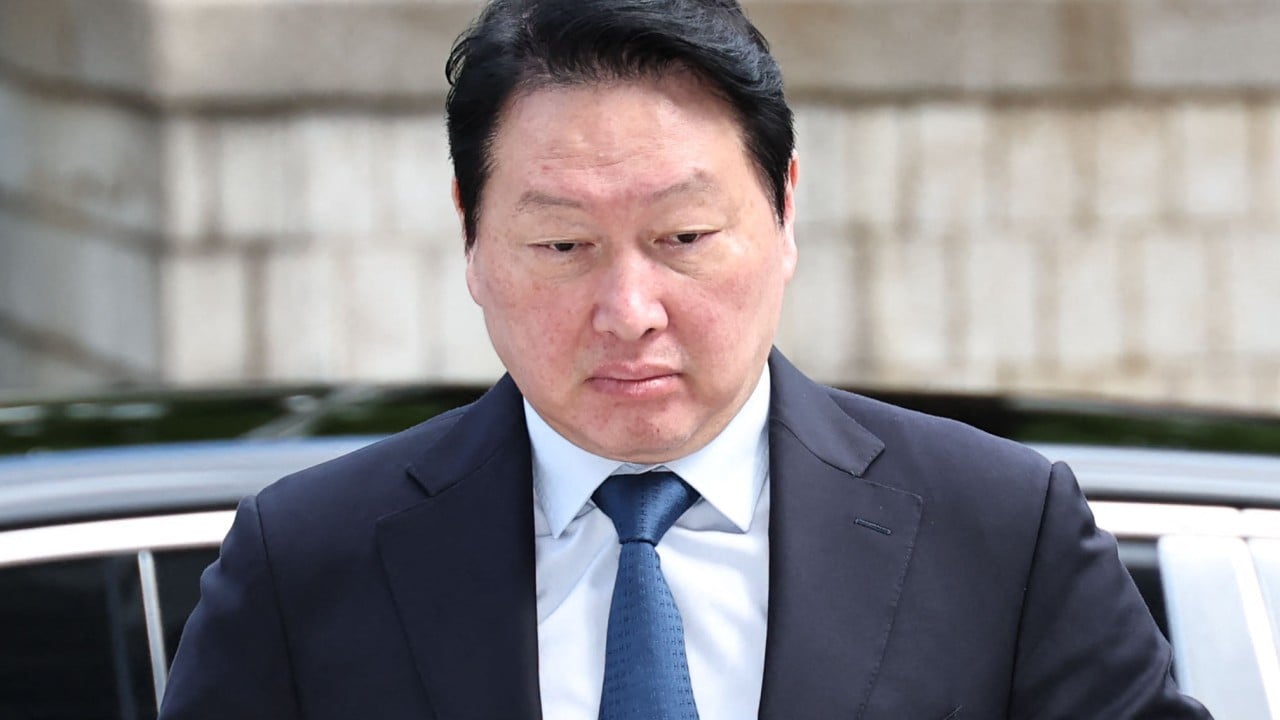
Inside the marble halls of the Seoul High Court, decades of quiet aristocratic privilege shattered into public view. At the center stood Chey Tae-won, the billionaire chairman of SK Group, one of South Korea’s massive, family-run conglomerates known as chaebols. Opposite him sat Roh Soh-young, an accomplished art museum director and the daughter of a former South Korean president. You might also find this related coverage interesting: The Economics of Saudi Domestic Nuclear Integration.
When the judge finally stopped reading the appellate ruling, the room held its breath. The court ordered Chey to pay Roh a record-breaking 1.38 trillion won—roughly $1 billion—in property division, alongside 2 billion won in alimony.
It was the largest divorce settlement in South Korean history. Yet, beneath the eye-watering financial sum lay a story that reached far beyond a failed marriage. It exposed the hidden scaffolding of corporate power, political patronage, and the fierce fight over who truly builds a empire. As extensively documented in detailed reports by Investopedia, the results are worth noting.
The Alliance of 1988
To understand how a marriage ends with a billion-dollar verdict, you have to rewind thirty-six years to a completely different era of East Asian politics and corporate expansion.
In 1988, Chey Tae-won married Roh Soh-young. On paper, it was a union of two young scholars who met while studying at the University of Chicago. In reality, it linked two of the most powerful institutions in South Korea: the military-backed political elite and an ambitious business dynasty. Roh’s father, Roh Tae-woo, had just taken office as the President of South Korea. Chey’s father was building what would become one of the nation’s dominant industrial forces.
Power wedded power.
For decades, SK Group transformed from a modest textile firm into a colossal conglomerate, dominating telecommunications, energy, and semiconductors. Today, SK Hynix powers a vast portion of the global artificial intelligence boom, supplying memory chips to tech giants worldwide.
Behind closed doors, however, the marriage had long since frayed. In 2015, Chey publicly acknowledged that he had an extramarital child and expressed his intent to separate. What followed was nearly a decade of bitter legal sparring, played out across trial courts, headlines, and corporate boardrooms.
What Is a Marriage Worth?
When couples divorce, courts routinely split bank accounts, houses, and cars. But how do you split a business empire that controls national infrastructure?
In lower court rulings, judges took a traditional approach. They deemed Chey’s shares in SK Inc. as personal, inherited assets—property acquired through his family line rather than joint effort—making them virtually untouchable during property division. In 2022, a lower court awarded Roh a modest fraction of what she sought: roughly $48 million in cash and a small alimony sum, leaving the chairman’s massive stockholdings entirely intact.
Roh appealed. She raised a fundamental question that rattled the core of South Korean corporate culture:
If a spouse's family background, political influence, and decades of silent stewardship provided the shield under which an empire grew, doesn't that spouse own a piece of the shield?
The Seoul High Court agreed.
The appellate judge delivered a earth-shaking assessment, ruling that former President Roh Tae-woo’s political influence functioned as a "slush fund" and protective umbrella for SK Group during its crucial growth phase in the 1990s. The court reasoned that Roh Soh-young’s presence and her family’s support directly eased regulatory hurdles, enabling SK to expand aggressively into the lucrative telecommunications sector.
In short, the judge ruled that her contribution was not passive. It was foundational.
The Ripple Effect Across the Empire
The verdict sent shockwaves through the upper echelons of South Korea’s corporate world.
For decades, chaebol leaders operated under an unspoken rule of corporate immunity. Business holdings were treated as sovereign bloodline assets, shielded from personal domestic disputes. The High Court's decision shattered that precedent, signaling that marital property law applies even when the assets are tied up in public holding companies.
The immediate concern for SK Group is control.
Chey holds a critical stake in SK Inc., the holding entity that controls the web of subsidiaries powering everything from electric vehicle batteries to memory chips. Paying a $1 billion cash settlement presents a massive liquidity challenge. If forced to sell significant chunks of stock to raise cash, Chey’s personal control over the holding company could dilute, opening the door for activist investors or hostile takeovers.
Uncertainty is an enemy of market stability. Shares in SK Inc. swung wildly following the ruling as analysts scrambled to model scenarios:
- Would Chey take out massive personal loans against his stock?
- Would he sell non-voting assets to cover the debt?
- Or would the Supreme Court intervene to freeze the ruling?
The Human Core of Systemic Power
Strip away the financial jargon, the stock tickers, and the legal briefs, and you are left with two people sitting in a courtroom, measuring the value of thirty-six years spent together.
For Roh Soh-young, the legal victory offered a public validation of her role in building a national giant. It challenged the outdated legal assumption that a wife’s contribution to a family enterprise ends at the threshold of the home.
For Chey Tae-won, the ruling represents an existential challenge to his legacy and his firm grip on an enterprise his family spent generations assembling. He quickly announced plans to appeal to the Supreme Court, fiercely contesting the lower court's findings regarding political favors and asset contributions.
The appeal now rests with South Korea’s highest tribunal. Yet regardless of the final legal technicalities, the court of public opinion has already witnessed something unprecedented: the curtain pulled back on the delicate, hidden intersection where family, politics, and billions of dollars meet.
In the end, empires are not built solely by visionaries in boardrooms. They are shaped in living rooms, forged through strategic alliances, and sustained by invisible sacrifices. And when those foundation stones finally shift, the entire structure trembles.