Milestone journalism is a lazy habit. Counting to 1,000 days of conflict in Gaza and declaring the future "uncertain" is the ultimate intellectual cop-out. It assumes a blank slate that does not exist. It implies that predictability vanished when the first missiles flew.
The truth is far colder. The trajectory of Gaza is not uncertain. It is highly predictable, dictated by rigid geopolitical structures, economic realities, and historical precedents that commentators consistently ignore because the reality is too uncomfortable to write about.
We need to stop treating this conflict as a series of chaotic, unpredictable events and start viewing it as a functioning, self-sustaining ecosystem of managed instability.
The Myth of the "Uncertain" Economy
Mainstream reporting constantly laments the total collapse of Gaza's economic future. They look at rubble and see zero. This misses how siege economies actually function.
I have tracked regional trade flows and black-market capital integration across conflict zones for over a decade. War does not destroy economic activity; it shifts it entirely into parallel, highly efficient gray markets.
- The Aid-Industrial Complex: Foreign aid does not just sustain populations; it subsidizes the governing authorities by relieving them of civic infrastructure costs.
- The Tunnel Monopoly: Subterranean logistics networks are not just military assets. They are highly lucrative trade routes that tax consumer goods, fuel, and weapons, creating a self-funding ruling class.
- The Remittance Lifeline: Millions of dollars flow silently via informal hawala networks daily, bypassing traditional banking blocks entirely.
To say the economic future is "uncertain" is to ignore how deeply entrenched these alternative economic models have become over 1,000 days. They are stable because they are hyper-profitable for the gatekeepers on both sides of the border.
The Geopolitical Status Quo is a Feature, Not a Bug
The loudest media narrative insists that global powers are desperately searching for a permanent resolution. This is a fundamental misunderstanding of regional foreign policy.
Stability is not the goal for the primary actors involved. Managed friction is.
The Regional Strategy Matrix
| Actor | Stated Goal | Actual Strategic Benefit |
|---|---|---|
| Regional Hegemons | Absolute Liberation | A perpetual proxy battleground to bleed rivals without risking direct conventional warfare. |
| Western Powers | Democratic Stabilization | Maintaining a predictable, highly weaponized status quo that justifies massive defense spending and intelligence integration. |
| Local Authorities | Civil Sovereignty | Utilizing the permanent state of emergency to suppress domestic political opposition and bypass democratic accountability. |
When you analyze the data through the lens of incentive structures rather than humanitarian rhetoric, the "uncertainty" evaporates. The current state persists because the cost of changing it exceeds the cost of maintaining it for every major stakeholder with the power to alter the dynamic.
Dismantling the "Day After" Delusion
People frequently ask: What happens the day after the war ends?
This question is fundamentally flawed. It presupposes a clean break—a moment where a treaty is signed, the dust settles, and a massive rebuilding project begins. History tells us this is a fantasy.
Look at Mogadishu. Look at Idlib. Look at Kabul.
Wars of this nature do not end with a neat declaration. They transition into permanent counter-insurgency environments. The "day after" is just more of the "day before," slightly recalibrated.
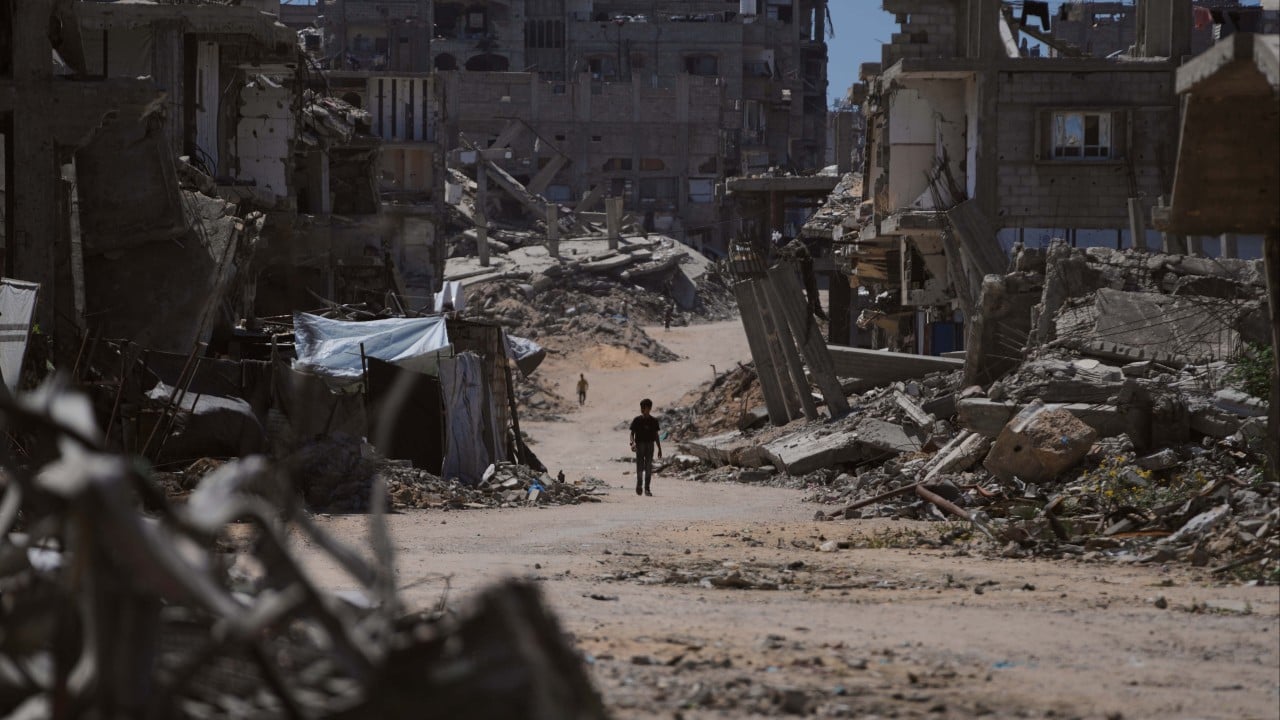
The physical destruction of 1,000 days has created a specialized urban landscape optimized for asymmetric warfare. Reconstruction will not look like a modern smart city. It will look like a hyper-militarized logistical zone, carved into secure sectors managed by external contractors and local strongmen.
The Hard Truth About Public Sentiment
The consensus view paints a picture of a population entirely uniform in its political alignment, waiting for external liberation. This ignores the brutal reality of domestic survival politics.
After 1,000 days, political ideology takes a backseat to basic logistical security. The entities that control the distribution of flour, clean water, and satellite internet control the political capital. It does not matter what flag they fly.
The assumption that a prolonged conflict automatically triggers a specific political uprising is historically illiterate. Long-term siege conditions more frequently result in deep societal atomization, where survival units shrink from political factions down to immediate clans. This fragmentation makes centralized governance even more unlikely, cementing local warlordism as the definitive governance model for the next decade.
Stop waiting for a sudden pivot. Stop analyzing the situation through the lens of arbitrary calendar milestones. The future of Gaza is already written in the concrete incentives of the present.