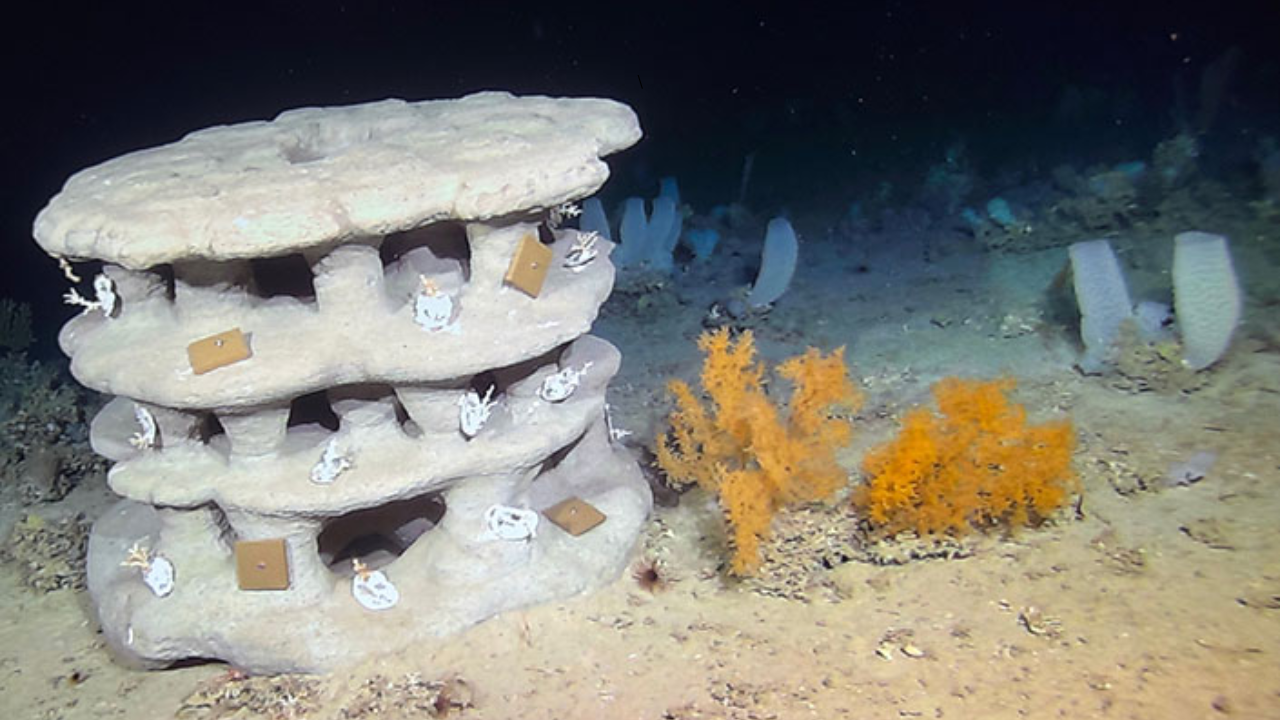
Ocean floor restoration used to mean dumping old subway cars and wrecked tires into the blue and hoping for the best. That era is over. Marine scientists recently took a massive step forward by dropping twenty-three specialized three-dimensional printed reefs eleven hundred meters beneath the surface to test how deep-water habitats recover under extreme pressure.
Most people think coral reefs only exist in sunlit tropical shallows where scuba divers take vacation photos. They forget about cold-water corals. These deep-sea ecosystems thrive in pitch-black environments, enduring freezing temperatures and crushing pressures. They also face severe destruction from deep-sea fishing and shifting industrial activities. When a trawler net drags across the ocean floor, it shatters centuries of coral growth in seconds. Fixing that damage takes more than good intentions. It requires structural engineering designed for the abyss.
The Engineering Challenge of the Deep Sea
You can't just throw plastic or cheap concrete into the deep ocean and walk away. Eleven hundred meters down, hydrostatic pressure is immense. Currents pull with surprising force. Chemical composition matters. If the material doesn't mimic natural calcium carbonate, marine larvae won't settle on it.
The twenty-three artificial structures deployed in this recent project were engineered specifically to replicate natural micro-topography. They feature complex internal chambers, porous surfaces, and varied textures designed to give deep-water organisms a place to anchor. Standard flat blocks fail because marine life needs nooks, crannies, and current eddies to survive.
I've watched countless conservation projects fail because they relied on guesswork rather than biomimicry. When you design for the deep ocean, every millimeter counts. If the surface is too smooth, organisms slide right off. If the structure is too light, the first heavy benthic current sweeps it away.
Why Deep Water Corals Matter More Than You Think
Shops sell tropical coral fragments, but cold-water species hold the keys to understanding deep marine biodiversity. These slow-growing reefs act as nurseries for deep-sea fish, sponges, and rare invertebrates. They lock away carbon and build structural oases in otherwise barren sediment plains.
When these habitats break down, the local food web collapses. Fishing fleets notice the drop in yields years before researchers map the damage. By testing 3D-printed recovery units at eleven hundred meters, scientists want to find out if human-made architecture can fast-track ecosystem repair.
Early data suggests that complex geometric designs attract colonizers much faster than smooth, traditional blocks. Filter feeders love the turbulence created by intricate exterior walls. Larvae drift past, catch an eddy, and settle down.
Moving Beyond Trial and Error in Marine Conservation
Conservation used to be an emotional gamble. Today, it's a data-driven science. Projects deploying high-tech submersibles to monitor these printed structures give us real-time feedback loops. We can see which pore sizes work best. We can measure which mineral blends accelerate calcification.
If you want to support or follow marine restoration efforts that actually work, look for initiatives prioritizing material science and long-term monitoring over quick photo-ops. Real restoration takes decades, but smart engineering gives nature a fighting chance.
Keep an eye on how deep-sea protocols evolve over the next few years. The success of these sub-surface trials will dictate whether large-scale restoration becomes a standard tool for healing damaged oceanic zones or remains a costly scientific experiment. Stop accepting superficial fixes for deep ecological problems. Demand rigorous design, transparent data, and accountable execution.


