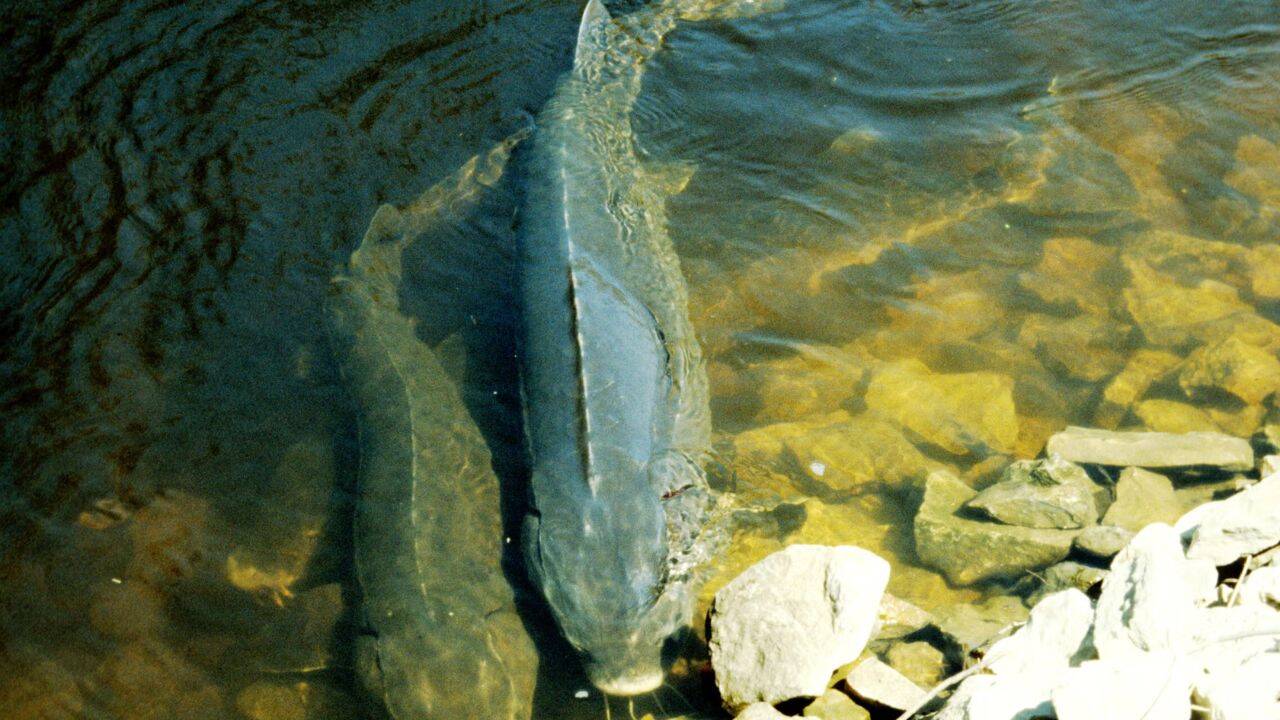
Everyone loves a good monster story. Tell people a prehistoric, armor plated dinosaur fish living in the murky depths of the Great Lakes can survive for four centuries, and the internet loses its collective mind. Biology journalism laps it up. Environmental groups slap it on a fundraising pamphlet. The lazy consensus writes itself: these ancient living fossils are immortal time capsules of a pristine past, weathering the centuries untouched by modern folly.
It is romantic garbage. Meanwhile, you can find other stories here: Why Finding the Fastest Star Near a Black Hole is a Distraction From Actual Physics.
I have spent decades watching fisheries management chase ghost stories while real, measurable populations bleed out. The obsession with the mythical four hundred year old sturgeon is not just bad biology. It is a dangerous distraction that lets polluters, hydro-dam operators, and lazy state agencies off the hook.
Let us look at the actual science instead of the bedtime stories. To explore the complete picture, check out the detailed report by Live Science.
The Math Doesn't Support The Myth
Biologists love to age fish by counting the growth rings on their pectoral fin rays, much like reading the rings of a tree. For decades, this method led to speculative extrapolations. Researchers found a big fish, counted some crowded rings near the edge, and guessed that growth slowed down to a crawl, pushing maximum ages well past three hundred or four hundred years.
It sounds impressive until you look at validation studies. Carbon dating and bomb radiocarbon assay testing from nuclear fallout peaks in the mid twentieth century completely shattered these extreme longevity claims for most freshwater species.
Reliable, rigorously verified data shows that while lake sturgeon Acipenser fulvescens are undeniably long lived compared to a perch or a bass, their actual maximum ceiling reliably sits closer to one hundred, maybe one hundred and fifty years under optimal conditions. Hitting two hundred is an extreme statistical outlier. Hitting four hundred belongs in fantasy novels alongside dragons and wizards.
By inflating the lifespan into geological time scales, we create a false sense of biological invulnerability. If a fish can live for four centuries, surely it can survive a few decades of industrial dumping, siltation, and fragmented rivers, right? Wrong. That exact line of thinking has justified decades of regulatory inaction.
The Real Threat Is Habitat Fragmentation, Not Age
Sturgeon do not need four centuries to thrive. They need connected waterways, clean gravel shoals to spawn on, and enough water flow to keep their eggs from suffocating in sediment.
When a river gets choked by a hydroelectric dam, the adult sturgeon get trapped upstream from their historical spawning grounds. Their migratory pathways get severed. The cold, oxygenated current they require for egg development turns into a warm, stagnant mud bath behind a concrete wall.
Does it matter if a trapped sturgeon could theoretically live for four hundred years if it cannot successfully reproduce a single viable offspring for fifty? Age means nothing without recruitment. A population of thousand-year-old sterile fish is functionally extinct. We are obsessing over the odometer while the engine block is cracked in half.
Conservation groups spend millions trying to protect individual mega-fish—the massive, ancient females that commercial poachers target for caviar—while completely ignoring the macro-level habitat destruction that kills off the juveniles before they ever reach two feet long.
The Downside Of Playing The Longevity Card
Let me be entirely transparent about the flaw in my own aggressive stance. Stripping away the mystical folklore of the four hundred year old lake sturgeon risks losing public interest. People care about ancient monsters. They do not get fired up about gravel particle size, dissolved oxygen metrics, or minimum environmental flow rates below a dam.
If we tell the unvarnished truth—that lake sturgeon are just really cool, moderately long-lived fish that happen to look like prehistoric tanks—do donors stop writing checks? Do politicians stop listening?
Maybe. But building conservation policy on top of exaggerated myths is a house of cards. When a population inevitably crashes despite its supposed four hundred year lifespan, the public feels lied to and cynicism sets in. We need to sell these fish for what they actually are: vital, highly sensitive indicators of freshwater health that cannot outrun modern industrial neglect, no matter how many rings are in their fins.
Stop Counting Rings And Start Freeing Rivers
If you actually want to save the lake sturgeon, stop treating them like museum artifacts and start treating them like dynamic wildlife.
Tear down deadbeat dams that serve no functional purpose. Enforce strict industrial effluent limits on spawning tributaries. Re-engineer the shoreline so sediment does not smother the nurseries.
The next time you read a headline about a mythical, centuries-old leviathan pulled from the depths, remember what that story is really hiding: a dying ecosystem propped up by a fairy tale.
Stop wondering how old the fish is. Start asking why the river is dead.