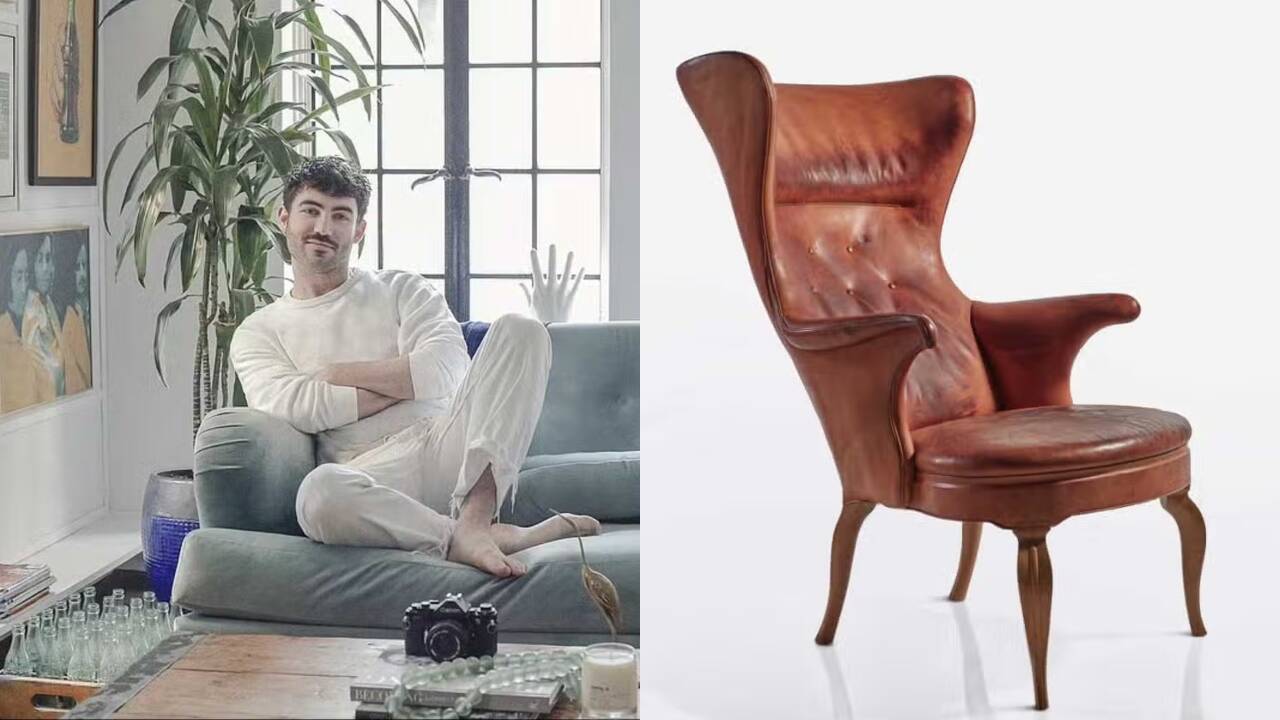
Someone paid $50 for a chair. Years later, it hit six figures at auction. Cue the confetti. Cue the headlines. Cue another wave of weekend pickers scouring estate sales like they have a golden ticket stitched into their carhartts.
I hate to ruin the party. Actually, no I don't.
Stories about a $50 chair turning into $107,950 are fun to read at 7:00 AM with burnt coffee. They make the secondary market feel like a slot machine where patience is the only coin you need. Buy cheap. Wait long enough. Cash out like a genius.
That story is lazy. Worse, it is financially dangerous for anyone trying to build real wealth or a sustainable reselling operation.
The headline treats a six-figure auction hammer price like a normal outcome of holding vintage furniture. It isn't. It is a statistical outlier wrapped in survivorship bias, auction-house theater, and selective memory. When an article sells you a $50-to-$107,950 flip without breaking down holding costs, restoration risk, buyer's premiums, authentication hurdles, and the ninety-nine forgotten chairs that rotted in a garage for a 4% return, it isn't informing you. It is selling lottery tickets disguised as investment advice.
The Lazy Consensus Around "Sleeping Giants"
Here is the standard playbook pushed by viral flipping stories:
- Find an overlooked piece of furniture for pennies.
- Sit on it until the market wakes up.
- Watch a gavel drop at a major auction house and collect a life-changing payday.
Sounds clean. Sounds romantic. Completely ignores how capital actually moves.
In auction and secondary-market circles—from regional estate sales to major houses like Sotheby's, Christie's, or Wright—a six-figure result on a chair almost never comes from "just holding onto it." It comes from a collision of provenance, maker attribution, rarity, condition, and current collector demand. A nameless oak dining chair from 1924 does not magically become a museum-grade trophy just because you left it in a spare bedroom until 2026.
Even when a piece does carry pedigree—say an early modernist prototype, a documented studio work by a major designer like George Nakashima, Finn Juhl, or Jean Prouvé, or an early American cabinetmaker piece with verifiable history—getting it to a six-figure hammer takes work most casual flippers never price in. You have to recognize what you are looking at before someone else does. You have to verify it without destroying its original surface. You have to survive years of storage and shifting tastes.
I have watched dealers and investors blow serious money chasing "hidden gems" based on viral auction comps. I have seen people buy beat-up mid-century frames for $400 because a magazine ran a photo of a similar silhouette selling for five figures. When they tried to move the piece six months later, nobody wanted a refinished knockoff or a damaged production piece with zero documentation. Money died in dead inventory.
You Are Asking the Wrong Question
Most readers who click a headline about a $50 chair ask: "How can I find one of those?"
Wrong question. Dead-end question.
Asking how to find a $107,950 chair is like asking how to pick a 500x penny stock without understanding balance sheets or liquidity. Even if you spot one once in a career, building a strategy around lightning strikes is a terrible way to allocate cash or hours.
The real question is: What is the true return on invested capital and time across an entire portfolio of objects, after every friction cost is paid?
Let's strip away the fairy dust and look at the mechanics. Suppose you buy a chair for $50. Cheap entry, right? Except cheap acquisition rarely comes with a concierge. You haul it home. Maybe it sits for eight years. During those eight years:
- You pay for space—whether that is opportunity cost on square footage in your house or monthly rent in a climate-controlled unit.
- You risk humidity swings, pests, sun bleaching, cracked joinery, or clumsy movers knocking a leg.
- If you decide to sell through a major auction house, you don't pocket the headline number automatically. Sellers face commissions, photography or cataloguing fees, shipping, crating, and insurance. Buyers pay buyer's premiums on top of the hammer price, which affects bidding behavior and net proceeds.
Imagine a scenario where you buy a vintage chair for $50, hold it for ten years in a storage unit costing $45 a month, and sell it for $1,800 through a channel that takes 20% in fees and logistics. Your gross sale sounds great on social media. Your storage bill alone was $5,400. You didn't pull off a masterclass flip; you financed a slow-motion loss while telling yourself you were "investing in antiques."
That math is why serious operators obsess over turn rate, carrying cost, and edge, not headline homeruns.
People Also Ask: Brutal Answers to Flawed Questions
Can a cheap chair really be worth over $100,000?
Yes, under narrow conditions that almost nobody stumbling through a Saturday tag sale is equipped to verify on the spot. A six-figure price tag on a chair requires an extraordinary alignment of factors: unmistakable historical or design significance, strong condition (especially original finish and unmolested structure), documented or strongly inferred provenance, and active competition among deep-pocketed buyers at the exact moment it hits the block. If any one of those pillars is missing, the ceiling drops fast—often by an order of magnitude or more.
How do I know if furniture at a thrift store or estate sale is valuable?
If you rely on a single "tell," you are going to get burned. Real evaluation looks at construction, joinery, materials, wear patterns, hardware, designer markings or labels, and period authenticity—and compares those against current realized auction prices rather than optimistic online asking prices. Asking prices on listing sites are wish lists; realized hammer prices are receipts. And even after you spot something promising, you have to ask whether you have the network and credibility to reach buyers who actually pay top dollar.
Should I restore an old chair before selling it?
Usually, if you aren't sure, leave it alone. Amateurs ruin valuable furniture every single day with orbital sanders, polyurethane, harsh strippers, and well-meaning "fixes" that wipe out patinated surfaces or replace original parts. In high-end antique and design markets, original surface and structural integrity are prized; heavy-handed restoration frequently depresses value rather than unlocking it. Sometimes a gentle cleaning or stabilization by a qualified conservator makes sense. Stripping a piece down to bare wood because you think "fresh looks better" is often financial arson.
Is flipping vintage furniture a good side hustle?
It can be a solid, hands-on cash flow business if you treat it like a real micro-enterprise rather than a treasure hunt. Profitable pickers and dealers win on boring fundamentals: buying below wholesale, knowing which categories move fast in their local or online market, keeping overhead lean, pricing realistically, and turning inventory instead of hoarding trophies. If your business plan depends on finding a $100,000 unicorn in a basement, get a day job and keep picking as a hobby.
Where the Conventional Wisdom Breaks Down
The conventional story treats value as something locked inside the wood waiting for a clock to run out. That is a comforting myth. Value in secondary markets is social, situational, and fragile.
Taste shifts. A style that commands fierce bidding today can cool off when a generation of collectors ages out or moves on. Condition matters ruthlessly—a hairline crack or replaced upholstery can separate a collector-grade piece from a decorative one. And liquidity is the quiet killer nobody mentions in clickbait headlines. A chair might theoretically be "worth" a big number on paper, yet take months or years to place in front of the right two bidders who want it badly enough to push past six figures.
Imagine a scenario where two identical-looking chairs sit in separate rooms. Chair A has clean joinery, honest age, and solid documentation tying it to a respected maker; it goes to a curated sale with informed bidders and clears a massive sum. Chair B has mismatched replacement parts, an over-sanded finish, and a vague backstory; it goes to a general estate auction and sells for a fraction of that. Same general silhouette. Completely different asset.
Calling both "a chair that made a fortune" flattens reality until it becomes useless.
How to Actually Play the Market Without Fooling Yourself
If you want to buy, sell, or collect furniture and objects with real discipline, ditch the lottery mindset and adopt rules that survive contact with reality.
- Separate hobby from capital. Decide upfront whether you are buying something because you love living with it or because you expect a return. Mixing the two leads to rationalizing bad buys and holding dead weight too long.
- Track all-in cost, not purchase price. Log what you paid, what you spent on gas, repairs, transport, storage, and selling fees, and how long your cash was tied up. A $75 item that sells in three weeks for $260 beats a $50 item that eats space and headaches for six years.
- Study realized sales, never wishful listings. Look up actual auction results and completed sales to see what buyers genuinely pay, not what sellers hope to get.
- Respect surface and originality. Learn the difference between dirt and history. When in doubt, consult a reputable specialist or auction house generalist before altering a piece.
- Build a repeatable lane. Pick a niche—specific eras, regions, materials, or functional categories—and learn it cold. Depth beats random luck every time.
The Catch With My Own Take
Being cynical keeps you from getting fleeced, sure—but taken too far, contrarianism makes you miss real opportunities.
If you assume every cheap piece of furniture is junk or every high auction headline is fake news, you can talk yourself out of genuine bargains when someone who doesn't know what they have prices a real piece too low. Market inefficiencies do exist. Mispriced items show up at estate sales, auctions, and private sales every week. Skepticism should sharpen your eye and protect your capital, not blind you when a real opportunity crosses your path.
Stop Chasing Lightning and Build an Edge
A $50 chair selling for $107,950 is a great headline. It is a terrible business model.
The people who actually win in secondary markets aren't sitting around dreaming about once-in-a-lifetime windfalls. They are doing the unglamorous work: learning the craft, verifying the facts, pricing honestly, watching their numbers, and moving inventory with eyes wide open.
Next time you see a viral story about a bargain turning into six figures, don't ask how to get lucky. Ask what it actually took to get there—and walk away before the hype spends your money for you.