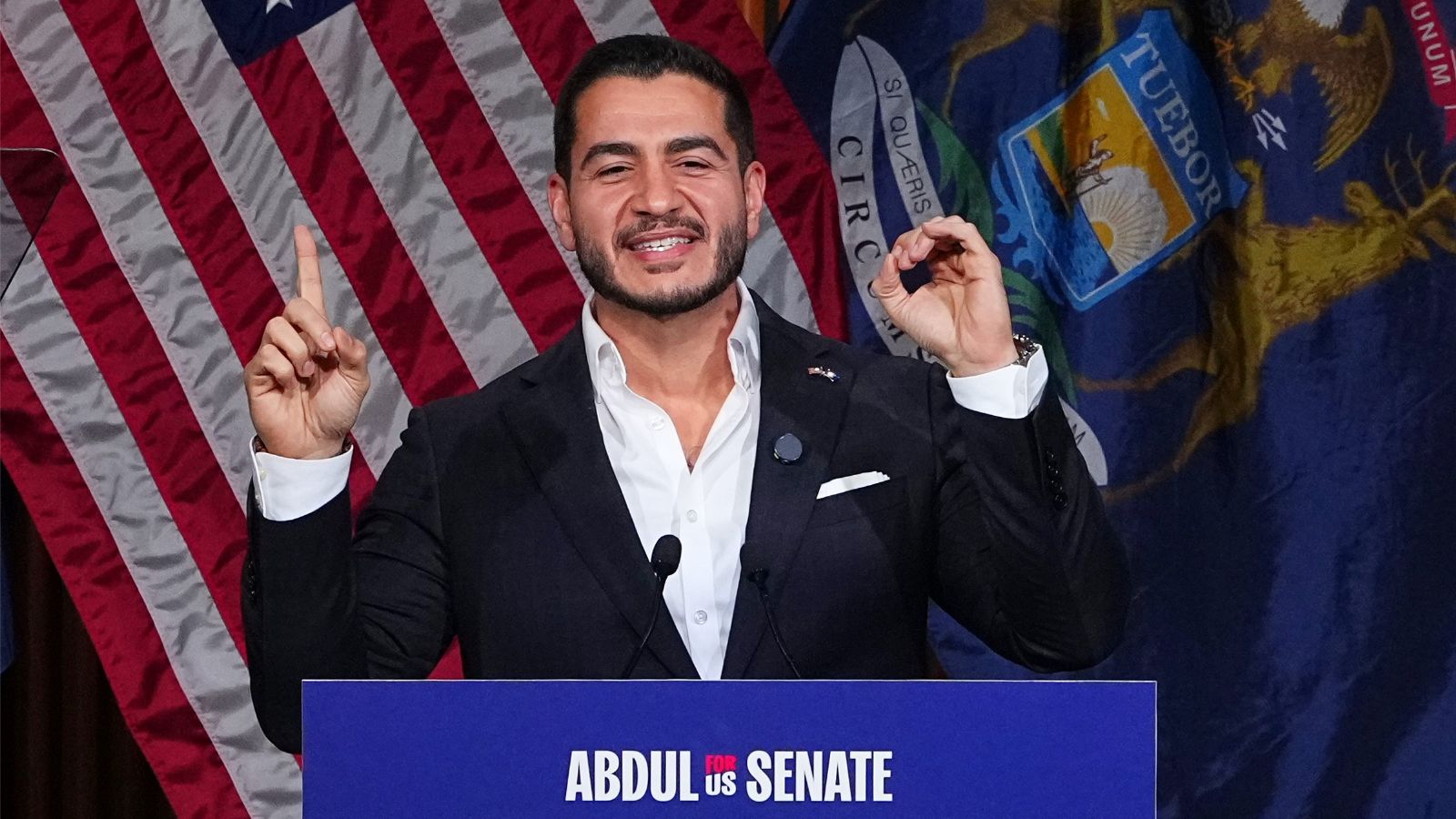
Old videos do not resurface by accident. The "JD Habibi" clips featuring Abdul El-Sayed exploded across social feeds immediately after his US Senate win because two opposing political machines needed them at the exact same time. Supporters pushed the footage to celebrate a rare, unfiltered progressive voice breaking through in Washington. Critics blasted the exact same frames to paint him as out of step with the chamber's traditional decorum. Both sides fed the same algorithm, turning years-old digital moments into a fresh national referendum.
That is how modern political media works. A candidate spends years building a massive archive of podcasts, livestreams, and off-the-cuff remarks. Nobody outside their core audience pays much attention until the stakes change. The moment a statewide race flips into a national headline, every frame ever recorded becomes live ammunition.
The Anatomy of a Resurfaced Clip
In traditional politics, opposition research was a quiet, methodical business. Staffers sat in windowless rooms, transcribed old speeches, and waited for the final two weeks of October to drop a thirty-second attack ad on local television. That model is dead.
Today, the cycle runs backward. A clip that failed to move the needle during a primary or a general election suddenly catches fire after the votes are counted. Why? Because the audience changes overnight. During a campaign, voters in Michigan are weighing local kitchen-table issues, healthcare costs, and regional endorsements. Once a candidate wins a US Senate seat, the entire country tunes in. National pundits, cable bookers, and partisan influencers who ignored the race for eighteen months suddenly need a shortcut to explain who this new senator is.
A short, punchy video—especially one carrying a memorable hook like "JD Habibi"—acts as an instant character sketch. It requires zero policy knowledge. You do not need to understand Medicaid expansion or Great Lakes infrastructure to react to a thirty-second clip. You just hit share, add a caption that confirms your audience's existing bias, and watch the engagement metrics climb.
The mechanics behind this are ruthlessly simple. Social platforms reward high-arousal emotions: outrage, vindication, and tribal pride. When a video features a progressive physician-turned-politician using casual, culturally specific humor aimed at a prominent national figure like JD Vance, it triggers both sides of the algorithmic equation. One camp sees authenticity and cultural fluency. The other sees unseriousness or a lack of "senatorial" gravitas. The platform does not care which side is right. It only sees velocity.
From Michigan Figure to National Lightning Rod
To understand why Abdul El-Sayed has such a deep well of viral-ready material, you have to look at how he built his public profile. Unlike career legislators who spend decades speaking in sanitized, focus-grouped talking points, El-Sayed came up through public health and grassroots media.
Before he ever ran for the US Senate, he was the executive director of the Detroit Health Department, a Rhodes Scholar, and a 2018 gubernatorial candidate who leaned heavily into digital organizing. When that 2018 bid fell short, he did not retreat into a quiet consulting gig. He stayed in front of a microphone. He hosted podcasts, wrote books, and appeared regularly on progressive media networks. He spoke the language of the internet because that was where his coalition lived.
That background creates a massive, searchable archive. Every hour spent on a livestream or a podcast is an hour of unscripted tape. For a veteran senator who has spent twenty years reading off teleprompters, there is rarely anything surprising left to find. For a digital-native politician, the archive is endless.
Why the JD Habibi Framing Hits Differently Now
Language matters in politics, and code-switching matters even more. The phrase "habibi"—an Arabic term of endearment that translates roughly to "my dear" or "my love," but is frequently used in internet banter with a sharp edge of sarcasm—carries specific weight in Michigan.
Michigan is home to one of the largest Arab-American communities in the United States. For years, that community was treated by national parties as a monolith to be courted every four years with stiff, formal appearances. Watching an Arab-American candidate use everyday cultural shorthand in political commentary felt jarring to Washington insiders, even as it felt completely natural to voters in Dearborn or Detroit.
When those clips resurface in a national context, they expose a massive cultural divide in how Americans expect politicians to sound. Traditionalists still expect a US Senator to sound like a mid-century radio announcer—measured, formal, and emotionally distant. Younger voters and marginalized communities often view that formality as a mask for dishonesty. To them, a candidate who talks like a real person on a podcast is infinitely more trustworthy than one who speaks in polished press releases.
Critics, of course, seize on the exact same informality. They strip away the broader context of the conversation and present the clip as proof that the new senator is more interested in internet clout than legislative work. It is a classic framing war. The footage stays identical, while the narrative wrapped around it shifts completely depending on who holds the megaphone.
The Economics of Post-Election Outrage
There is also a financial reality driving these viral waves. Political campaigns do not actually end on Election Day; they just rebrand.
The moment a race is called, national fundraising committees, PACs, and partisan media outlets pivot to the next cycle. They need fresh villains and fresh heroes to keep their email lists active and their donor bases engaged. A newly minted senator with a distinct identity and a treasure trove of outspoken clips is a gift to both fundraising operations.
For the opposition, a resurfaced video is an instant fundraising hook. It allows them to email donors with a message that says, in effect, look who just got elected to the Senate—help us stop them. For allies, the same viral moment proves their candidate is already rattling the establishment, which drives small-dollar contributions and boosts the senator's national profile before they even take the oath of office.
What Happens When Digital Native Politicians Hit the Senate
The resurgence of the "JD Habibi" videos is not a one-off fluke. It is a preview of what the next decade of American politics will look like.
For decades, the US Senate was insulated from the fast-twitch reflexes of internet culture. Members arrived in Washington in their fifties or sixties, long after their formative years, with paper trails instead of video archives. That buffer is gone. The generation now entering the chamber grew up with smartphones, podcasts, and social feeds. Their entire adult lives are documented in high definition.
Attempting to scrub that archive is pointless. Deleting old clips only triggers the Streisand effect, turning a minor moment into a cover-up story. The only real strategy left is ownership—standing behind the context of what was said and letting the voters decide whether authenticity outweighs tradition.
Washington has spent a century trying to sand down the rough edges of every newcomer who walks through its doors. The internet, by contrast, rewards the people who keep their edges sharp. Those two forces are now locked in a permanent collision, and every old clip waiting in a server farm is just waiting for its turn in the feed.