Political obituaries get written too quickly. When Abdul El-Sayed lost his 2018 primary bid for Michigan governor to Gretchen Whitmer, conventional wisdom relegated him to the political sidelines. Pundits assumed the progressive physician would fade back into academia or public health administration. They were wrong.
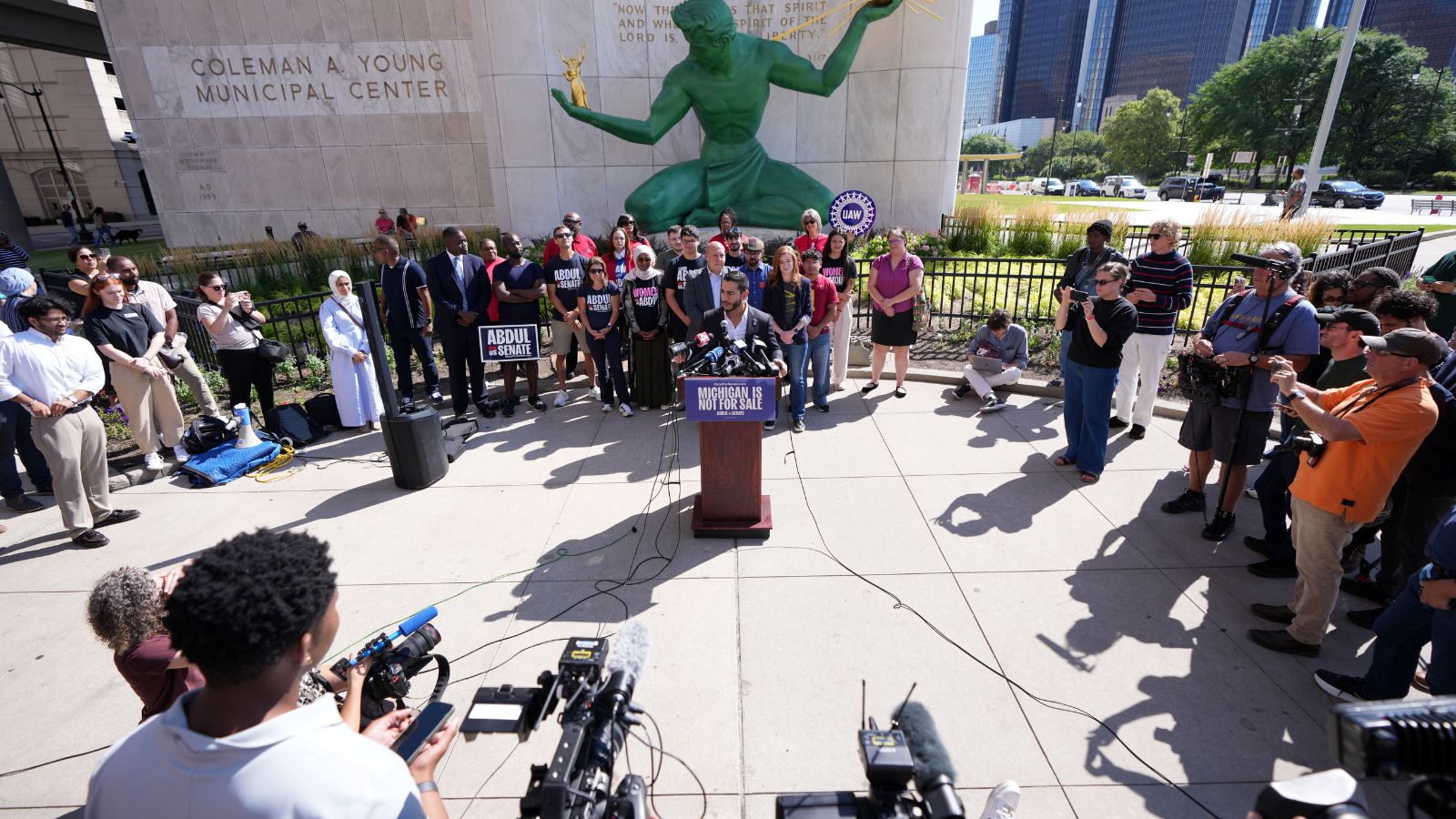
Fast forward to the primary battle for Michigan's open U.S. Senate seat. El-Sayed didn't just crawl back into relevance—he engineered a stunning progressive breakthrough. He beat establishment favorite Representative Haley Stevens by a razor-thin margin, defying tens of millions in outside corporate and super PAC spending.
If you want to understand where the Democratic Party is heading next, you have to look closely at how this happened. This race wasn't just a local contest. It was a massive stress test for the future of American politics.
The Public Health Origin Story
Most politicians enter politics through law, business, or local city councils. El-Sayed took a radically different route. He trained as an epidemiologist and physician, earning degrees from the University of Michigan and Oxford before teaching at Columbia University.
When former Detroit Mayor Mike Duggan appointed him executive director of the Detroit Health Department at just 30 years old, he inherited an agency gutted by municipal bankruptcy. He didn't just manage decline. He replaced lead pipes in schools, secured free glasses for children, and built grassroots trust in a city that had every reason to distrust government institutions.
That background shaped his political worldview. When the Flint water crisis unfolded, watching state officials cut corners at the expense of children's lives pushed him off the sidelines. He realized that public health isn't just about clinical medicine. It's about structural power, environmental justice, and economic inequality.
Rewriting the Playbook on Fundraising
The core reason establishment Democrats dismissed El-Sayed's initial ambitions was money. Traditional campaigns rely heavily on corporate donors, industry political action committees, and wealthy bundlers. El-Sayed built his entire political identity on rejecting that model.
During his 2018 gubernatorial run and his recent Senate campaign, he swore off corporate PAC money entirely. When millions of dollars in outside attack ads flooded Michigan airwaves—courtesy of groups like the pro-Israel super PAC United Democracy Project—his campaign relied on small-dollar donations and boots-on-the-ground volunteer networks.
Critics argued this approach would leave him outspent and unheard. Instead, it galvanized a passionate base. By championing a clear, punchy platform—getting money out of politics, putting money back in working people's pockets, and passing Medicare for All—he gave voters a distinct alternative to moderate incrementalism.
Navigating the Party's Deep Fractures
The Michigan Senate primary became a proxy battle for the soul of the Democratic Party. On one side stood Haley Stevens, backed by congressional leadership and mainstream donors, who pitched herself as a pragmatic manufacturing advocate. On the other side stood El-Sayed, backed by national progressives like Senator Bernie Sanders and Representative Alexandria Ocasio-Cortez.
The race also exposed deep party divisions over foreign policy, particularly regarding the war in Gaza. El-Sayed made U.S. foreign policy and the influence of heavy-spending special interest groups a central pillar of his stump speech. Rather than dodging controversial foreign policy debates, he leaned into them. He argued that true electability comes from inspiring non-voters and young people to show up, rather than chasing a dwindling center.
The friction wasn't just ideological. It got personal. Opponents questioned his viability in a crucial swing state, raising questions about how identity and faith play into Midwestern electoral politics. El-Sayed routinely countered that electability is manufactured by consultants who prefer safe, uninspiring candidates.
What This Means for the General Election
Winning the primary is only half the battle. El-Sayed now faces Republican nominee Mike Rogers in a state that remains fiercely competitive. The general election will test whether a unabashed progressive can build a winning coalition in a vital Rust Belt battleground that narrowly voted Republican in recent presidential cycles.
Republicans are already framing him as an extreme choice, while bruised factions of the state Democratic party scramble to unite behind him to keep the Senate seat blue.
If you want to watch how modern political insurgencies actually succeed or fail, keep your eyes on Michigan over the next few months. The old rules of political gatekeeping are breaking down. Whether grassroots organizing can consistently beat institutional money will determine the trajectory of American elections for the next decade.
Support candidates who speak directly to working-class material needs, study how volunteer-driven movements scale against dark money, and pay attention to local municipal policy labs where tomorrow's national leaders are currently cutting their teeth.