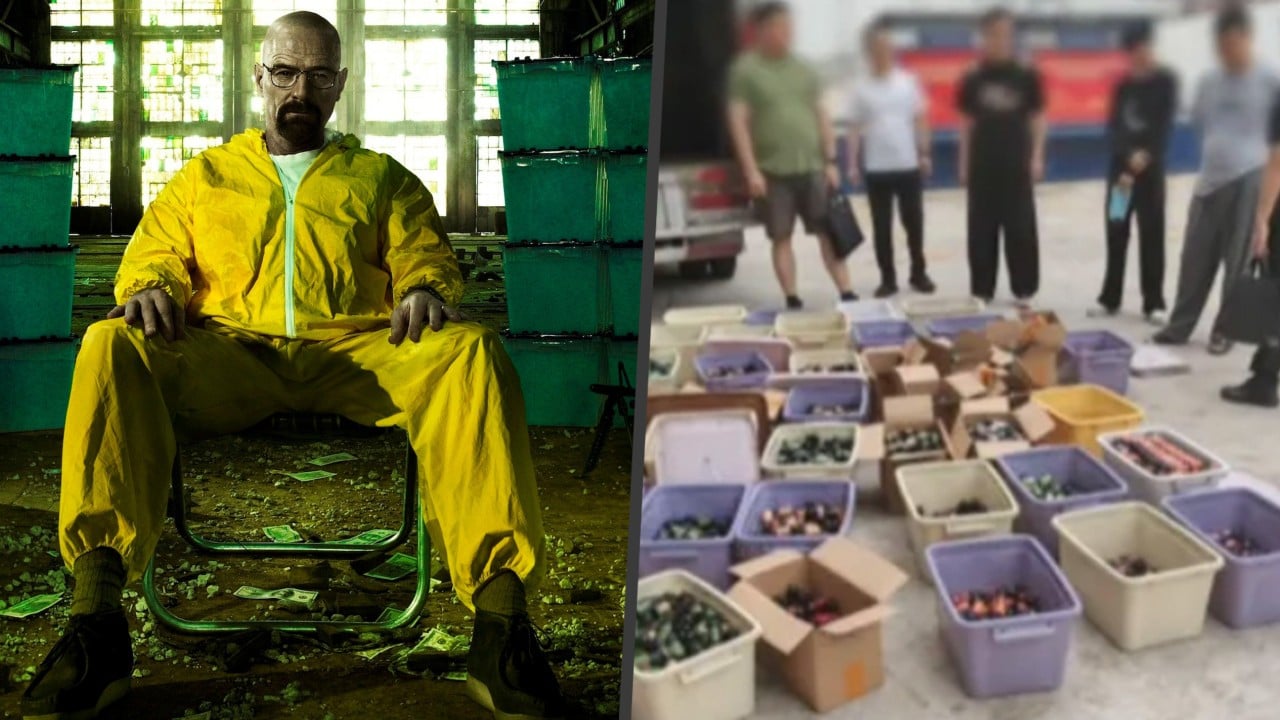
In a quiet provincial laboratory, a tenured academic traded peer-reviewed journals for precursor chemicals and clandestine synthesis routes. Law enforcement agencies in China recently dismantled a sophisticated illicit drug manufacturing operation that mirrored the fictional premise of television dramas, arresting a former university chemistry professor who allegedly orchestrated the enterprise. The raid highlights a grim intersection where advanced scientific expertise meets the underworld economy. When academic credentials intersect with predatory illicit markets, the result is an industrial-scale threat that conventional policing struggles to contain.
Public fascination immediately gravitated toward the cinematic parallels. Real life, however, lacks a tidy narrative arc and offers far less room for redemption. Academic professionals possess specialized knowledge of organic synthesis, purification protocols, and equipment acquisition that bypasses standard criminal learning curves. This specific case reveals systemic vulnerabilities within higher education oversight and chemical supply chain tracking across developing manufacturing sectors. In related news, we also covered: The Structural Mechanics of Motor Vehicle Trauma and Public Grieving.
The Anatomy of Academic Deviation
Universities pride themselves on autonomous research environments. That autonomy creates blind spots. An experienced researcher understands how to source reagents through legitimate procurement channels or shell entities without triggering automated red flags.
Consider the mechanics of large-scale synthetic drug production. Designing a high-yield synthesis pathway requires doctoral-level understanding of stereochemistry, reaction kinetics, and byproduct management. Amateur cooks frequently blow up garages or produce severely contaminated batches that fail on the street. An academic brings process optimization to the enterprise. They maximize purity, minimize waste heat signatures, and troubleshoot unexpected crystallization failures before law enforcement intercepts a shipment. NPR has provided coverage on this critical topic in great detail.
Institutional oversight often fails to monitor the physical presence of faculty outside core teaching hours. Laboratories remain operational late into the night. Access badges log entries, but algorithmic monitoring of actual chemical consumption remains lax in many regional facilities. A professor can divert standard laboratory supplies or order specialized precursors under the guise of legitimate polymer or pharmaceutical research.
The Economic Push Factors
No one spends decades earning a doctorate only to risk a life sentence on a whim. Financial desperation or profound professional disillusionment usually serves as the catalyst.
Higher education markets face severe contraction and wage stagnation in many regions. While elite institutions reward top-tier publications and grants, regional universities often pay modest salaries that fail to keep pace with soaring living costs. When a scientist accumulates personal debt or faces sudden financial ruin, the illicit drug trade presents an obscene arbitrage opportunity. A single successful synthesis cycle can yield returns that dwarf an annual professorial salary.
The specialization gap also matters. Synthetic drug markets constantly evolve to evade analog drug laws. When authorities schedule one precursor compound, underground chemists immediately synthesize a structural variant that falls outside statutory bans. This perpetual cat-and-mouse game requires genuine research capability. Organized crime syndicates recognize this reality. They no longer rely on street-level chemists using crude kitchen setups; they actively recruit or kidnap technical expertise to maintain profit margins.
Supply Chain Failures and Regulatory Blind Spots
Tracking precursor chemicals resembles policing a leaky dam. Industrial solvents, catalysts, and basic reagents have legitimate dual-use applications across multiple industries, including plastics, textiles, and legal pharmaceuticals.
Regulatory bodies mandate end-user verification for restricted substances, but enforcement varies wildly across international borders. A broker operating through digital storefronts can acquire bulk quantities by exploiting jurisdictional gaps. If local suppliers tighten restrictions, procurement networks shift to overseas markets with lax export controls.
Law enforcement agencies increasingly rely on financial intelligence units to track unusual capital flows. Yet underground operations adapt by utilizing cryptocurrency, trade-based money laundering, and cash-heavy proxy businesses. A university laboratory provides a convenient cover story for heavy utility consumption, specialized glassware orders, and waste disposal contracts.
The Broader Implications for Scientific Ethics
The arrest of an educator forces academic institutions to confront uncomfortable questions regarding vetting and institutional culture. Pre-employment background checks assess criminal records, but they rarely evaluate psychological vulnerabilities, sudden lifestyle inflation, or ideological detachment from institutional norms.
Scientific ethics education focuses heavily on plagiarism, data fabrication, and biosafety protocols. It rarely addresses the risk of dual-use research turning malicious from within. When a researcher decides to cross the line, they weaponize the very knowledge meant to advance society.
The takedown of this laboratory will not stem the flow of synthetic narcotics. Another experienced hand will likely step into the vacuum left by the arrested professor, drawn by the same toxic mix of advanced capability and immense financial reward. As long as illicit markets offer life-altering fortunes to those with specialized technical training, academia will remain an unwitting recruitment pool for the underground economy.