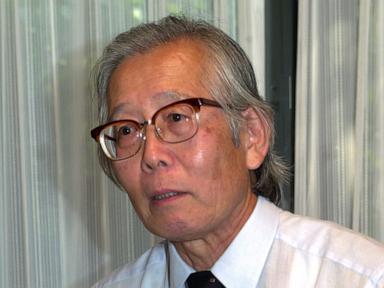
Hideki Shirakawa stood in his laboratory in Tokyo in 1967, staring at a mistake.
Science is often romanticized as a series of calculated steps, a steady climb up a mountain of logic. But the truth is messier. It smells like burnt toast and accidental spills. It looks like a graduate student misreading a manual, adding a thousand times more catalyst than intended to a routine mixture of acetylene gas.
Shirakawa had intended to create a silver-black powder. Instead, he pulled from his reaction vessel a thin, coppery film that looked remarkably like aluminum foil. It was pliable. It had a strange, metallic sheen. And it possessed a secret that would take more than a decade to fully unlock.
He did not know it yet, but he had just made electricity think.
Plastic is supposed to insulate. That is the foundational rule of the modern material world. We wrap our copper wires in PVC. We shield our fingers from burning electrical currents with Bakelite casings. Plastics block the flow of electrons, acting as silent, stubborn walls that keep electrical currents corralled where we want them.
Shirakawa's strange film refused to obey this rule.
When he and his colleagues later collaborated with visiting American chemist Alan MacDiarmid and physicist Alan Heeger, they discovered something astonishing. By exposing this shiny polymer film to iodine vapor—a process called doping—the material's electrical conductivity skyrocketed by a factor of ten million.
It was a contradiction. A plastic that conducted electricity.
To understand why this matters, imagine trying to build a city out of only stone. You can make walls, foundations, and roads. But try building a nervous system out of stone. Try making a fiber-optic cable, a flexible touchscreen, or a beating artificial heart muscle that communicates with organic tissue using electrical impulses. Stone cannot do it. Traditional metals can carry electricity, but they are rigid, heavy, and brittle. They crack under strain. They do not bend.
For decades, electronics meant silicon wafers and heavy copper wiring. It meant cold, hard, unyielding hardware.
Shirakawa’s accidental film changed the horizon. It offered a middle ground. It gave humanity a way to craft materials that possessed the mechanical flexibility of polymers combined with the electrical conductivity of metals.
When the news arrived in October 2000 that Shirakawa, along with MacDiarmid and Heeger, had been awarded the Nobel Prize in Chemistry, the scientific world paused to celebrate the quiet revolution of conductive polymers. The citation praised their work for launching an entire field of modern materials science.
Yet, like many foundational breakthroughs, the real story was not the prize. It was the quiet, invisible downstream effects that rippled outward into daily life long after the television cameras went home.
Consider what happens every time you pull a smartphone out of your pocket. Consider the organic light-emitting diode screen glowing softly against your thumb. Consider flexible solar panels rolling out across a roof like heavy canvas, or biodegradable sensors monitoring a patient's heartbeat through a patch of artificial skin. None of these technologies exist without the conceptual door that Shirakawa kicked open in the late sixties.
Hideki Shirakawa was not a man of grand proclamations. Colleagues remember him as remarkably modest, a gentle scholar who preferred the quiet hum of the laboratory to the loud theater of academic politics. He spent his career doing what true pioneers do: following a strange thread simply because it was there, refusing to throw away an anomaly just because it did not fit the textbook.
When Shirakawa passed away at the age of ninety, the world lost a quiet giant. Most people walking down the street will never recognize his name. They will never think of the Tokyo lab bench where a miscalculated drop of catalyst created a golden-brown film of polyacetylene.
They will simply tap a flexible screen, fold a newspaper-thin electronic display, or slip on a lightweight biomedical monitor, entirely unaware that they are living inside a reality that Hideki Shirakawa accidentally helped invent.
The lesson of his life is not about Nobel medals or grand design. It is about paying attention to the cracks in the expected outcome. It is about the courage to look at a ruined experiment, a strange anomaly, or a chemical mistake, and wonder what the universe is trying to tell you in the quiet space where the rules break down.


