Biosecurity headlines make people nervous for good reason. When news breaks that a researcher working inside a high-security pathogen facility has died from an unusual respiratory illness, the immediate reaction tends to skew toward panic. People picture containment breaches, airborne outbreaks, and cinematic worst-case scenarios.
Let's look at the actual details surrounding the incident at the State Research Center of Virology and Biotechnology, commonly known as the Vector institute in Siberia. A laboratory worker contracted pneumonia from an unidentified pathogen and passed away. Headlines spread fast, raising alarms about the safety protocols governing maximum-containment facilities studying dangerous biological agents.
Understanding what happened requires separating verified institutional reports from internet speculation. High-containment laboratories handle some of the most dangerous biological threats on earth. Accidents happen, but transparency matters just as much as containment.
Inside the Vector Institute and High Containment Security
The Vector institute sits just outside Novosibirsk in Siberia. It operates as one of the world's premier biological research centers. During the Soviet era, it served as a primary site for biological weapons development. Today, it functions as a civilian virology and biotechnology research facility. Along with the Centers for Disease Control and Prevention in Atlanta, Vector holds one of the only two official, authorized repositories of smallpox left in the world.
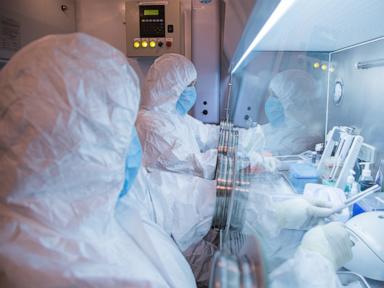
Working inside a Biosafety Level 4 facility means dealing with extreme isolation protocols. Researchers wear positive-pressure full-body suits supplied with breathing air via overhead hoses. Facilities use negative air pressure rooms so air flows inward, trapping airborne particles. Double-door autoclaves and chemical showers protect the outside world from whatever stays inside.
Yet, human error and biological unpredictability remain constant variables. Even with heavy filtration and rigid safety drills, laboratories remain workplaces populated by people. Equipment fails. Seals degrade. Accidents happen during sample extraction or animal handling.
The Incident and the Pneumonia Diagnosis
When reports emerged regarding a fatal case of pneumonia of unknown origin in a laboratory worker, the medical community paid close attention. Pneumonia itself is common. Bacterial, viral, and fungal agents cause millions of cases every year. However, pneumonia acquired inside a high-security research facility studying dangerous pathogens demands immediate epidemiological scrutiny.
The worker reportedly fell ill after working with biological samples. Initial medical evaluations could not immediately identify the specific causative agent. That ambiguity fueled public concern. When doctors cannot pinpoint a pathogen right away, fears of novel strains or accidental exposure escalate quickly.
Russian health authorities and institutional representatives stated that the worker's death did not pose a broader public health threat. They maintained that containment procedures prevented any dangerous agent from leaving the laboratory environment. Critics and independent observers, however, often question the speed and transparency of institutional disclosures during such events. Trust in official channels gets tested whenever high-consequence laboratories experience worker fatalities.
Why Pathogen Research Laboratories Face Scrutiny
Public anxiety about facilities like Vector isn't irrational. History shows that containment lapses do occur. From smallpox outbreaks in nineteenth-century London hospitals to accidental laboratory escapes of foot-and-mouth disease in Europe, high-security facilities carry inherent biological risks.
When research involves studying hemorrhagic fevers, hantaviruses, or modified respiratory pathogens, the margin for error shrinks to zero. A single mistake can compromise an entire facility. This reality drives ongoing debates among scientists, ethicists, and government regulators about gain-of-function research, dual-use capabilities, and the sheer number of high-containment labs operating globally.
Many experts argue that the benefits of studying lethal pathogens outweigh the risks. Vaccines, therapeutics, and diagnostic tools depend entirely on researchers understanding how these agents operate. Without active surveillance and laboratory analysis, public health systems remain blind to emerging zoonotic threats.
Other specialists question whether certain high-risk experiments belong in populated areas or whether international oversight needs stronger enforcement mechanisms. The World Health Organization and global biosafety networks constantly evaluate standards, but enforcement relies heavily on national governments complying with international safety norms.
Assessing the Real Risk After the Siberian Incident
Every time a laboratory worker falls ill, the global scientific community evaluates its safety manuals. Procedures get rewritten. Air handling systems undergo rigorous recertification. Training protocols become stricter.
The death at the Siberian institute highlights the silent hazards faced by laboratory technicians and researchers. They stand on the front lines of biological defense, handling agents that most people hope never to encounter.
Look past the sensationalized rumors. A worker died of pneumonia of an initial unknown cause inside a maximum-security facility. Investigations followed. Authorities claimed containment held. Whether those assurances satisfy public skepticism depends entirely on future transparency and independent verification standards within international biosecurity.
Keep an eye on how regulatory bodies update laboratory safety mandates in response to this case. Real progress in biosafety comes from acknowledging failures and closing gaps before the next unexpected pathogen emerges.