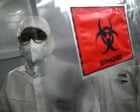
The threat of AI bioweapons is real, but it does not look like a rogue computer script magically printing a pandemic out of thin air. Biology is messy. Wet lab execution remains the hardest part of turning digital design into a functional pathogen.
I have spent decades covering both defense intelligence and life sciences startups. Every few years, a new technology arrives with breathless predictions that civilization faces an overnight existential threat. First it was automated gene synthesis. Then it was CRISPR home kits. Now biological foundation models sit at the center of that fear.
Podcasts and panels love dramatic soundbites about models designing novel toxins or immune-evading viruses in minutes. That framing sells attention. It also misses how biological systems behave once you step away from a GPU cluster and pick up a pipette.
To understand AI bioweapons honestly, we have to separate software capability from physical reality. A language or protein model can suggest sequence variations, predict folding patterns, or flag literature connections faster than a graduate student. Turning a digital sequence into viable biological material still requires physical reagents, specialized equipment, troubleshooting, and biological luck.
Why Digital Design Hits A Wet Lab Wall
Models write text and sequences. Cells do not read text.
In computational biology, a sequence that looks plausible on screen can fail immediately inside a living host or cell-free system. Proteins misfold. Metabolic pathways stall. Viral particles fail to assemble or lose infectivity when exposed to heat, drying, or shear stress.
Consider a hypothetical example to see where the bottleneck sits. Suppose an open-weights model generates a candidate protein sequence intended to alter how a molecule binds to a human receptor. Even if the in silico score looks high, a researcher still has to order synthetic DNA, clone or express the construct, verify expression, and test binding in a physical assay. Each stage introduces failure modes that software cannot simulate with complete fidelity.
Biological systems are governed by thermodynamic constraints, cellular regulation, and evolutionary trade-offs that pure statistical models only approximate.
This gap explains why seasoned virologists and biosecurity analysts often argue past one another. Computer scientists look at scaling laws and benchmark curves. Experimentalists look at contamination, failed transfections, and weeks lost when a protocol behaves differently on a humid Tuesday.
The Myth Of Frictionless Automation
Another common claim is that cloud labs and automated liquid handlers will erase human bottlenecks. Automation speeds up repetitive tasks. It does not eliminate error.
Automated workstations still require calibration, quality control, reagent stability, and human oversight. If an upstream step produces a weak yield or an unintended byproduct, running ten thousand plates faster just scales up a noisy experiment.
Real-world biological work is iterative. You tweak buffer conditions, re-check primers, troubleshoot why a control failed, and repeat. Calling that process effortless ignores decades of laboratory history.
Screening Gaps And The Dual-Use Dilemma
While Hollywood scenarios are overblown, genuine vulnerabilities exist around gene synthesis screening and access to powerful open models. Pretending there are no weak spots would be just as reckless as claiming a killer bug is one prompt away.
Commercial DNA synthesis providers have long used screening protocols to check orders against lists of regulated pathogens and toxins. Those checks work well against exact matches or close relatives of known agents. They face harder questions when sequences are heavily diverged, split across fragments, or designed to perform a function without matching a signature from a known threat.
| Bottleneck Layer | What Software Changes | What Still Blocks Bad Actors |
|---|---|---|
| Sequence Ideation | Speeds up literature synthesis and variant brainstorming | Cannot guarantee real-world viability or phenotype |
| DNA Acquisition | Helps optimize codon usage or fragment design | Provider screening, shipping controls, and cost |
| Wet Lab Execution | Suggests protocols or troubleshooting hypotheses | Physical skill, containment limits, and biological failure |
| Scale And Stability | Models some biophysical properties in silico | Environmental fragility, yield limits, and detection |
Open-weight biological models sharpen this dual-use dilemma. The same tools that help researchers design thermostable enzymes, engineer better vaccines, or map antimicrobial resistance can also lower technical barriers for harmful experimentation.
Closing open weights after release is impossible. Once model weights are public, copies spread across mirrors, researchers, and bad actors alike. Any durable safeguard has to focus on training-time risk evaluations, access controls before release, and physical checkpoint monitoring rather than wishful thinking.
Why Over-Classification Carries Its Own Cost
Heavy-handed restrictions create side effects that security hawks often underplay. Overly broad controls can slow legitimate academic research, push work into less transparent jurisdictions, or discourage scientists from sharing safety findings openly.
Biosecurity is not a single lock on a single door. It is a set of overlapping defenses across sequence screening, public health surveillance, diagnostics, and medical countermeasures.
If policy treats every protein design model like a turnkey weapon, defenders risk wasting energy chasing ghosts while ignoring everyday gaps in hospital surge capacity and early outbreak detection.
What Biosecurity Analysts Actually Worry About
Ask experienced biosecurity professionals what keeps them awake, and most will point to convergence rather than magic. AI does not replace biology; it accelerates adjacent steps in a chain.
One concern is information synthesis. A model can connect obscure findings across virology, immunology, and materials science in seconds, surfacing ideas that might otherwise take months of manual reading to assemble.
Another concern is lowering the floor for less experienced actors. Even if a bad actor still faces hard physical hurdles, software assistance can reduce trial-and-error during early planning or troubleshooting.
Public health readiness remains the decisive backstop. Faster diagnostic assays, wastewater monitoring, genomic surveillance, and platform vaccine technologies determine whether an unusual outbreak is spotted early or spreads quietly across borders.
Blind Spots In Threat Forecasting
Forecasting biological risk suffers from a structural bias. Analysts naturally focus on known pathogens and familiar threat playbooks because those are the easiest to catalog.
Nature remains the most prolific generator of surprises. Zoonotic spillover, drug-resistant bacteria, and novel environmental pathogens regularly challenge health systems without any human design at all.
When debates over AI bioweapons crowd out funding and attention for routine outbreak response, priorities get warped. Stopping a fast-moving biological event depends heavily on detection speed, clinical infrastructure, and rapid countermeasure manufacturing.
Practical Guardrails That Survive Contact With Reality
Effective governance starts with sequence screening standards that keep pace with synthetic biology rather than relying solely on static lists from twenty years ago. Industry consortia, governments, and synthesis providers have incentives to make screening thorough without grinding routine research to a halt.
Model developers should run rigorous pre-deployment evaluations focused on biological risk before releasing capable weights. Red-teaming biological capabilities requires domain specialists who know where models hallucinate plausible-sounding nonsense versus where they offer genuinely useful assistance.
Equally important is investing in biosurveillance and medical readiness. Strong detection networks and adaptable therapeutics shrink the window of vulnerability regardless of whether a threat originates in nature, an accidental lab leak, or deliberate misuse.
Audit your organization's biosecurity assumptions by separating sequence generation from physical lab execution, verifying synthesis screening coverage across suppliers, and funding early detection and response capabilities that work against both novel designs and natural outbreaks.


