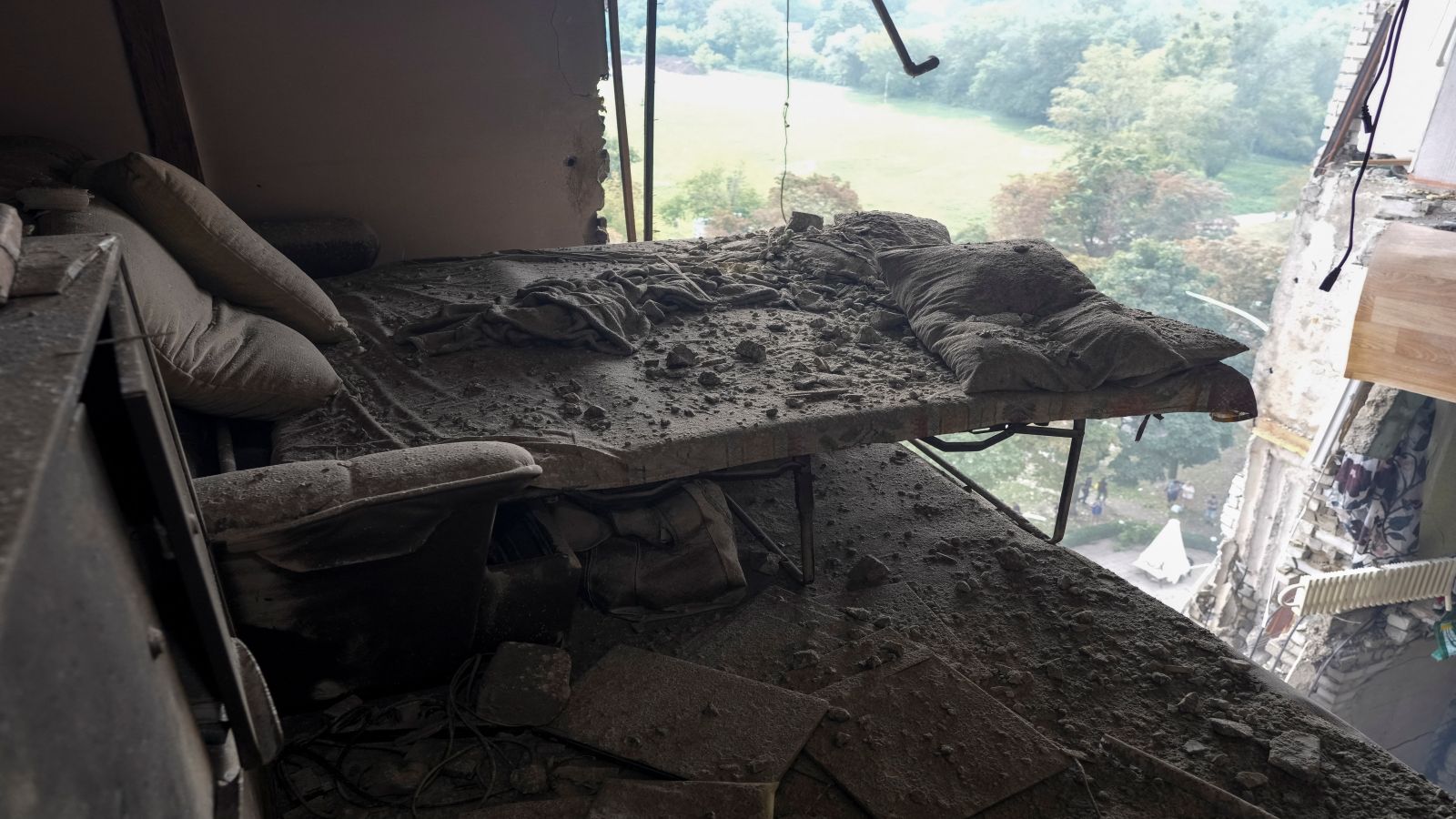
Every single time a missile slams into an apartment block in Kharkiv or Zaporizhzhia, the public script writes itself. The machinery of outrage spins up. Leaders stand before cameras, point to the smoking ruins, and demand more interceptors. Give us more Patriot batteries. Send more advanced radar. Plug the holes in the sky.
It is the laziest consensus in modern warfare. It sounds logical, moral, and urgent. It is also completely wrong.
I have spent years watching military analysts, defense bureaucrats, and politicians fall into the same intellectual trap. They treat aerial defense as a physics problem when it is actually an economic one. Pouring billions of dollars into high-end missile interceptors to chase an asymmetrical barrage of cheap drones and glide bombs is not a strategy. It is a slow-motion wealth transfer that burns through scarce Western stockpiles while leaving the structural vulnerabilities completely untouched.
Stop asking how many more interceptors Kyiv needs. The question itself is a trap.
The Economics of Attrition Always Win
Let us look at the raw math that no one in the mainstream press wants to talk about. A standard Patriot PAC-3 interceptor costs somewhere between three and four million dollars. Many of the drones and basic cruise missiles crashing into Ukrainian cities cost a fraction of that amount, sometimes running in the tens of thousands.
In what universe does trading a four-million-dollar asset to destroy a fifty-thousand-dollar asset work out over a multi-year war of attrition?
Military history is littered with the corpses of nations that tried to defend every square inch of territory with elite, exquisite systems. You run out of interceptors long before the adversary runs out of cheap projectiles. When defense costs fifty times more than offense, the defender goes bankrupt first.
The Western defense industrial base is not built for mass production. It is built for boutique, high-precision manufacturing. Lockheed Martin and Raytheon cannot churn out interceptors at the speed assembly lines in adversary states can pump out low-tech loitering munitions. Pretending that a few more battery shipments will fundamentally alter this equation is a delusion.
The Myth of Absolute Shielding
There is another comfortable lie we tell ourselves: that absolute air defense is possible if we just send enough hardware.
It is a fairy tale. Israel, with one of the densest, most integrated multi-layered air defense grids on the planet, featuring Iron Dome, David Sling, and Arrow systems, still absorbs hits during major salvos. Ukraine is vastly larger, with a front line stretching over a thousand kilometers. Covering every critical infrastructure node, power station, and population center with top-tier Western air defense is a physical impossibility.
When leaders condition public morale on the arrival of the next big anti-air system, they create a dangerous psychological dependency. They teach the population to believe that safety comes from a metal tube fired from a truck, rather than from strategic initiative.
Worse, it creates a defensive mindset. If your entire strategy is reactive—waiting to see where the next missile lands so you can shoot it down—you have already surrendered the initiative. You are playing goalie in a game where the opponent has an infinite number of pucks and you have a finite number of sticks.
Striking the Source Beats Catching the Arrow
If catching arrows out of the sky is a dead end, what is the alternative?
You stop the archer.
For the first two years of the conflict, Western partners tied one hand behind Ukraine's back by placing strict geographic limits on how donated weapons could be used. The rule was simple: you can shoot down incoming threats over your own territory, but you cannot touch the launch platforms, staging areas, or airfields across the border.
That policy was strategic malpractice. It forced a defensive crouch.
Imagine a scenario where a boxer is told he can block punches with his face all day, but he is forbidden from throwing a counterpunch at the opponent's jaw. That is the reality Kyiv has been forced to operate within.
Air defense is a band-aid. The real solution is suppression and destruction of the launch architecture at the source. That means long-range strike capabilities, permission to hit military targets inside adversary territory, and dismantling the supply chains that feed the bombardment before the birds ever leave the ground.
Shifting resources away from endless interceptor replenishment and toward domestic long-range drone production, electronic warfare jamming, and offensive counter-strike capabilities is the only path that breaks the cycle.
The Uncomfortable Truth About Scarcity
Admitting this truth requires confronting the limits of Western political will.
Supplying interceptors allows politicians in Washington and European capitals to look like they are taking decisive action without escalating the conflict. It is a politically safe way to look busy. Sending Patriot batteries feels tangible. It makes for good headlines.
Funding a massive, decentralized domestic cruise missile program inside Ukraine, or greenlighting cross-border strikes against logistics hubs, makes diplomats nervous. It forces uncomfortable conversations about escalation management.
So the status quo grinds on. Seventeen dead here. Twenty dead there. Another power plant smoking. Another batch of multi-million-dollar interceptors launched into the night sky to swat away cheap metal.
The most compassionate thing the West could do right now is stop lying about what air defense can achieve.
We need to stop measuring support in the number of defense batteries pledged and start measuring it in the ability to project power outward. Until the strategy shifts from catching falling metal to stopping the hands that throw it, the bloodshed will continue, fueled by a comforting illusion that the next shipment of Patriots will finally change the game.
It won't. Stop buying the lie.