Sirens wail. Teachers count heads. Children move quickly down concrete stairs into reinforced basements. This isn't a routine fire drill. It's the standard morning schedule for students across Ukraine as Moscow maintains its relentless aerial campaign.
When a Russian drone slammed directly into a school compound in Kyiv Oblast, the only reason it wasn't a mass casualty event was institutional muscle memory. Over 170 children and staff members were already locked safely behind concrete walls before the impact. They heard the warning early. They reacted faster.
The Anatomy of a Targeted Aerial Campaign
Moscow's ongoing strategy relies heavily on massed drone and missile waves aimed at breaking civilian morale and crippling infrastructure. These strikes rarely target military installations in a traditional tactical sense. Instead, urban centers like Kyiv face near-constant air raid alerts, forcing millions to live their lives in fragments between shelters and surface streets.
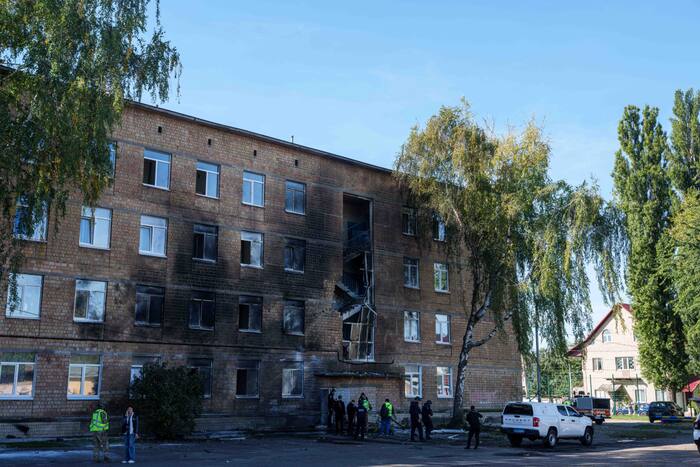
The attack on the regional school involved a mix of munitions designed to overwhelm local air defenses. When the strike hit, it shattered windows, damaged nearby civilian vehicles, and torched parts of the grounds. But the structural resilience of modern school basements across Ukraine has evolved out of grim necessity. Schools are no longer just places of learning. They are frontline civilian bunkers.
Why Civilian Infrastructure Remains on the Front Line
Why target educational facilities or residential districts? The logic behind Moscow's aerial escalation is straightforward psychological pressure. By turning everyday spaces into hazard zones, the campaign aims to exhaust the population's stamina.
Yet, the response on the ground tells a different story. Communities adapt with clinical precision. Parents pack go-bags alongside lunchboxes. Schools construct makeshift classrooms inside reinforced cellars complete with Wi-Fi, heating, and art supplies. Education continues, albeit underground.
The psychological toll on children growing up under constant threat is immeasurable, but panic is rarely visible in the hallways. Instead, you find a practiced calm that feels unnatural for students so young. They know the sound of an incoming loitering munition. They recognize the distant thud of air defense interceptors.
The Broader Cost of Escalation
As long-range strikes continue to trade blows across borders—with Ukrainian drone raids targeting Russian energy refineries and industrial plants—the civilian cost inside Ukrainian cities remains high. Every intercepted drone over Kyiv leaves a trail of falling shrapnel, and every missed interception threatens a schoolyard, a hospital, or an apartment block.
The physical damage to the Kyiv Oblast school was cleaned up within days, but the reality of the ongoing air campaign remains unchanged. Normal life in Ukraine isn't a return to peace. It's the ability to keep teaching math and reading while air defense systems fire overhead.
[A detailed breakdown of this event can be viewed in the Russian drone hits Kyiv school with 100 children inside report.]
This video provides on-the-ground footage and news reporting detailing how students and teachers safely evacuated into bomb shelters just moments before the drone impact.