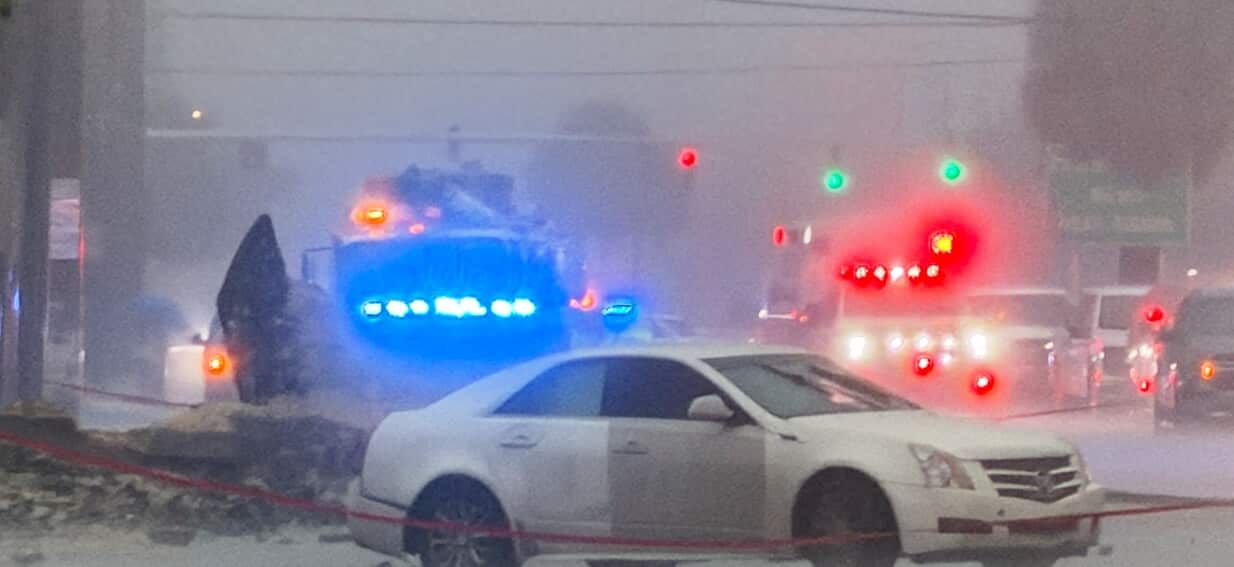
Nine people are dead after a small aircraft went down in a US residential neighborhood, turning a quiet block into a smoldering debris field and leaving federal investigators to sift through twisted aluminum for answers. While local officials routinely label these events unforeseeable tragedies, aviation safety data tells a much more uncomfortable story. Fatal crashes in populated areas are rarely random acts of bad luck; they are the predictable friction points where aging general aviation fleets, aggressive urban sprawl, and shrinking safety buffers collide directly over American homes.
Every time a light aircraft drops out of the sky onto a cul-de-sac, the immediate news cycle follows a rigid, predictable script. First come the shaken eyewitness accounts describing a sputtering engine or an unnatural banking angle. Next come the somber press briefings from local police chiefs and fire marshals praising first responders for containing the jet fuel fires before they consume an entire street. Within forty-eight hours, the National Transportation Safety Board arrives on scene, establishes a perimeter, and reminds the public that a preliminary report will take weeks while a final determination of probable cause could take up to two years. By the time that final report is published, the national media has moved on, leaving the neighborhood to rebuild in silence.
That cycle of collective amnesia obscures a structural crisis in American aviation. Commercial airlines in the United States have achieved an astonishing safety record over the past two decades, operating millions of flights with near-zero fatalities. General aviation—the vast ecosystem of private piston planes, corporate turboprops, and charter jets—operates under a completely different set of risks, maintenance standards, and pilot proficiency requirements. When something goes wrong at two thousand feet over a densely packed suburb, there is nowhere left to go.
The Anatomy of a Residential Impact
To understand why nine lives were lost in a single residential crash, you have to look at the physics of low-altitude emergencies and the geography of modern American suburbs. Most fatal neighborhood crashes do not happen during high-altitude cruise. They occur during the terminal phases of flight—takeoff, initial climb, or final approach—when an aircraft is low, slow, and operating near the edges of its aerodynamic envelope.
At five hundred or a thousand feet above the ground, a pilot experiencing a catastrophic mechanical failure or an abrupt loss of thrust has mere seconds to make a series of life-or-death calculations. A commercial airliner at thirty-five thousand feet can glide for over a hundred miles if both engines quit. A light twin-engine prop or a small business jet heavy with fuel on departure has the glide ratio of a falling brick.
Consider a hypothetical scenario that plays out in NTSB dockets year after year. Imagine a twin-engine aircraft departing a municipal airport on an overcast morning, loaded near its maximum gross weight with passengers and luggage. Seconds after lifting off the runway, one engine loses power due to fuel starvation or a mechanical fracture. If the pilot fails to immediately identify the dead engine, feather the propeller to reduce drag, and maintain minimum controllable airspeed, the asymmetrical thrust from the surviving engine will violently yaw the aircraft. Within heartbeats, the plane rolls inverted and plunges nose-first into whatever lies beyond the airport fence.
Years ago, what lay beyond that airport fence was almost always farmland, timber, or vacant industrial scrub. Today, it is townhomes, strip malls, and elementary schools.
Urban Encroachment and the Vanishing Buffer Zone
Municipal airports were intentionally built on the outskirts of cities during the mid-twentieth century. Planners specifically chose remote tracts of land to isolate noise and provide wide, empty safety corridors beneath the arrival and departure paths. Those buffers are largely gone.
Over the past forty years, relentless suburban expansion has swallowed regional airfields whole. Real estate developers, hungry for buildable acreage near major highway arteries, successfully lobbied city councils to rezone agricultural land directly adjacent to runways. Local governments, eager for the property tax revenue that new subdivisions generate, routinely approved high-density residential zoning right inside the runway protection zones—the exact trapezoidal areas off the ends of runways where federal guidelines explicitly warn that aircraft accidents are statistically most likely to occur.
The Federal Aviation Administration publishes strict recommendations regarding compatible land use around airports, urging municipalities to restrict residential construction under flight paths. The catch is that the FAA has almost zero legal authority to enforce those guidelines on local zoning boards. Unless an airport accepts specific federal grant money tied to land-use assurances, city planners can permit a developer to build single-family homes a few hundred yards from the threshold of an active runway.
Once those homes are occupied, a perverse secondary effect kicks in. New residents, understandably irritated by the roar of aircraft engines over their roofs at six in the morning, organize and pressure local airport authorities to implement noise abatement procedures. Pilots are then instructed to execute sharp, low-altitude turns immediately after takeoff or fly steeper, non-standard approaches to avoid flying directly over certain subdivisions. While these maneuvers keep decibel levels down on the ground, they force pilots to bank steeply at low speeds and low altitudes—a classic recipe for an aerodynamic stall and spin. In trying to quiet the skies for suburbanites, local politics often make the airspace measurably more dangerous.
The General Aviation Maintenance and Proficiency Gap
Geography only explains where a plane lands when it falls; it does not explain why it fell in the first place. While investigators will spend months examining the wreckage of this latest crash for signs of metal fatigue, avionics failure, or weather-related icing, industry veterans know that general aviation suffers from persistent vulnerabilities that commercial carriers eliminated long ago.
The average age of the active general aviation fleet in the United States is well over forty years old. Many of the piston-driven and turboprop aircraft crisscrossing suburban skies today were built during the Carter or Reagan administrations. While an older airframe is not inherently unsafe if maintained rigorously, the economics of private aircraft ownership create powerful incentives to cut corners.
Commercial airlines operate under Part 121 regulations, which mandate continuous airworthiness tracking, redundant systems, mandatory crew resource management training, and strict rest requirements. Private owners and certain charter operators fly under Part 91 or Part 135, where oversight is drastically lighter. A private owner flying their own aircraft is only legally required to have the plane inspected once a year by a certified mechanic. Between those annual inspections, deferred maintenance is common. A slightly rough magneto, an intermittent fuel gauge, or a sluggish actuator might be logged mentally as something to fix later rather than grounding the aircraft immediately.
Pilot proficiency represents an equally jagged fault line. Commercial airline captains fly hundreds of hours a year in standardized equipment, undergoing rigorous simulator checks every six months where they practice surviving engine fires, windshear, and electrical blackouts until their reactions are pure muscle memory. Conversely, a wealthy business owner or recreational pilot flying a high-performance plane might log fewer than fifty hours a year. Many lack access to full-motion simulators for their specific airframe, meaning the first time they ever experience an actual engine failure or severe instrument malfunction at low altitude is the day it happens with their family or colleagues strapped into the seats behind them.
The High-Performance Trap
The danger escalates sharply when pilots transition into complex, high-performance aircraft without adequate transition training. Light jets and pressurized twin-engine turboprops climb faster, cruise higher, and require exponentially faster cognitive processing than single-engine trainers. When things go wrong in a fast aircraft, the timeline compresses brutally. Checklists that take two minutes to run in a slow trainer must be executed in fifteen seconds in a high-performance twin before the aircraft departs controlled flight.
Investigators frequently uncover a grim pattern in multi-fatality general aviation crashes. The pilot was legally licensed and current on paper, the aircraft had a valid annual inspection, and the weather was flyable. Yet a subtle mechanical anomaly—a clogged fuel injector, a vacuum pump failure in instrument conditions, or an improperly latched baggage door—triggered a cascade of distraction. Fixated on troubleshooting the problem, the pilot stopped flying the airplane, allowed the airspeed to decay below critical thresholds, and lost control directly over a populated area.
What Happens When Nine Lives Vanish on the Ground and in the Air
The sheer number of fatalities in a single light-aircraft crash—nine dead—points to either a larger cabin-class aircraft, such as a commuter turboprop or light business jet carrying a full manifest, or a smaller plane that struck an occupied structure or vehicle on impact. When a plane hits a residential neighborhood, the lethality is compounded by post-impact fire.
Unlike automotive gasoline, aviation fuel—particularly Jet-A used in turbines and 100LL avgas used in piston engines—carries immense thermal energy. Wings on modern aircraft are essentially wet structural tanks, holding hundreds of gallons of fuel just inches away from hot exhaust manifolds and sparking electrical wiring. When the wing spars shear off against trees, utility poles, and rooflines, that fuel atomizes instantly into an explosive mist.
Even when occupants survive the initial deceleration forces of a crash, the resulting fireball leaves almost no window for rescue. Neighborhood streets, often narrow and lined with parked cars, create logistical nightmares for heavy fire apparatus trying to reach the impact zone. Live downed power lines energize metal debris and chain-link fences, forcing firefighters to wait for utility crews to cut grid power before they can safely advance hoses into the wreckage. For anyone trapped inside the fuselage or inside a struck home, those lost minutes are fatal.
The Systemic Blind Spots Regulators Refuse to Fix
Every major aviation disaster triggers calls for reform, yet the regulatory machinery governing non-commercial flight moves at a glacial pace. Even when the NTSB identifies a clear, recurring lethal hazard and issues formal safety recommendations, the FAA routinely stalls implementation for years, often bowing to intense lobbying from aviation trade groups who argue that mandatory upgrades are too expensive for private owners.
Consider the battle over angle-of-attack indicators and modern crash-resistant fuel systems. For decades, safety advocates have pushed for mandatory installation of simple, inexpensive sensors that give pilots an unmistakable visual and tactile warning before a wing stalls, regardless of weight or bank angle. Similarly, bladder-style crash-resistant fuel tanks—technology that the US military perfected during the Vietnam War to prevent post-crash fires in helicopters—are still missing from thousands of civilian aircraft flying over American cities today because retrofitting older airframes was deemed cost-prohibitive.
The lack of mandatory flight data recorders—the "black boxes" standard on all airliners—in smaller turbine and piston aircraft further slows down accountability. When a light aircraft disintegrates in a residential fire, investigators are often left piecing together the final seconds of flight from grainy doorbell camera footage, fragmented air traffic control radar pings, and scorched analog gauge needles. Without hard telemetry showing control surface positions, engine parameters, and cockpit audio, determining whether a crash was caused by a design flaw, a maintenance error, or pilot misjudgment becomes an exercise in forensic guesswork.
Living Under the Flight Path
For the millions of Americans living within five miles of a regional or municipal airport, the risk remains largely invisible until sirens shatter a quiet afternoon. Statistically, flying remains remarkably safe, and the odds of an aircraft crashing into any specific house are infinitesimally small. Statistics, however, offer zero comfort to the families burying nine victims, nor do they absolve the policy failures that place fragile aircraft and dense housing tracts on a collision course.
True prevention requires confronting uncomfortable truths that neither the aviation lobby nor local real estate developers want to discuss. Municipalities must stop treating runway protection zones as prime real estate opportunities and begin buying back high-risk buffer land. The FAA must enforce stricter recurrent training standards for pilots operating complex aircraft over congested areas, moving beyond check-the-box annual reviews toward rigorous scenario-based emergency testing. Until regulators prioritize the safety of people on the ground as fiercely as they protect the convenience of those in the air, quiet neighborhoods across the country will remain involuntary landing zones for preventable failures.