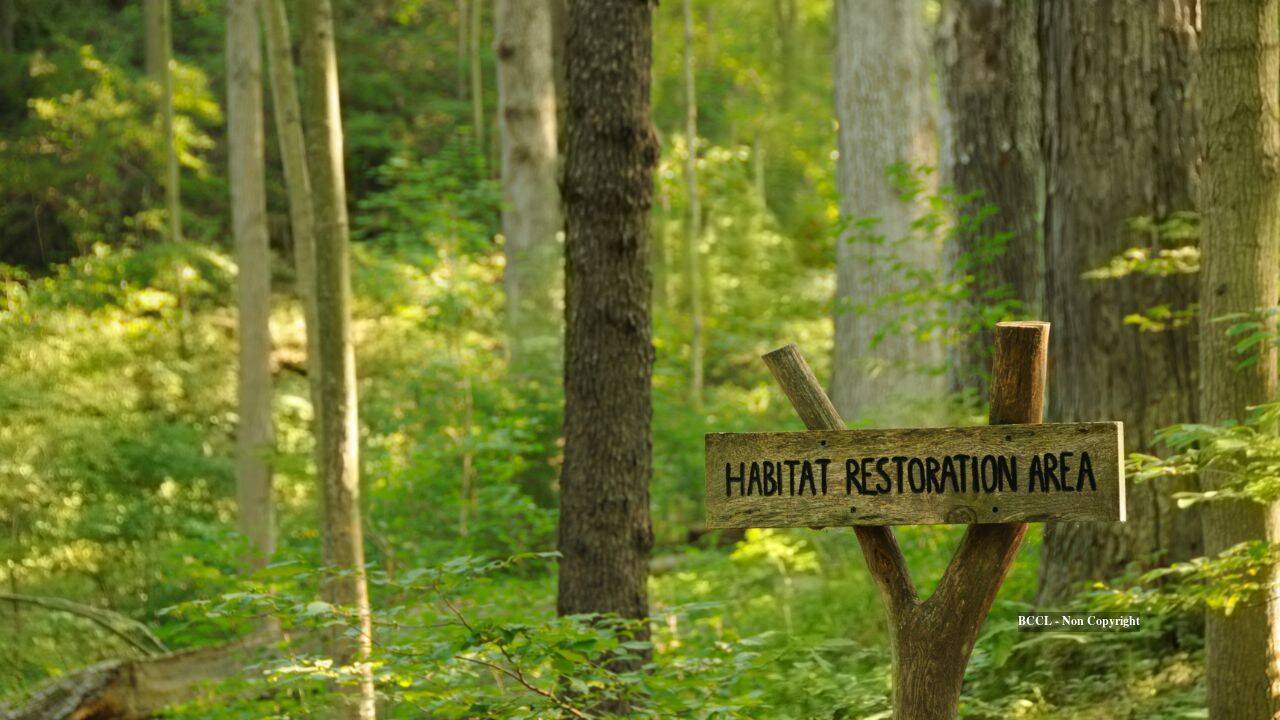
Urban ecological interventions routinely suffer from a fundamental failure of capital allocation. When an anonymous benefactor injects 1.8 million dollars into the municipal forest restoration initiatives of Cincinnati, public discourse typically defaults to superficial celebration of the headline figure. This obscures the structural mechanics required to translate philanthropic liquidity into measurable ecological yield. Ecological restoration in densely populated municipal boundaries is not merely a horticultural exercise; it is an infrastructure investment problem involving land-use economics, invasive species amortization, and canopy survival probability over multi-decade time horizons.
Analyzing this intervention requires dismantling the standard municipal narrative and examining the capital efficiency of urban forestry.
The Economic Architecture of Municipal Forest Restoration
Urban forests operate as critical municipal assets, delivering quantifiable ecosystem services such as stormwater mitigation, urban heat island mitigation, and particulate matter filtration. However, municipal balance sheets rarely account for the depreciation of natural assets. When capital enters an urban ecosystem, its deployment efficiency is dictated by three distinct variables.
The first variable is land acquisition and edge-effect mitigation. Urban forests are rarely contiguous wilderness blocks; they are fragmented patches bounded by impervious surfaces, residential parcels, and infrastructural rights-of-way. These fragmentation boundaries create severe edge effects, including elevated ambient temperatures, altered hydrology, and persistent vectors for invasive species infiltration. Capital allocation that ignores edge-to-core ratios achieves low ecological yield per dollar spent.
The second variable is the species replacement cost function. Municipal canopies degraded by invasive species such as Amur honeysuckle or tree-of-heaven require intensive mechanical and chemical removal before native succession can occur. The cost of initial eradication often eclipses the procurement cost of native saplings by a factor of ten. A capital infusion must be front-loaded toward site preparation rather than visible planting milestones to prevent high early mortality rates among newly introduced flora.
The third variable is the maintenance expenditure decay curve. Planting a tree represents less than fifteen percent of its total lifecycle cost. Without sustained post-planting interventions—including structural pruning, moisture management during extended drought periods, and continuous invasive species suppression—canopy survival rates plummet below statutory thresholds within five years. Philanthropic grants that fail to endow long-term maintenance liabilities effectively transfer unfunded future liabilities to municipal operating budgets.
Quantifying Ecological Yield Versus Capital Expenditure
To evaluate the efficiency of a major urban forestry restoration project, decision-makers must deploy rigorous cost-benefit frameworks that map monetary inputs to environmental outputs.
Capital deployment follows a strict temporal hierarchy. In year one, expenditure is heavily skewed toward capital-intensive site remediation. This involves removing non-native biomass, stabilizing eroding topography, and installing temporary protective fencing to deter urban herbivores like white-tailed deer, which can devastate regeneration layers.
Capital Phase      | Primary Expenditure Focus       | Ecological Objective
-------------------|---------------------------------|-----------------------------------
Phase I (Years 1-2)| Invasive Removal & Soil Prep    | Eradicate competition vectors
Phase II (Years 3-5)| Native Planting & Establishment | Secure high early-stage survival
Phase III (Years 6+)| Structural Maintenance & Monitoring | Transition to self-sustaining canopy
Measuring success by the sheer count of planted stems is an analytical error. High-density planting without adequate spatial spacing induces intraspecific competition, stunting overall biomass accumulation and reducing structural diversity. Effective ecological restoration optimizes for leaf area index, vertical stratification, and soil microbiome recovery.
Structural Bottlenecks in Public-Private Conservation Funding
Philanthropic injections into public municipal domains create unique governance friction. Private donors often exhibit preference for tangible, visible assets over unglamorous infrastructural maintenance. This creates a structural misalignment where funds are easily secured for high-visibility planting campaigns but remain scarce for foundational workforce development, long-term monitoring technologies, or permanent land-banking acquisitions.
Furthermore, municipal agencies operate under bureaucratic procurement cycles that frequently conflict with ecological urgency. Invasive species propagation operates on biological timelines that outpace municipal RFP processes. When capital allocation is delayed by administrative friction, invasive species re-establish dominance, neutralizing the initial capital investment.
Overcoming these structural bottlenecks requires establishing dedicated trust structures or endowment models where the principal is invested to generate a reliable operational yield for ongoing stewardship, insulating the project from municipal budget fluctuations and political cycles.
Strategic Operational Recommendations for Long-Term Canopy Viability
Maximizing the return on investment for municipal forest restoration requires executing a sequence of disciplined operational protocols.
First, institute survival-linked contractor agreements. Municipalities should structure vendor compensation not upon the initial delivery and planting of saplings, but upon verified canopy survival at twenty-four, forty-eight, and seventy-two-month intervals. This shifts the risk of early-stage mortality back to the executing contractors and enforces rigorous initial maintenance standards.
Second, deploy spatial prioritization algorithms. Capital should not be distributed evenly across all municipal green spaces. Instead, deployment must be concentrated in high-priority urban heat islands and vulnerable stormwater catchment zones where the marginal benefit of canopy cover yields the highest reduction in municipal infrastructure strain.
Third, establish an open-access monitoring framework utilizing remote sensing and LiDAR data to track canopy volume changes and biomass accumulation over decadal scales. Transparency in ecological performance ensures that philanthropic confidence is maintained, paving the way for secondary capital infusions as the project matures.