Most Amazon Prime Big Deal Days toys promoted as can't-miss steals are inventory clearance traps dressed up in holiday urgency. When Amazon ran its October 6–7, 2026 fall event, listicles churned out twelve-item shopping carts filled with steep percentage slashes, novelty tie-ins, and screen-free fillers. Underneath those red badges sits a brutal retail mechanism: manufacturers and marketplaces use fall deal events to offload slow-moving SKUs, test pricing elasticity ahead of Black Friday, and lock parents into gift closets months before December.
The Anatomy of a Fall Deal Cart
Standard shopping roundups treat every markdown as an equal win. A 30% discount on a licensed playset gets the same breathless enthusiasm as a modest price cut on a modular building kit. That flattening hides how toy pricing actually works.
Look at what showed up across fall 2026 deal coverage. Licensed movie and show tie-ins—from Toy Story 5 and Paw Patrol: The Dino Movie to KPop Demon Hunters—moved fast because studio marketing did the heavy lifting. Meanwhile, evergreen staples like LEGO, Melissa & Doug, Magna-Tiles, and classic family card and board games leaned on brand gravity.
The difference between a smart buy and a sucker bet comes down to unit economics and replay durability. A licensed plastic playset with fifteen loose pieces often carries an inflated list price solely to make a 30% or 40% markdown look heroic. Consider a hypothetical example: a studio-branded vehicle set lists at $69.99, drops to $48.99 during October Prime Big Deal Days, and then sits at $49.99 through Cyber Monday. The shopper feels clever; the brand clears shelf space before newer waves arrive.
A steep percentage off a list price nobody paid last week is marketing theater, not consumer surplus.
Evergreen systems behave differently. A compact LEGO botanical build, a wooden Melissa & Doug barn, or a storage-tin card game like Phase 10 rarely needs artificial list-price inflation to justify its spot in a closet. Even when the discount is smaller—say, 15% to 22% rather than 40%—the cost per hour of actual play drops dramatically.
Why October Is a Trap for Early Gift Buyers
Retail calendars have trained parents to treat October as the starting gun for holiday gifting. That pressure is entirely manufactured.
When Amazon staged Prime Big Deal Days on October 6–7, 2026, the pitch was simple: lock in low prices before holiday stockouts hit. In reality, October is an inventory-balancing window. Major toy makers ship initial holiday allocations in late summer, watch sell-through in September, and push selective promotional allowances into October to measure demand before committing to November replenishment.
Three hidden costs hit buyers who clear their lists in October:
- Taste drift: A six-year-old obsessed with a summer theatrical release in October can abandon that franchise by Christmas morning once new streaming drops or schoolyard trends shift.
- Return window compression: Buying in early October can push gift opening past standard 30-day return windows unless extended holiday return policies apply to every third-party seller in the cart.
- Duplicate inventory: Buying blind boxes, plush companions, or small novelty kits early often leads to redundant clutter when relatives buy from the same viral lists later in November.
None of this means fall deal events have zero value. It means treating October as a research lab—watching which SKUs actually hold price and which ones collapse—beats treating it as a finish line.
The Four Toy Categories That Actually Earn Their Keep
Strip away the hype and four distinct categories consistently justify attention during major Amazon sales events, whether in October or November.
| Category | What Works | What to Skip | Real Cost Signal |
|---|---|---|---|
| Open-Ended Construction | Modular bricks, magnetic tiles, wooden blocks | Single-use licensed vehicles with rigid molds | High piece-to-play ratio; easy to expand across birthdays |
| Screen-Free Tabletop | Compact card games, classic logic games, puzzles | Oversized board games with fragile cardboard inserts | Small footprint; plays across multiple age brackets |
| Tactile Art & Sensory | Washable paint sets, modeling compounds, craft kits | Overpriced novelty slime packs with tiny mix-ins | Consumable value is clear upfront; low storage burden |
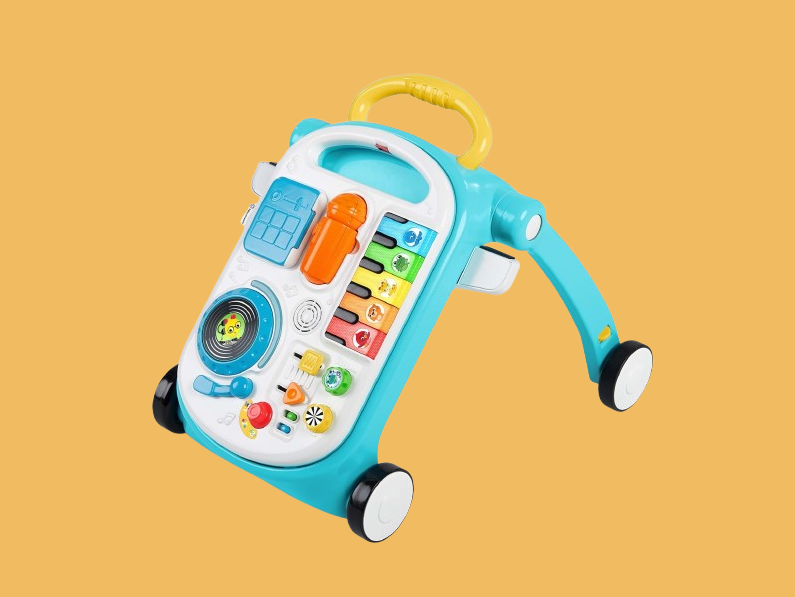
| Early Developmental Gear | Multi-stage walkers, washable plush, basic sorters | Electronic toys with non-removable batteries or loud loops | Look for volume controls and machine-washable fabrics |
Notice what is missing from the winners column: hyper-specific single-episode tie-ins. When a toy depends on a child remembering a secondary character from a fall movie, its shelf life is borrowed. When a toy relies on combinatorial play—like snapping bricks together, sorting colors, or trading cards in a tin—the child supplies the narrative.
The Counter-Argument for Licensed Tie-Ins
Fairness requires admitting when licensed toys win. A child who struggles to sit still for open-ended blocks will sometimes spend an hour recreating a favorite scene from Mario or Toy Story 5. Motivation is half of play. If a specific character unlocks reluctant engagement, paying a modest sale price makes sense. The mistake is buying three different tie-in SKUs from the same property just because the algorithm puts them in the same carousel.
How Third-Party Listings Distort Deal Comparisons
Anyone scanning Amazon toy deals during a major event runs into a structural quirk: the same toy often appears under multiple listings with different sellers, bundled accessories, or slightly altered model numbers.
A parent looking for a wooden barn or a puzzle set sees a headline discount on one listing while a nearly identical SKU sits next to it with a smaller markdown. Price-tracking tools frequently fail on these variants because the ASIN changes when a seller adds a sticker sheet or alters packaging.
Before clicking buy on any headline markdown, check three details on the product page:
- Ships and sold by line: First-party Amazon fulfillment simplifies replacements if pieces arrive missing or crushed.
- Price history over 90 days: A 35% banner means very little if the item hovered near the sale price for most of the quarter.
- Age grading versus developmental fit: Box ages reflect safety testing and choke-hazard rules, not whether a child has the fine-motor patience for 200 small pieces.
What Smart Buyers Do Instead
The best way to approach Amazon Prime Big Deal Days toys is to invert the standard gift-guide routine. Instead of starting with a list of twelve discounted items and trying to match kids to them, start with a hard cap on closet space and a short list of evergreen categories.
Watch how prices move across the fall cycle. Keep a tight watchlist of open-ended kits, family card games, and durable art supplies. Buy only when the discount is genuine, the seller is reputable, and the toy survives a simple test: if the movie or show vanished tomorrow, would the kid still touch it on a rainy Tuesday?
Pick two evergreen staples, skip the novelty filler, and let the clearance racks sort themselves out.