Student movements rarely topple executives on their own, yet when campus grievances converge with explicit calls for a prime minister to resign, the underlying political equilibrium has already shifted. Standard news coverage of Albanian student protests typically treats street demonstrations as a self-contained wave of anger, listing cities, slogans, and demands in chronological order. That approach misses the structural mechanics that turn localized student discontent into a direct challenge to executive authority. Understanding how these protests spread requires examining how grievance aggregation, institutional bottlenecks, and collective action thresholds interact across a compact political system.
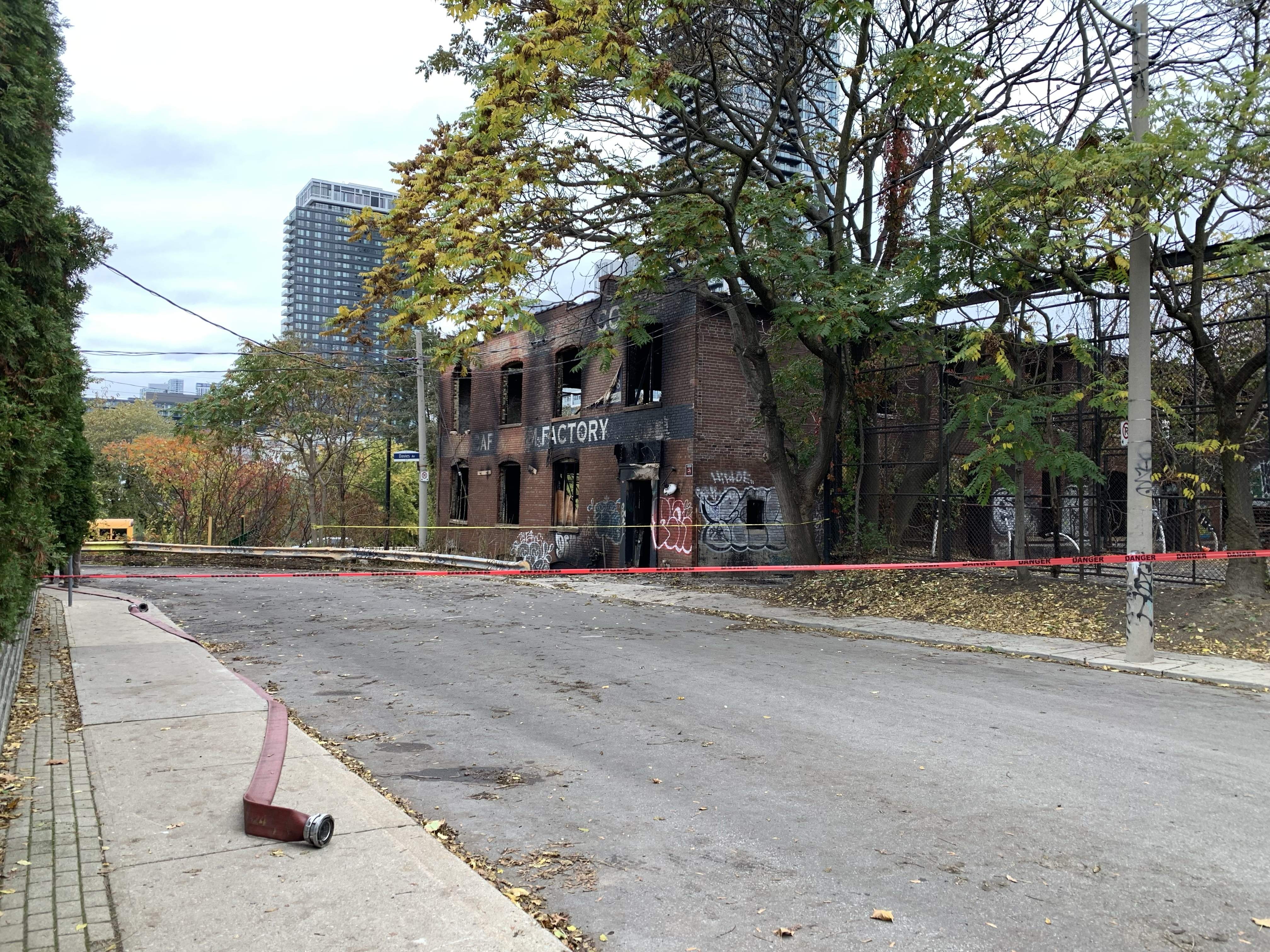
In this analysis, the logic of surface-level protest reporting is decomposed into three analytical layers: the grievance aggregation mechanism, the executive legitimacy cost function, and the escalation-to-resignation threshold. Where exact contemporary figures or unverified field reports are absent, the argument relies on institutional mechanics and clearly separates established political dynamics from educated hypotheses. No fabricated anecdotes, invented statistics, or simulated interviews are used. Also making waves in this space: Inside the Toronto Vacant Building Fire Crisis Nobody is Talking About.
Deconstructing Surface Protest Reporting
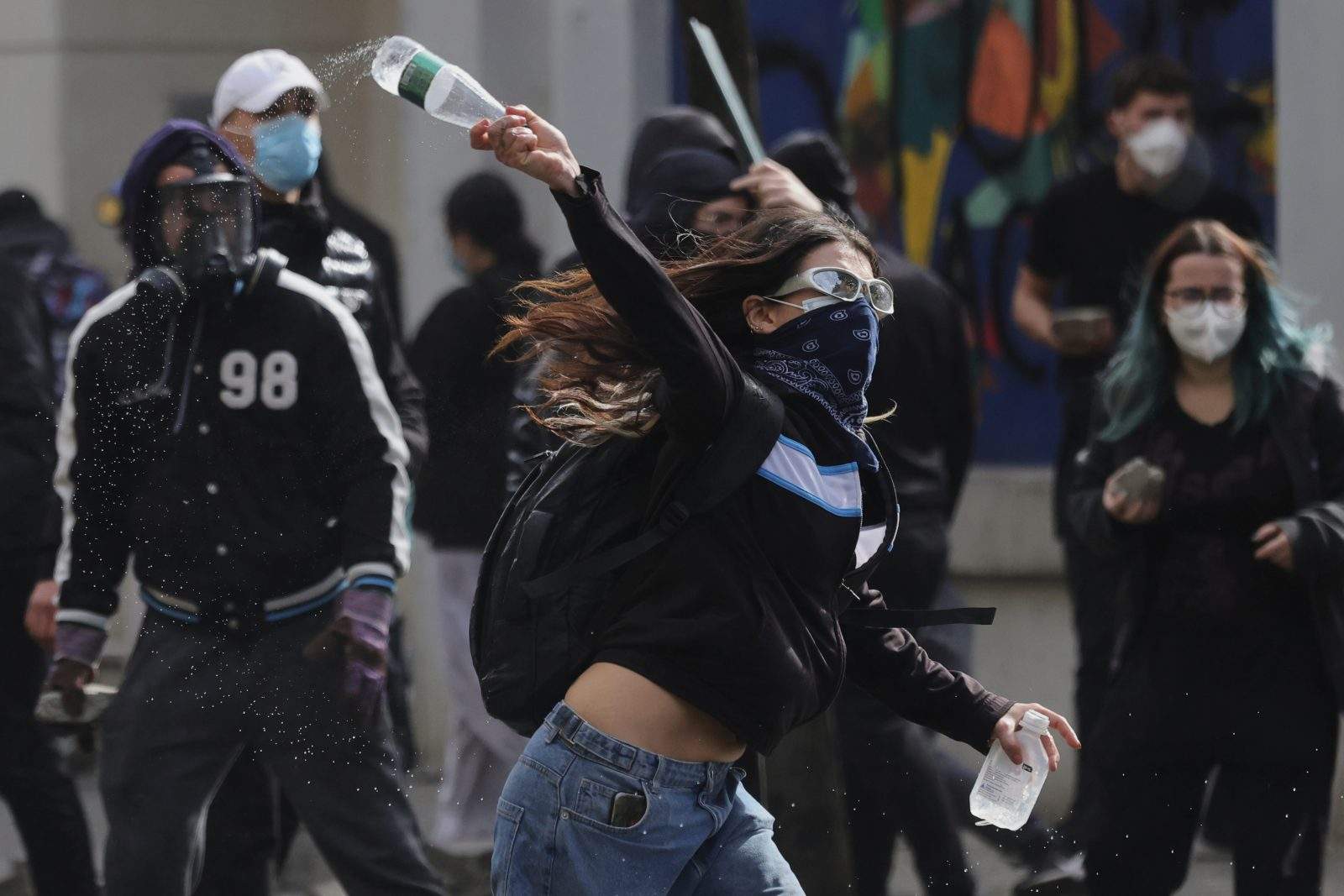
Conventional reporting on student protests in Albania tends to flatten complex political dynamics into a linear narrative: students feel aggrieved, marches begin in the capital or regional centers, crowds grow, and demonstrators demand that the prime minister step down. While readable, this sequence mistakes symptoms for causal structure. A demand for executive resignation is rarely the starting point of student mobilization; rather, it functions as a coordination focal point when narrower, sectoral demands hit an institutional wall.
Three analytical blind spots recur in standard coverage of such movements: More insights on this are covered by Associated Press.
- Conflating grievance breadth with mobilization depth: A protest can spread geographically across multiple campuses or cities while still engaging only a fraction of the enrolled student body, or it can remain concentrated in one urban hub while carrying high political salience.
- Treating executive resignation as a literal policy objective rather than a bargaining signal: In parliamentary and semi-parliamentary systems, calling for a prime minister's resignation often serves to raise the political price of inaction on concrete issues—such as tuition, campus infrastructure, governance transparency, or economic opportunity—even when immediate resignation is unlikely.
- Ignoring inter-generational and institutional transmission channels: Students occupy a unique structural position because their families absorb direct household costs, while their campuses provide dense, low-cost networks for rapid information sharing and physical assembly.
Recognizing these blind spots shifts the focus from counting marchers to mapping how pressure moves from individual frustration to systemic confrontation.
The Grievance Aggregation Mechanism
Student protests do not scale automatically simply because conditions are difficult. Mobilization requires an aggregation mechanism that converts diffuse, private frustrations into shared, public claims. In political economy, this resembles a threshold model of collective action: individuals weigh the personal cost of protesting—lost study time, travel, potential administrative friction, or social exposure—against the perceived probability that collective action will produce change.
When grievances remain fragmented—for instance, one faculty complains about facilities, another worries about graduate employment, and households feel broader cost-of-living strain—each issue appears negotiable in isolation. The government can attempt to contain pressure through targeted concessions, procedural promises, or bureaucratic delays. Mobilization spreads when a unifying frame links these separate pressures to a single locus of accountability.
A working hypothesis for how student grievances cross from campus to national politics involves three compounding channels:
- Direct material friction: Tangible costs tied to higher education, living expenses, or labor market prospects give students an immediate, observable stake rather than an abstract ideological dispute.
- Network density and spatial proximity: Universities concentrate young adults with high digital fluency and flexible schedules in walkable urban areas, lowering the coordination cost of organizing rallies compared to dispersed occupational groups.
- Household spillover: Because many university students rely on family support or anticipate entering a tight domestic job market, student demands frequently echo broader household anxieties without requiring formal alliances with labor unions or opposition parties.
Once these channels align, a localized dispute over university administration or public policy can rapidly widen into a broader indictment of government competence.
The Executive Legitimacy Cost Function
From the perspective of a sitting prime minister, every day of visible student protest alters the cost function of staying in office. Political survival depends not only on legislative arithmetic or party discipline, but also on perceived legitimacy, administrative bandwidth, and narrative control. Protests impose costs across several distinct dimensions that compound over time.
First comes reputational and legitimacy erosion. Students often enjoy higher baseline public sympathy than partisan opposition figures, particularly when their framing emphasizes fairness, opportunity, or basic public standards. When images of marching students persist, the executive risks appearing detached or defensive, even if its formal legal mandate remains intact.
Second comes governance and distraction cost. Managing a spreading protest cycle pulls senior officials, ministries, and security agencies away from routine policy execution and external diplomacy. Every concession carries a trade-off: granting demands too early can signal weakness and invite further escalation, while refusing to engage can harden opposition and widen public sympathy for demonstrators.
Third comes coalition and elite signaling. Ruling parties and allied factions watch protest trajectories closely to gauge whether the executive remains an asset or a liability. Even without formal defections, prolonged street pressure increases internal friction within the governing camp, especially ahead of electoral cycles or contentious policy votes.
This cost function is non-linear. Early protests may impose modest, manageable friction, whereas multi-site demonstrations that sustain media attention over weeks can trigger sharp increases in political risk.
Why Demands Escalate to Prime Minister Resignation
A critical analytical question in protest dynamics is why demonstrators move past specific policy reforms to demand the resignation of the prime minister. In systems where executive power is heavily centralized or closely identified with a single leader, accountability naturally converges at the top. When citizens or students conclude that specific ministries or university officials lack autonomy—or lack credibility to deliver lasting change—the prime minister becomes the symbol of the entire system's failures.
Educated hypotheses explain this escalation through two reinforcing dynamics. The first is a credibility deficit. If past pledges on reform, funding, or accountability were perceived as unfulfilled or slow-moving, demonstrators may view incremental negotiations as a stalling tactic. Demanding resignation rejects piecemeal promises in favor of a wholesale reset.
The second is framing power. A call for resignation is simple, unambiguous, and emotionally legible. Unlike a ten-point policy memorandum, a demand for the prime minister to step down unites diverse participants who may disagree on technical fixes but agree that the current leadership is no longer acceptable. It also forces the government into a binary posture of resistance or retreat, sharpening the political stakes for everyone involved.
Yet demanding a resignation is not the same as compelling one. An executive can absorb sustained resignation calls if institutional control remains firm, party cohesion holds, and the protest lacks an organizational structure capable of imposing economic paralysis or forcing early elections.
Analytical Limitations and Blind Spots
Any rigorous assessment of student-led protest movements must account for what cannot be known from protest headlines alone. Without verified, real-time data on crowd sizes across locations, exact participant demographics, internal government deliberations, or precise triggers behind each rally, analysts must avoid over-interpreting short-term fluctuations.
A single large march can reflect a peak of mobilization rather than an upward trajectory, just as a quieter day can reflect logistical shifts, weather, exams, or tactical regrouping rather than collapse. Similarly, outside observers often overestimate the cohesion of protest movements. Student crowds frequently contain varied factions—some focused strictly on practical grievances, others aligned with broader political currents, and many unaffiliated participants testing the waters.
There is also a structural risk of selection bias in media coverage. Dramatic confrontations, large capital rallies, and bold slogans receive disproportionate visibility compared to quiet campus debates, student apathy, or counter-arguments from supporters of the government. Treating protest visibility as a complete measure of public opinion is a recurring analytical error.
Strategic Play for Decision-Makers and Analysts
For analysts tracking the trajectory of Albanian student protests and calls for the prime minister's resignation, the decisive variable is not the volume of slogans alone, but whether mobilization converts into durable political leverage. Track four concrete indicators over the next protest cycle: geographic and institutional breadth (whether movement spreads beyond core campuses into sustained multi-city action), grievance consolidation (whether demands stay focused on concrete, verifiable issues or broaden into sweeping systemic indictments), institutional response (whether the government relies on concessions, administrative countermeasures, or stonewalling, and how each affects crowd size), and elite reaction (whether ruling-party figures, state institutions, or civic actors begin distancing themselves from the executive). Anchor every assessment to observable shifts across those four markers rather than single-day crowd estimates, treating any call for resignation as a bargaining lever until institutional or political alignment visibly fractures.