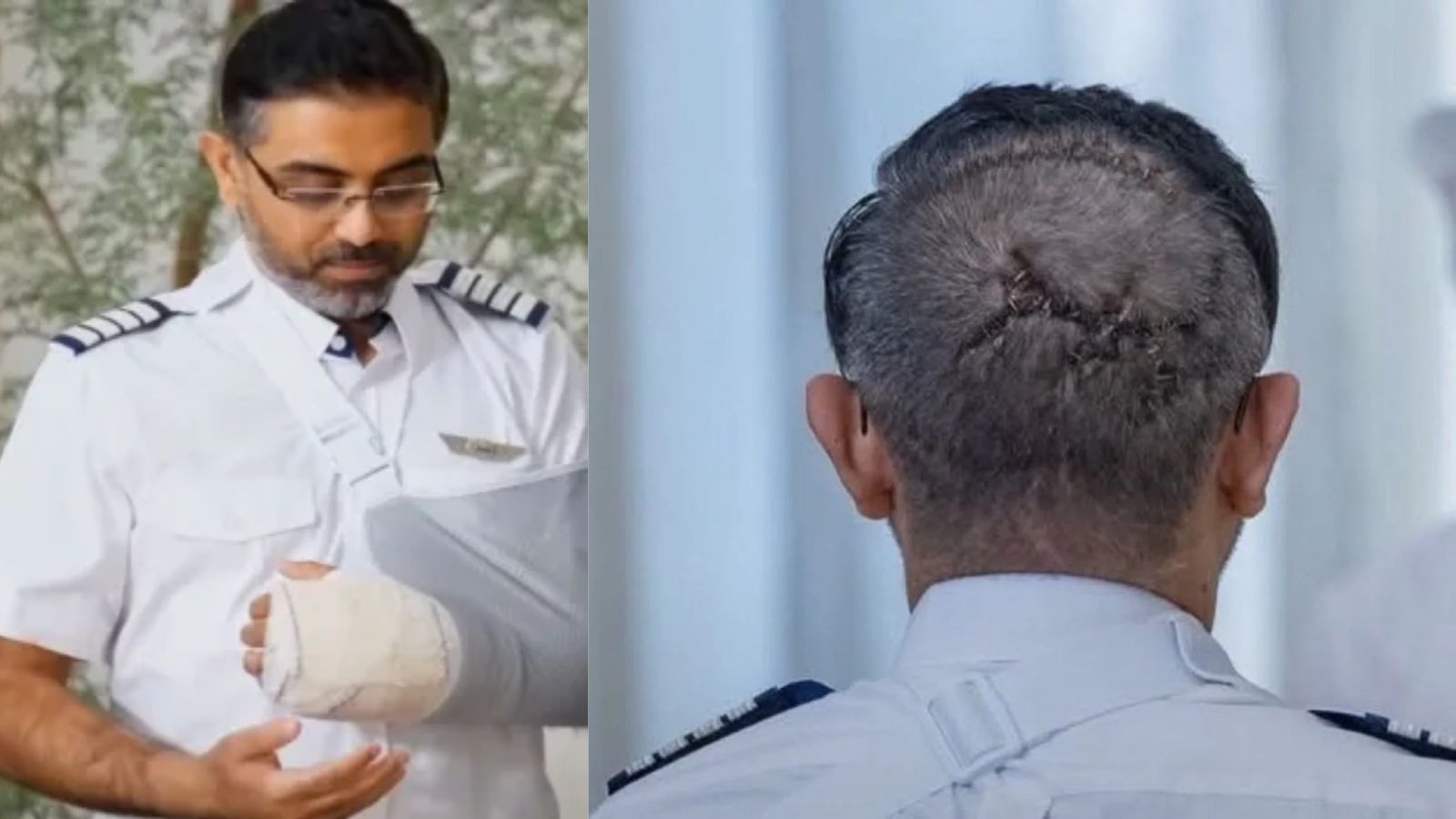
Viral aviation news stories routinely misdiagnose operational reality by prioritizing visual shock over regulatory mechanics. When images circulate of a commercial pilot operating with visible cranial sutures—such as the widely shared report involving flydubai pilot Smit Machchhar in the United Arab Emirates—public commentary immediately fractures into speculation regarding passenger safety and airline oversight. In commercial aviation, visible medical artifacts do not equate to operational impairment; rather, they represent the endpoint of a rigid, multi-layered aeromedical certification pipeline governed by international civil aviation authorities. Understanding how an aviator returns to the flight deck after cranial trauma or surgery requires mapping the exact regulatory thresholds, physiological risk assessments, and corporate crisis-communication dynamics that dictate modern airline operations.
The Regulatory Architecture of Aeromedical Clearance
Commercial pilots operate under some of the strictest medical surveillance frameworks in global industry. In the United Arab Emirates, flight crew licensing and medical fitness fall under the jurisdiction of the General Civil Aviation Authority (GCAA), which aligns closely with International Civil Aviation Organization (ICAO) Annex 1 standards. Any commercial airline pilot must hold an active Class 1 Medical Certificate. The core operational mechanism of Class 1 certification is not the absence of past injury, but the quantified probability of sudden incapacitation in flight.
Aeromedical examiners (AMEs) evaluate pilots using the "1% Rule," a foundational risk-management heuristic in aviation medicine. Under this model, a pilot is deemed fit for multi-crew commercial operations only if their annual risk of sudden, incapacitating medical failure does not exceed 1% per year—a threshold roughly equivalent to the baseline cardiovascular risk of a healthy adult male in his late fifties.
When a pilot sustains a laceration or undergoes a minor dermatological procedure requiring scalp sutures, the injury itself is classified as superficial soft-tissue trauma. Soft-tissue wounds do not inherently degrade neurological function, spatial orientation, or cognitive processing. However, the presence of stitches triggers a mandatory reporting and evaluation protocol before the pilot can resume active duty.
The Three Pillars of Post-Trauma Flight Clearance
To transition from a treated injury back to the left or right seat of a Boeing 737, a pilot must clear three sequential operational gates:
- Etiological Verification (Cause of Injury): The AME must confirm the origin of the laceration. A superficial impact—such as striking one's head on an overhead locker, a domestic slip, or a minor surgical excision—carries a vastly different risk profile than a laceration resulting from syncope (fainting), a seizure, or high-velocity blunt trauma. If the underlying mechanism involves loss of consciousness, the pilot faces immediate grounding and an exhaustive neurological workup, including electroencephalograms (EEGs) and magnetic resonance imaging (MRI), regardless of how minor the external stitches appear.
- Pharmacological Washout: Pain management following sutures often involves analgesics, local anesthetics, or prophylactic antibiotics. Aviation regulations enforce strict zero-tolerance policies regarding sedating medications, opioids, and certain non-steroidal anti-inflammatory drugs (NSAIDs) that carry side effects like dizziness or visual disturbances. Clearance requires documentation that the pilot has completed the medication course and passed a sufficient washout period—typically five half-lives of the administered drug—to guarantee zero residual cognitive impairment.
- Equipment Interface and Ergonomic Compatibility: In the cockpit, a pilot must wear a communication headset for hours at a time, and in emergency decompression scenarios, must don an oxygen mask within five seconds. If cranial sutures are positioned directly beneath the headset clamping band or the harness straps of a quick-donning oxygen mask, mechanical pressure can cause acute pain, bleeding, or distraction during critical flight phases. An AME physically verifies that standard flight deck equipment does not compromise wound integrity.
Once these three criteria are satisfied and documented in the pilot's medical file, the GCAA-authorized examiner issues a fit-to-fly clearance. At that stage, the visible stitches are medically irrelevant to flight safety.
The Asymmetry of Visual Risk Perception
The virality of the flydubai incident demonstrates a persistent cognitive bias in public risk assessment: the substitution of visual salience for statistical probability. Passengers and social media users evaluate safety through immediate, tangible cues. A visible suture on a pilot's scalp triggers an evolutionary threat response, creating an intuitive assumption of fragility or ongoing trauma.
Conversely, genuine threats to flight safety—such as acute crew fatigue, unrecorded spatial disorientation, or latent cardiovascular disease—are entirely invisible to the passenger standing at the boarding door. A pilot suffering from severe sleep deprivation appears completely normal in uniform, yet exhibits cognitive degradation equivalent to a blood alcohol concentration of 0.08%. A pilot with neatly closed, cleared scalp sutures presents zero cognitive deficit, yet generates intense public anxiety.
This perception gap creates a structural vulnerability for carriers operating high-frequency, short-to-medium-haul networks like flydubai. Operating out of Dubai International Airport (DXB), the carrier functions as a high-utilization point-to-point and feeder airline connecting South Asia, the Middle East, Europe, and Africa. Its workforce is heavily expatriate, with Indian nationals representing a substantial percentage of both flight crew and passenger demographics. When an image of an Indian pilot with visible stitches circulates within expatriate social networks, the story bridges two distinct media ecosystems: aviation enthusiasts and regional diaspora news outlets.
Deconstructing the Information Cascade
The trajectory of this specific story from an isolated visual observation to a trending news item follows a predictable four-stage information cascade:
- Stage 1: Contextual Stripping. A photograph or brief video clip is captured, usually during boarding or disembarkation when the cockpit door is open, or in a public terminal area. The visual is uploaded to social media stripped of all medical, regulatory, and timeline context.
- Stage 2: Emotional Framing. Initial commenters project narratives onto the image. These narratives generally bifurcate into two opposing tropes: alarmism ("Are airlines forcing injured pilots to fly?") or hyper-romanticized hustle culture ("Look at the dedication of this pilot working despite his injuries"). Both narratives are factually flawed. The first ignores the strict legal prohibitions against flying while unfit; the second mischaracterizes standard regulatory compliance as heroic self-sacrifice.
- Stage 3: Algorithmic Amplification. Regional digital publishers monitor high-engagement social threads for low-cost content generation. Because the subject involves recognizable entities—a major UAE carrier and an Indian professional—the story guarantees high click-through rates across specific geographic demographics.
- Stage 4: Defensive Corporate Stabilization. Once mainstream outlets pick up the social media thread, the airline's communications team is forced into a reactive posture. Issuing a statement confirming that the pilot was medically cleared is necessary to reassure the public, yet doing so inadvertently validates the story's newsworthiness, extending its lifecycle in search engine results.
Operational Mechanics of Crew Scheduling and Sick Leave
A critical sub-question driving public interest in such stories is whether commercial airline economics pressure pilots into flying while injured. Analyzing the operational structure of Gulf carriers reveals why this hypothesis fails under scrutiny.
In major UAE airlines, flight crew compensation is structured around a base salary plus hourly flight pay, accompanied by comprehensive medical coverage and paid sick leave provisions. Unlike gig-economy workers, commercial pilots do not face immediate financial ruin for calling in sick. Furthermore, the regulatory liability for operating a commercial aircraft while medically unfit falls squarely on the individual pilot under civil aviation law.
Under GCAA regulations (specifically CAR Part II, Chapter 2), a pilot is legally obligated to self-ground immediately upon experiencing any decrease in medical fitness that might render them unable to safely exercise the privileges of their license. Operating a flight without medical clearance after an injury invalidates the aircraft's airworthiness and insurance coverage, exposing the pilot to permanent license revocation and criminal prosecution.
From a scheduling perspective, airlines like flydubai maintain dedicated standby reserve crews at their primary hub in Dubai specifically to absorb last-minute sick calls. Swapping a reserve pilot into a rotation at DXB is a routine, automated dispatch function costing a fraction of the financial and reputational damage incurred by a medical diversion or regulatory audit failure. A pilot with stitches is on the flight deck exclusively because the airline's medical department and the pilot independently verified full operational fitness, not because dispatch lacked a replacement.
Limitations of Current Aviation Transparency Models
While the regulatory framework governing pilot health is extraordinarily effective at preventing accidents, the industry's public communication architecture remains poorly adapted to the modern visual media environment. Two structural limitations persist:
First, Medical Privacy Laws Restrict Proactive Disclosure. Airlines cannot legally broadcast the specific medical details of their employees to satisfy public curiosity. When an image goes viral, the carrier is restricted to issuing generic assurances that "all safety protocols were followed." To a skeptical public, boilerplate corporate language often reads as evasion rather than transparency, fueling further speculation.
Second, Passenger Education Occurs Too Late. Commercial aviation relies on institutional trust rather than operational literacy. Passengers are never educated on what a Class 1 Medical Certificate entails or how the 1% Rule operates. Consequently, when confronted with an anomaly—such as a pilot with a visible bandage or suture—the passenger has no mental model to process the sight safely.
Strategic Directives for Aviation Communications and Crew Operations
To neutralize the reputational friction caused by viral visual anomalies without compromising medical privacy or operational efficiency, airline leadership and flight operations teams must implement targeted procedural adjustments:
- Enforce Cosmetic Shielding Protocols for Cleared Visible Wounds. Aeromedical examiners must expand their ergonomic fit-to-fly checks to include visual presentation assessments. If a pilot is medically cleared to fly with cranial or facial sutures that are externally visible to boarding passengers, operational policy should mandate the use of low-profile, skin-toned sterile dressings or discreet bandages while in uniform in public terminal areas and during passenger boarding. Eliminating the raw visual trigger prevents the Stage 1 contextual stripping that initiates viral cascades.
- Deploy Pre-Approved Regulatory Explainers in Crisis Playbooks. Airline corporate communications teams must abandon vague, defensive statements when addressing crew health rumors. Communications playbooks should contain pre-cleared, factual explanations of the GCAA/ICAO Class 1 medical clearance process and the legal obligations of self-grounding. Educating journalists on the objective mechanics of aeromedical certification shifts the media narrative from corporate negligence to regulatory rigor.
- Establish Real-Time Crew Reporting for Public-Facing Incidents. Flight crews must be briefed to report any instance where passengers photograph or film them in an unusual context—such as wearing a medical dressing—directly to the Integrated Operations Control Center (IOCC) upon landing. Early notification gives the communications team a 2-to-4-hour window to prepare factual context before the images gain algorithmic traction on regional social platforms.


