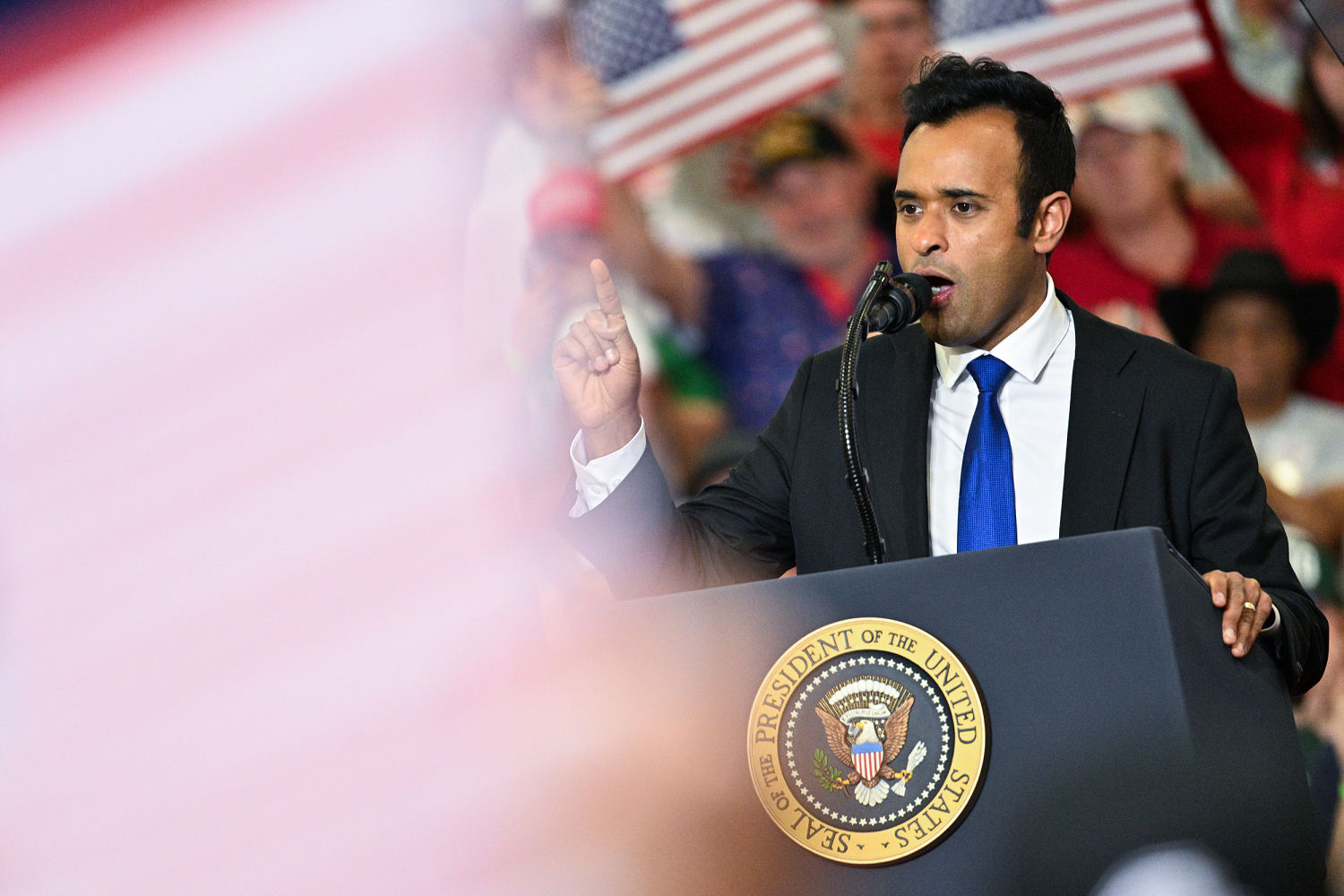
Political advertising relies on the economics of attention and the asymmetric transfer of credibility, yet the October 2026 decision by Republican gubernatorial candidate Vivek Ramaswamy to pull his television advertisement targeting Democratic opponent Amy Acton demonstrates what occurs when an opposition narrative violates foundational public-trust heuristics. Reported by the Associated Press and WOSU Public Media, the spot featured Acton’s estranged birth mother, Donna Arthur, accusing Acton of fabricating details about her childhood. Rather than eroding Acton's standing ahead of the November 3, 2026 general election, the broadcast triggered immediate intra-party defections, elevated verified court records from 1978 into the daily news cycle, and ended its television run days before voters cast ballots.
The Mechanics of Witness Credibility in Negative Advertising
In political communications, deploying a family member against a candidate operates on the principle of source-credibility arbitrage. Voters typically discount standard partisan attacks because they recognize the strategic incentives of an opponent. Introducing a biological relative is designed to bypass that skepticism by signaling insider authority. When Donna Arthur stated on camera that Acton had "lied her entire life" and fabricated accounts of childhood homelessness, the campaign sought to undermine Acton’s core biographical brand as a resilient public servant from Youngstown.
This tactic fails when the selected messenger carries unvetted or indefensible liabilities that collapse the intended frame. According to reporting by The 19th and the Associated Press, Donna Arthur had not seen Acton since 1978, when Arthur lost custody of her children. Court records detailed by those outlets show that Arthur's husband, stepfather Cledith Arthur, was indicted by a grand jury in September 1978 for raping Acton when she was 12 years old. Following the indictment, Cledith Arthur failed to appear for a court hearing, fled the state with warrants issued for his arrest, and remained married to Donna Arthur until his death in Pennsylvania in 2004.
Because the television advertisement omitted this legal history, the campaign created an acute information asymmetry that rival campaigns and investigative reporters rapidly exploited. Once journalists surfaced the 1978 indictment and custody records, the persuasive vector of the spot inverted. Instead of questioning Acton's veracity regarding her upbringing, the electorate was presented with documented state records corroborating severe childhood trauma and parental abandonment. In behavioral economics, this triggers a strong boomerang effect: voters penalize the sender for violating baseline norms of fairness, shifting sympathy and moral authority directly to the target.
Asymmetric Coalition Fracture and Elite Signaling
A critical variable in statewide campaigns is elite signaling—how trusted party leaders validate or reject a campaign's closing argument. When a high-risk advertisement airs, unified party backing can insulate a candidate by framing criticism as partisan outrage. In Ohio, the Ramaswamy advertisement produced an immediate split between national populist figures and in-state Republican officeholders.
- National Endorsement: As reported by CBS News and The 19th, President Donald Trump publicly praised the spot, characterizing it as "very powerful" and comparing it to "hitting pay dirt," while urging Ramaswamy to keep it on the air. Vice President JD Vance stated in Cincinnati that whether the advertisement was appropriate was not his concern.
- In-State Republican Rejection: Every living full-term governor of Ohio spoke out against the broadcast, according to the Associated Press. Outgoing Republican Governor Mike DeWine called the spot wrong and urged Ramaswamy to pull it, while Republican U.S. Senator Jon Husted stated that it exceeded the bounds of human decency.
This divergence exposed a structural misalignment between nationalized media tactics and statewide electoral math. National figures optimized for high-conflict attention cycles, whereas Ohio officeholders—who depend on suburban and independent swing voters to maintain governing majorities—recognized the immediate brand toxicity of the message. Senator Husted’s absence from the initial stops of the October 23, 2026 statewide Republican bus tour, officially attributed to scheduling conflicts, visually reinforced the fracture in the party's unified front at the exact moment campaigns normally consolidate turnout operations.
The Earned-to-Paid Media Inversion
Paid television advertising is purchased to control message frequency and audience targeting. A campaign invests capital to ensure a specific demographic sees a curated argument a predetermined number of times. However, when a paid spot crosses an ethical threshold, earned media coverage overwhelms the paid buy, stripping the campaign of message control.
During the final two weeks of October 2026, local and national news broadcasts repeatedly aired segments examining the 1978 grand jury indictment and featuring responses from Acton’s family members, including her brother and aunt, who publicly defended her and condemned the commercial. Every dollar Ramaswamy spent keeping the spot on the air effectively subsidized earned media segments that reminded Ohio voters of Acton’s survival of childhood abuse and highlighted Republican disunity.
By October 29 and 30, 2026, media tracking confirmed that the advertisement had ceased airing on Ohio television stations. While campaigns routinely rotate creative assets in the final days before an election, removing a flagship closing attack after public condemnation from the sitting governor of the candidate's own party functions operationally as a retreat. The termination of the TV run ended the direct paid impressions, yet the reputational damage remained embedded in voter perception through Election Day on November 3, 2026, when Acton defeated Ramaswamy by an eight-point margin to become Ohio's first elected female governor and the first Democrat to win the office since 2006.
Operational Lessons for High-Stakes Campaign Risk Management
Evaluating the trajectory of the Ohio gubernatorial race reveals concrete failure points in opposition research, creative vetting, and crisis response. Campaigns operating in competitive environments can prevent similar value destruction by enforcing strict analytical protocols before deploying personal attacks.
- Red-Team Vetting of Third-Party Messengers: Before placing any non-political witness on camera, legal and opposition teams must conduct full-lifecycle background audits—including decades-old civil, family, and criminal court dockets—to identify counter-narratives that nullify the witness's standing.
- Pre-Broadcast Elite Alignment: Closing arguments that test social norms require prior buy-in from key state-level surrogates. Airing high-variance creative without securing alignment from sitting governors and senators invites public repudiation that fractures the base.
- Rapid Kill-Switch Thresholds: Media buyers and campaign managers must establish objective trigger metrics—such as sustained negative earned-media ratios or defections by top-tier endorsers—that mandate pulling an advertisement within 24 hours rather than defending it across multiple news cycles.
- Biographical Attack Boundaries: Attacking an opponent's documented personal trauma carries high asymmetric risk; unless the campaign possesses irrefutable primary documentation disproving a material public claim, focusing paid media on policy records, fiscal management, and governance outcomes yields higher net persuasion without alienating persuadable suburban cohorts.


