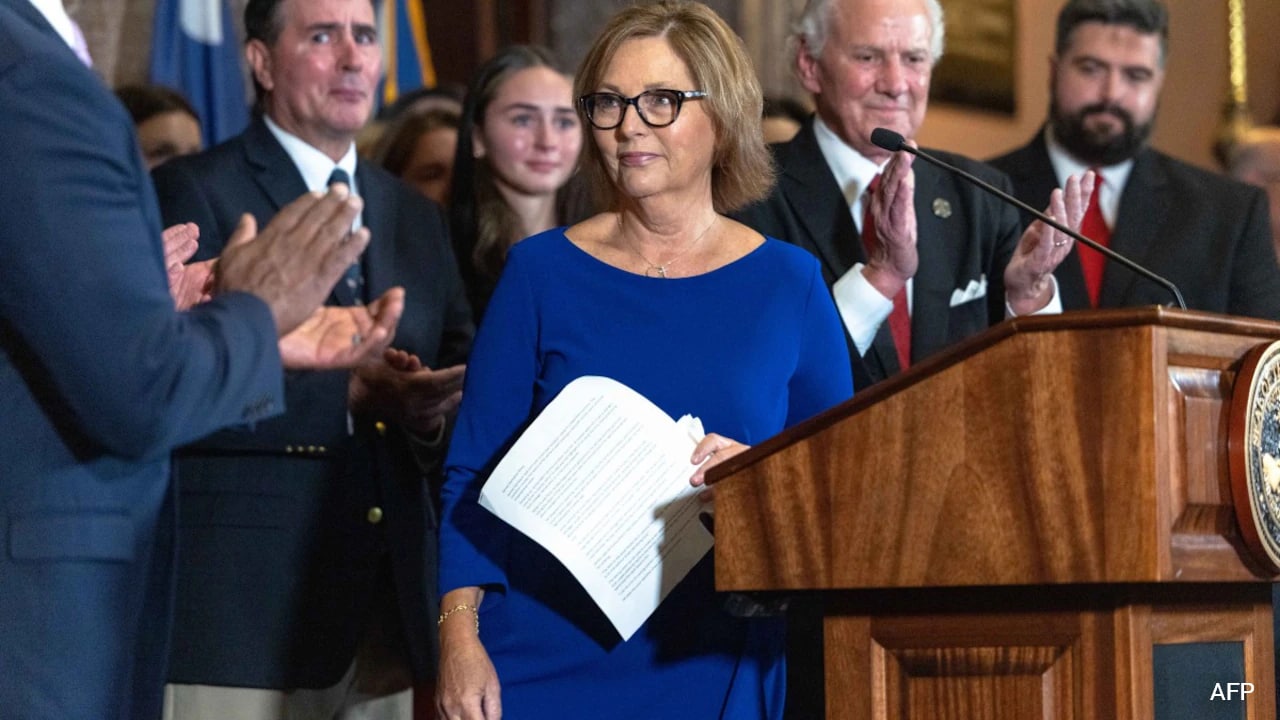
The sudden death of Senator Lindsey Graham has triggered an immediate constitutional and strategic realignment in South Carolina. Rather than appointing a highly competitive political actor to the vacant seat, Governor Henry McMaster selected Graham’s younger sister, Darline Graham Nordone, to serve out the remaining months of the term expiring in January 2027. Far from a mere sentimental gesture, this choice represents a highly calculated, risk-mitigating mechanism designed to preserve party stability, defer to voter selection, and honor a unique familial legacy that shaped Graham’s public life.
To understand the strategic logic behind Nordone’s appointment, we must analyze the structural mechanics of caretaker succession, the political utility of a neutral placeholder, and the immediate electoral dynamics set in motion ahead of the November general election.
The Caretaker Principle: Mitigating Strategic Inequities
In political science, appointments to vacant legislative seats fall into two primary categories: ambitious succession and caretaker succession.
An ambitious appointment involves selecting an active politician who intends to run for the full term. While this provides the appointee with an immediate incumbency advantage, it introduces severe structural distortions when multiple ambitious figures within the same party are vying for the seat.
Avoiding Primary Distortions
South Carolina Republicans are emerging from a highly competitive, exhausting nominating cycle, including a recent June runoff to succeed the term-limited Governor McMaster. Dropping an ambitious figure—such as Representative Nancy Mace, Representative Russell Fry, or Lieutenant Governor Pamela Evette—into the Senate seat via gubernatorial appointment would have disrupted the local party apparatus.
- The Incumbency Premium: Appointing any active candidate would grant them a state-backed advantage, effectively pre-empting the voter-driven nominating process.
- Intra-Party Fractionalization: Elevating one faction’s preferred candidate would alienate rival factions, threatening party cohesion right before a critical general election.
The Frictionless Placeholder
By selecting Nordone, Governor McMaster applied a classic caretaker strategy. Because Nordone has signaled no intention to run for the full term beyond January 2027, her appointment achieves three operational objectives:
- Ensures Parity: It maintains a level playing field for the upcoming August 11 special Republican primary.
- Eliminates Distraction: It allows the state’s federal delegation to remain focused on legislative business without navigating the friction of an appointed peer leaping over them.
- Guarantees Immediate Alignment: Nordone’s stated objective is strictly execution-oriented: to support the administration’s legislative agenda and fulfill her late brother’s policy commitments without seeking to build her own personal brand.
The Widow Succession Paradigm: A Modern Sibling Variant
While the media has focused heavily on the emotional narrative of Nordone’s appointment, her selection sits within a well-documented historical framework: "widow's succession". Historically, executive authorities have turned to immediate family members—primarily spouses—to temporarily step into vacancies created by sudden deaths.
                [Sudden Legislative Vacancy]
                            │
            ┌───────────────┴───────────────┐
            ▼                               ▼
 [Ambitious Succession]            [Caretaker Succession]
(Disrupts primary equity)        (Preserves party equilibrium)
                                            │
                                  ┌─────────┴─────────┐
                                  ▼                   ▼
                          [Family Successor]  [Bureaucratic Caretaker]
                          (Unifies base,      (Lacks narrative weight)
                          honors legacy)
This model relies on a distinct set of operational advantages:
Legitimacy Transfer
A direct relative inherits the goodwill and political capital of the deceased official. This minimizes the friction of the transition. The base of the party accepts the successor immediately because they represent a living continuation of the legacy they previously voted for.
Structural Neutrality
A spouse or sibling who has not previously held elected office does not carry political baggage or prior policy commitments that could clash with the existing party platform. Nordone’s professional background as commissioner of the South Carolina Commission for the Blind and president of the National Council of State Agencies for the Blind provides executive administrative credentials without political entanglements.
While sibling appointments are rarer than spousal successions, the unique biography of the Graham family makes this structural transition highly intuitive. Following the deaths of their parents when Nordone was 13, Lindsey Graham became her legal guardian. This dynamic forged a lifelong, highly visible partnership; Nordone frequently acted as his key surrogate, introducing him at high-stakes events like his 2015 presidential announcement. Her selection is the ultimate manifestation of the caretaker model, maintaining the delegation’s status quo while paying a highly visible tribute to the state's senior senator.
The Tactical Math: South Carolina's Impending Special Election
With Nordone acting as a stable placeholder, the strategic battle for the permanent seat moves directly to the electoral arena. The political landscape of South Carolina is experiencing a sudden acceleration.
July 13, 2026:        Appointment of Darline Graham Nordone (Interim)
August 11, 2026:     Special Republican Primary Election
November 3, 2026:    General Election (GOP Nominee vs. Annie Andrews)
January 3, 2027:     End of Current Term / Swearing-in of Permanent Senator
The Primary Campaign Bottleneck
The August 11 special primary leaves campaigns with a condensed timeline to build statewide name recognition, organize field operations, and secure donor commitments. This compressed schedule favors candidates with pre-existing, statewide fundraising networks and high baseline name recognition. Figures like Representative Nancy Mace, who possesses a national profile, or Lieutenant Governor Pamela Evette, who has spent eight years building statewide relationships, face a structural advantage over lesser-known local officials.
The General Election Cash Dynamics
The winner of the Republican primary will immediately face Democratic nominee Annie Andrews in November. Unlike the scrambled Republican field, Andrews has been campaigning systematically, establishing a substantial financial war chest. As of late May, Andrews had raised over $8 million, holding nearly $3 million in cash on hand.
The Republican nominee will have to pivot instantly from a bruising, expensive three-week primary to a general election campaign. Because Graham had over $4 million in cash on hand at the time of his passing, the national and state party committees will need to aggressively coordinate independent expenditure campaigns to offset Andrews’ head start.
The selection of Nordone ensures that this multi-million dollar scramble occurs entirely outside the halls of the Senate. While ambitious candidates debate on the campaign trail, the state’s seat in Washington remains reliably filled, guaranteeing that the Republican majority is not temporarily diluted during key legislative sessions. The strategy successfully insulates state governance from campaign-trail volatility.