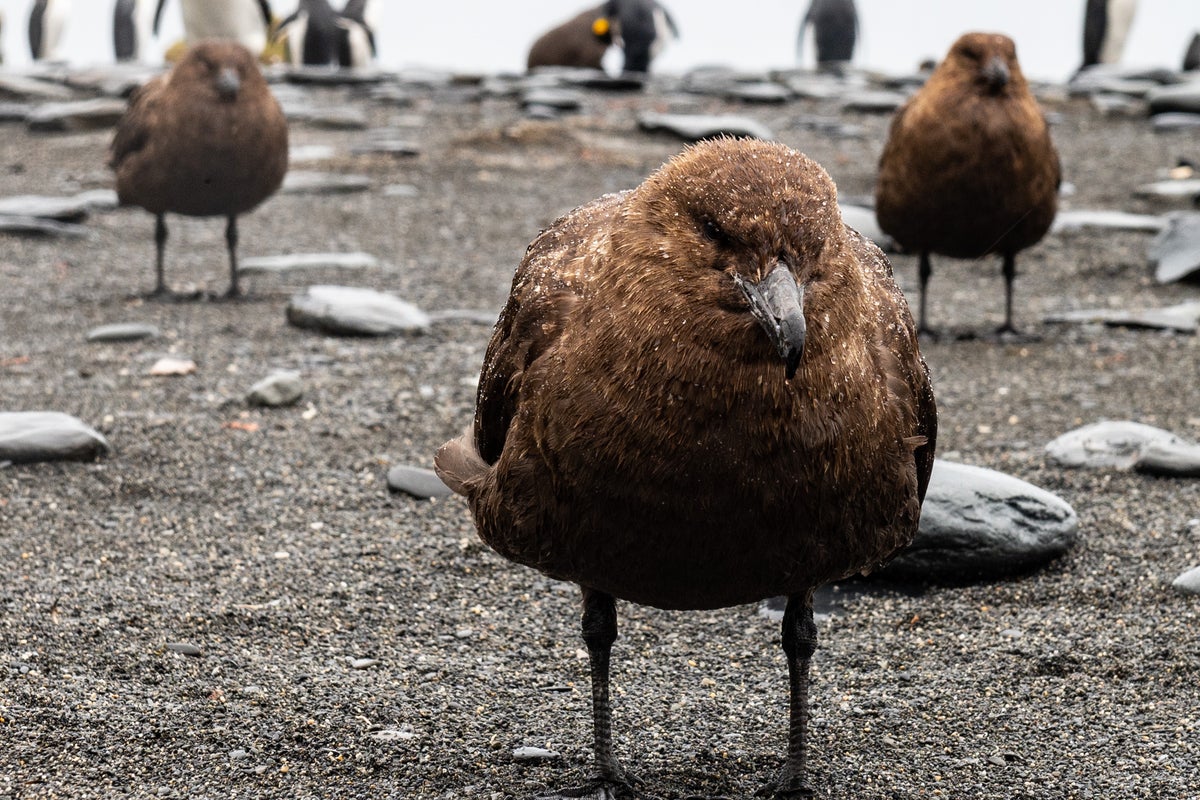
Biosecurity insularity is a function of geography, not permanence. The identification of a suspected H5 avian influenza case in a migratory brown skua (Stercorarius antarcticus) at Cape Le Grand National Park in Western Australia marks the potential collapse of the final geographic sanctuary from Highly Pathogenic Avian Influenza (HPAI) clade 2.3.4.4b. For over five years, the Australian mainland remained the sole global continent untouched by this specific panzootic lineage, which has caused unprecedented ecological and commercial devastation across the Americas, Europe, Africa, and Asia since 2020.
To evaluate the operational risk of this development, the situation must be processed through three discrete analytical frameworks: transmission mechanics, ecological vulnerability indexes, and commercial containment protocols. The immediate challenge for biosecurity agencies is not merely reactive culling, but managing a systemic shift from exclusion to endemic mitigation. Don't forget to check out our previous coverage on this related article.
Transmission Mechanics and The Sub-Antarctic Vector
The introduction of HPAI into the Australian mainland follows a clear, non-random transmission pathway dictated by pelagic bird migration corridors rather than traditional commercial poultry supply chains. The primary vector in this incursion, the brown skua, is a wide-ranging sub-Antarctic seabird whose foraging radius links mainland Australia directly to southern oceanic hotspots.
This transmission model relies on a multi-stage stepping-stone mechanism: If you want more about the context of this, Mayo Clinic provides an in-depth summary.
- Reservoir Amplification: In late 2025, H5N1 was definitively confirmed on Australia's remote external territory of Heard Island, located roughly 4,000 kilometers southwest of Perth. The viral load amplified exponentially within highly dense marine mammal and avian colonies, leading to an estimated 76.9% mortality rate among southern elephant seal pups (13,359 fatalities out of a population of 17,364).
- Pelagic Dispersal: Sub-Antarctic species, including the brown skua and a second symptomatic giant petrel (Macronectes) currently undergoing testing, act as high-mobility biological vectors. These species bridge the epidemiological gap between sub-Antarctic breeding grounds and the southern coast of the Australian mainland.
- The Shoreline Intercept: The recovery of the moribund skua on a remote beach near Esperance indicates that environmental exposure occurs initially at the wild-domestic interface. Unlike migratory waterfowl that utilize inland wetlands via the East Asian-Australasian Flyway, pelagic seabirds introduce the pathogen directly via coastal choke points.
Preliminary testing by Western Australian state laboratories confirmed the presence of an H5 influenza strain. Definitive confirmation of whether this isolate represents the highly virulent global H5N1 variant is currently being determined via whole-genome sequencing at the CSIRO Australian Centre for Disease Preparedness (ACDP) in Geelong.
Ecological Vulnerability Indexes
The vulnerability of Australian avian ecosystems to H5N1 is compounded by evolutionary isolation. Because mainland populations have not faced the selective pressures of highly pathogenic lineages over the past several generations, immunologically naive native species face severe demographic bottlenecks if the virus achieves horizontal transmission.
The risk profile can be categorized by three ecological parameters:
- Colony Density Factors: High-density nesting sites, such as those occupied by pelagic seabirds and endemic shorebirds along the southern coastline, maximize the basic reproduction number ($R_0$) of the virus by ensuring high rates of environmental shed and close physical proximity.
- Taxonomic Susceptibility: Modeling by conservation bodies indicates that specific endemic families, particularly black swans (Cygnus atratus) and various raptor species, exhibit high mortality rates when exposed to Eurasian H5 lineages, lacking the baseline low-pathogenic immunity common in northern hemisphere waterfowl.
- Mammalian Spillover Likelihood: The high-affinity binding of current H5N1 variants to alpha-2,6 sialic acid receptors—though still primarily adapted to alpha-2,3 avian receptors—poses a direct threat to mainland marine mammal populations, specifically Australian sea lions (Neophoca cinerea), which are already structurally endangered.
Commercial Containment Protocols and the Cost Function
The macro-economic threat of a confirmed mainland incursion centers on the poultry and egg production sectors. The primary economic objective during an incursion is the preservation of export market access and the prevention of vertical transmission into commercial biosecurity zones.
The total economic exposure of the agricultural sector under an uncontained outbreak is governed by a complex cost function:
$$C_{total} = C_{depopulation} + C_{surveillance} + L_{export} + C_{indemnity}$$
Where:
- $C_{depopulation}$ represents the direct operational cost of destroying, removing, and biosecurely disposing of infected and contiguous flocks.
- $C_{surveillance}$ represents the capital allocation required for high-throughput PCR testing within a designated 10-kilometer restricted movement zone surrounding any detection point.
- $L_{export}$ represents the immediate revenue loss resulting from automatic trade bans imposed by international trading partners on live bird and poultry products lacking regionalization agreements.
- $C_{indemnity}$ represents state and federal fiscal outlays required to compensate producers for statutory livestock destruction, drawing from the federal government's 113 million AUD ($79.2 million USD) biosecurity preparedness fund.
At this stage of the Western Australian incursion, there is no empirical evidence of mass mortality events in wild wildlife populations, nor has any positive sample been retrieved from commercial poultry assets. The immediate operational response is governed by the Emergency Animal Disease Response Agreement (EADRA), which mandates a cost-sharing framework between government jurisdictions and affected industry bodies to execute rapid stamping-out policies if the virus breaches commercial perimeters.
Operational Limitations of Containment Strategy
Deploying a standard biosecurity containment framework against an avian pathogen carried by wild migratory pelagic birds reveals structural limitations that do not exist in standard terrestrial disease outbreaks:
The first limitation is the irrelevance of perimeter fencing and traditional movement controls. While commercial poultry operations can enforce strict bio-exclusion practices—such as air filtration, water sanitation, and rigorous vehicle decontamination—the wild reservoir cannot be contained by regulatory borders.
The second limitation involves the surveillance bottleneck. Detecting a single infected bird on a remote beach in a national park suggests that low-level viral shedding may already occur across low-density wild populations undetected. Relying on passive surveillance—waiting for members of the public or park rangers to report dead or symptomatic wildlife—creates a dangerous reporting lag that can obscure the true geographic distribution of the pathogen.
Immediate Strategic Action
To mitigate systemic risk prior to the publication of the ACDP confirmatory sequencing results, biosecurity agencies must pivot immediately from a posture of passive vigilance to active surveillance architecture.
- Immediate Execution of Zone-Based Wild Sampling: Establish active non-lethal sampling traps and environmental DNA (eDNA) monitoring of water bodies within a 50-kilometer radius of the Cape Le Grand index case to determine if local wild populations are exhibiting sub-clinical shedding.
- Commercial Isolation Mandate: Issue an immediate statutory order requiring all commercial poultry operations within Western Australia to transition to mandatory indoor housing protocols. This effectively severs the direct physical contact and shared water supply vectors between wild wild birds and production assets.
- Traceability Audits on Supply Chains: Initiate retrospective tracking of all poultry and machinery movements within the southwest agricultural zone over the past 14 days to isolate potential cross-contamination pathways in the event the ACDP confirms a positive H5N1 diagnosis.