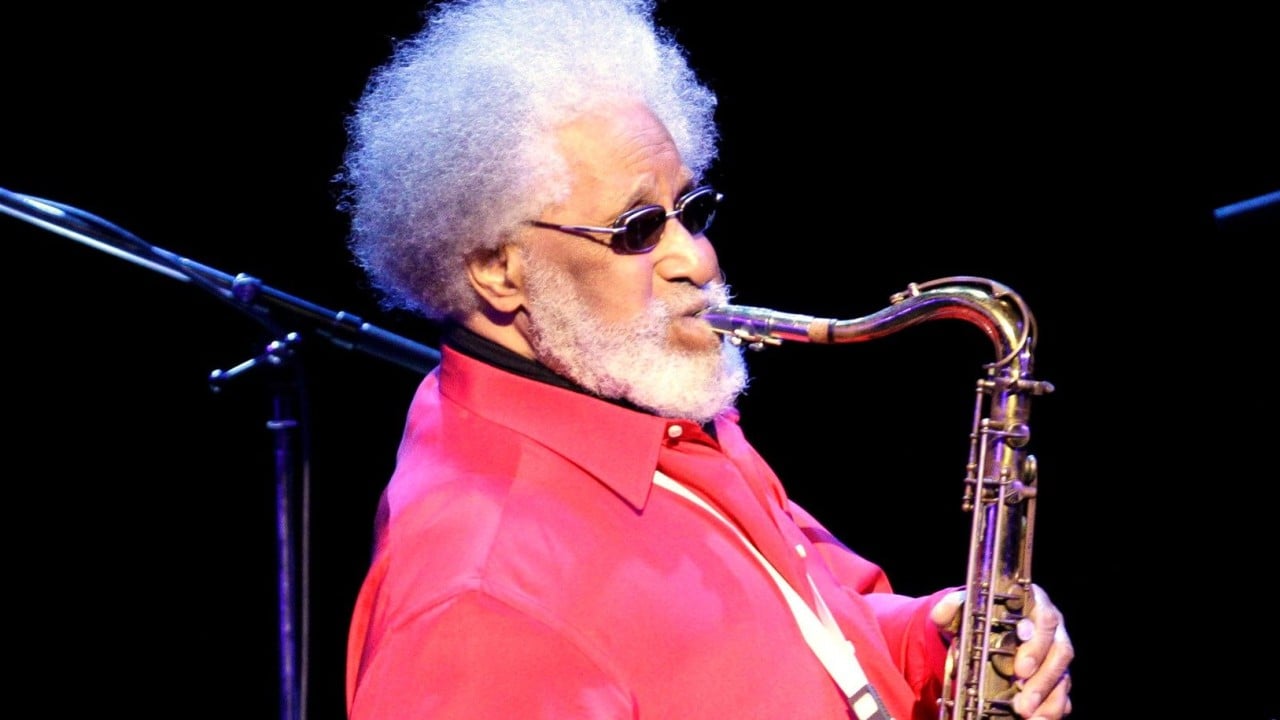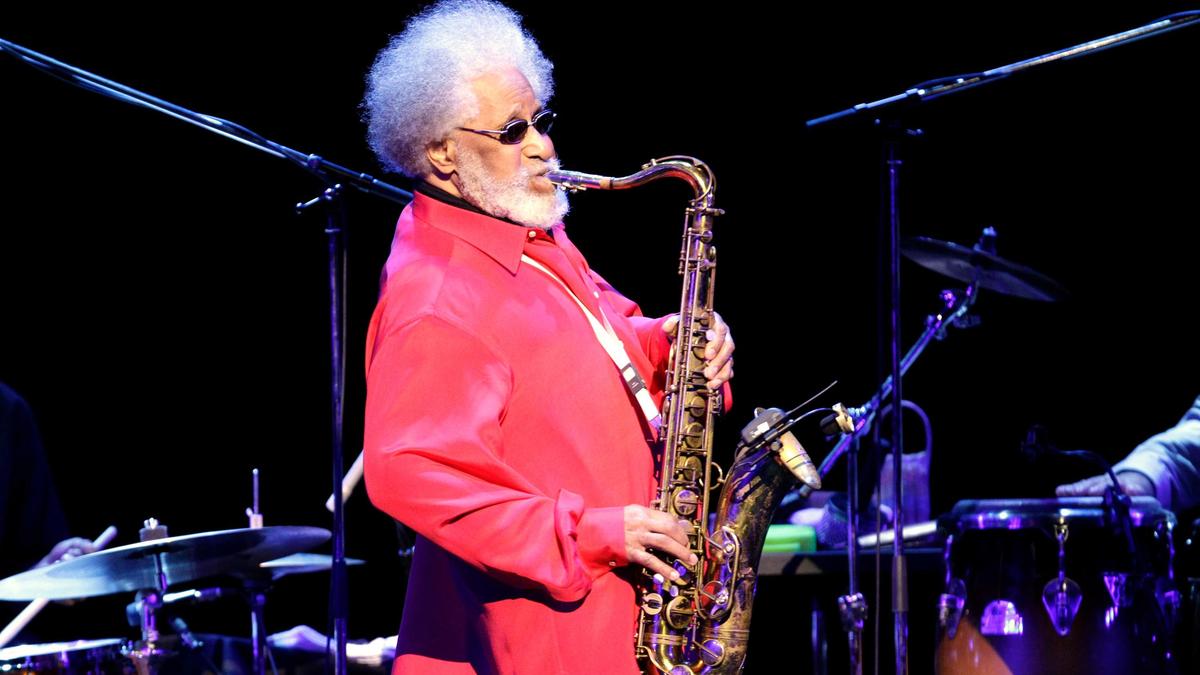
The death of Walter Theodore "Sonny" Rollins on May 25, 2026, at the age of 95, marks the closure of the foundational era of American modern jazz. While standard obituaries frame Rollins through the lens of individual genius, mystical wanderlust, or emotional virtuosity, an evaluation of his sixty-year career reveals a highly structured methodology of creative output. Rollins operated not by erratic impulse, but through a calculated cycle of innovation, intentional withdrawal, and strict structural discipline designed to mitigate the creative decay common to long-term artistic operations.
By deconstructing his output, architectural design of improvisation, and economic rejection of industry norms, we map the mechanics that transformed a standard bebop instrumentalist into the definitive structural architect of modern jazz.
The Tri-Value Framework of the Rollins Improvisation Model
The primary limitation of traditional jazz analysis is its reliance on subjective descriptors like "inventiveness" or "exuberance." To quantify the musical mechanics that set Rollins apart from contemporaries like John Coltrane or Johnny Griffin, his improvisational strategy must be viewed as an optimization problem across three distinct musical variables: motivic development, thematic subversion, and structural pacing.
1. Motivic Development
Unlike players who relied on pre-fabricated scalar patterns or rapid-fire harmonic extensions (the "sheets of sound" approach), Rollins utilized a system of mathematical variations on a singular, often banal, melodic seed. He would isolate a short phrase—frequently from a musical theater standard or a folk melody—and subject it to systematic transformations.
- Rhythmic Displacement: Shifting the entry point of the motif across the bar line, altering its relationship to the underlying downbeat.
- Intervallic Expansion and Contraction: Widening or narrowing the jumps between notes while preserving the contour of the original phrase.
- Harmonic Re-contextualization: Forcing the motif to interact with shifting chord progressions, altering its tension-and-release values without changing the core sequence of notes.
2. Thematic Subversion
Rollins weaponized low-value musical material. His systematic selection of novelty tunes, calypsos, and Broadway show tunes ("St. Thomas," "I'm an Old Cowhand") served a distinct structural purpose. By utilizing simplistic harmonic frameworks, he maximized the real estate available for rhythmic and tonal modification. The simpler the baseline architecture, the more radical the variations could be without destabilizing the audience's structural orientation.
3. Spatial and Structural Pacing
The fundamental bottleneck in high-speed jazz improvisation is cognitive and physical fatigue, leading to repetitive phrasing. Rollins engineered an asymmetrical delivery model, alternating between dense, polyrhythmic salvos and sudden, stark silences or honking, single-note anchors. This approach disrupted standard 4-bar and 8-bar hyper-meter expectations, forcing the accompanying rhythm section to abandon passive timekeeping and adapt in real time to his structural shifts.
The Strategic Sabbatical: Intentional Attrition as a Growth Metric
The narrative of Rollins practicing on the Williamsburg Bridge between 1959 and 1961 is frequently romanticized as a spiritual quest. An objective asset assessment reveals it as a deliberate intervention to halt creative stagnation and re-engineer a technical system under conditions of extreme constraint.
+------------------------------------------------------------+
|            The Strategic Sabbatical Cycle                  |
+------------------------------------------------------------+
|                                                            |
|    [Phase 1: Market Saturation & Formulaic Output]         |
|    - High commercial demand / repetitive improvisation      |
|                           │                                |
|                           ▼                                |
|    [Phase 2: Intentional Cessation of Monetization]         |
|    - Complete withdrawal from clubs and recording studios  |
|                           │                                |
|                           ▼                                |
|    [Phase 3: High-Constraint Reconstruction]               |
|    - Practicing under environmental friction (Bridge)      |
|    - Stripping down acoustic dependencies                  |
|                           │                                |
|                           ▼                                |
|    [Phase 4: Market Re-Entry via Structural Pivot]         |
|    - Launch of "The Bridge" (1962)                         |
|    - Advanced harmonic autonomy and structural control     |
+------------------------------------------------------------+
By 1959, Rollins had achieved peak market saturation. He was a dominant tenor saxophonist, yet he recognized that the velocity of commercial production—recording multiple albums a year while touring constantly—created an environment prone to intellectual asset depreciation. He was repeating his successes rather than expanding his technical capabilities.
The sabbatical on the Williamsburg Bridge operated on four key operational variables:
- Acoustic Friction: Practicing against the ambient noise of tugboats, trains, and industrial wind forced Rollins to develop a more powerful, physically resilient embouchure and tonal projection. He was stripped of the forgiving acoustics of standard recital halls or padded studios.
- Isolation from Competitive Stimuli: By removing himself from the nightclub circuit, he halted the subconscious copying of his peers' harmonic ideas, allowing him to purify his internal improvisational vocabulary.
- Unconstrained Time Horizons: Without the ticking clock of studio fees, he could spend hours exploring the micro-tonal possibilities of a single note or testing the absolute limits of his saxophone's altissimo register.
- Voluntary Revenue Cessation: Choosing zero income over compromised output demonstrated an understanding that long-term legacy value outweighs short-term liquid compensation.
When he returned to the market with the 1962 album The Bridge, his playing demonstrated a sharper structural clarity, a harder edge, and an increased capacity for unaccompanied performance that predicted the free-jazz movements without abandoning harmonic gravity.
The Trio Form: Elimination of Harmonic Overhead
In 1957, Rollins initiated a series of performances and recordings utilizing a piano-less trio format (tenor saxophone, bass, and drums), most notably documented on Way Out West and A Night at the Village Vanguard. This structural pivot was a direct challenge to the standard hard-bop quintet architecture.
The removal of the piano was not merely a stylistic quirk; it was a fundamental re-engineering of the ensemble's cost-benefit structure.
| Variable | Standard Quintet (with Piano/Guitar) | Rollins Piano-less Trio |
|---|---|---|
| Harmonic Grid | Fixed by the comping instrument; soloist must conform to stated chord voicing. | Fluid; implied by the bassist’s root movement and the saxophonist’s linear choices. |
| Sonic Density | High; frequency spectrum shared between horns, piano chords, and cymbals. | Low; open mid-range frequencies maximize the acoustic footprint of the saxophone. |
| Rhythmic Freedom | Bound to the explicit meter kept by drums and anchored by piano comping. | Elastic; drummer can interact directly with the soloist's phrasing without harmonic clashes. |
| Error Propagation | High; a misread chord by the pianist invalidates the soloist's altered extensions. | Low; structural pivots can occur instantaneously on a mutual cue between horn and bass. |
The piano-less trio format shifted the burden of harmonic proof entirely to Rollins. To prevent the music from sounding thin, his linear lines had to outline both the melody and the implied chord changes simultaneously. This required an advanced grasp of voice-leading and a hyper-acute sense of pitch. The benefit was absolute operational agility: Rollins could modulate to a new key signature mid-solo without warning, and a responsive bassist could pivot with him instantly, bypassing the structural bottleneck of a chordal gatekeeper.
Risk Mitigation and the Corporate Contrast
In his later operational phase, Rollins took full control of his supply chain by founding Doxy Records in 2006. This move was an explicit rejection of major-label monetization models, which Rollins openly critiqued as being counter-intuitive to the core mechanics of jazz creation.
The corporate music model requires standardization, predictability, and replication—values that run directly counter to the jazz mechanism of real-time improvisation. Rollins recognized that corporate distribution channels treated music as a static commodity. His response was to insource production, allowing him to capture live performances without studio temporal constraints.
His 2001 Grammy-winning album This Is What I Do and the 2006 release Without a Song: The 9/11 Concert—recorded live in Boston just four days after Rollins was evacuated from his home near Ground Zero—serve as primary evidence of this strategy. Rather than attempting to replicate past studio perfection, he documented raw, high-stakes live interactions. The imperfections inherent in live captures were accepted as unavoidable components of a high-yield creative process.
Operational Legacy and Strategic Transition
The physical cessation of Rollins' career occurred not at his death in 2026, but between 2012 and 2014, when systemic pulmonary fibrosis permanently degraded his lung capacity, rendering performance impossible. The management of this final chapter provides a masterclass in asset preservation. Unlike many historical figures who compromised their artistic capital by performing past the point of technical competence, Rollins enforced a clean break from public performance.
His final strategy shifted from real-time asset generation to archive curation and academic preservation, culminated by the 2024 publication of The Notebooks of Sonny Rollins. This transition transformed ephemeral performance knowledge into permanent intellectual property.
The structural takeaway from the life and output of Sonny Rollins extends far beyond the parameters of jazz pedagogy. It establishes that long-term creative relevance is achieved not through continuous, unbroken output, but through the rigorous balance of performance cycles with periods of intensive optimization and structural re-engineering. Creative longevity requires the courage to dismantle high-performing systems when they threaten to become formulaic, ensuring that every deployment of talent functions as a deliberate act of structural evolution.