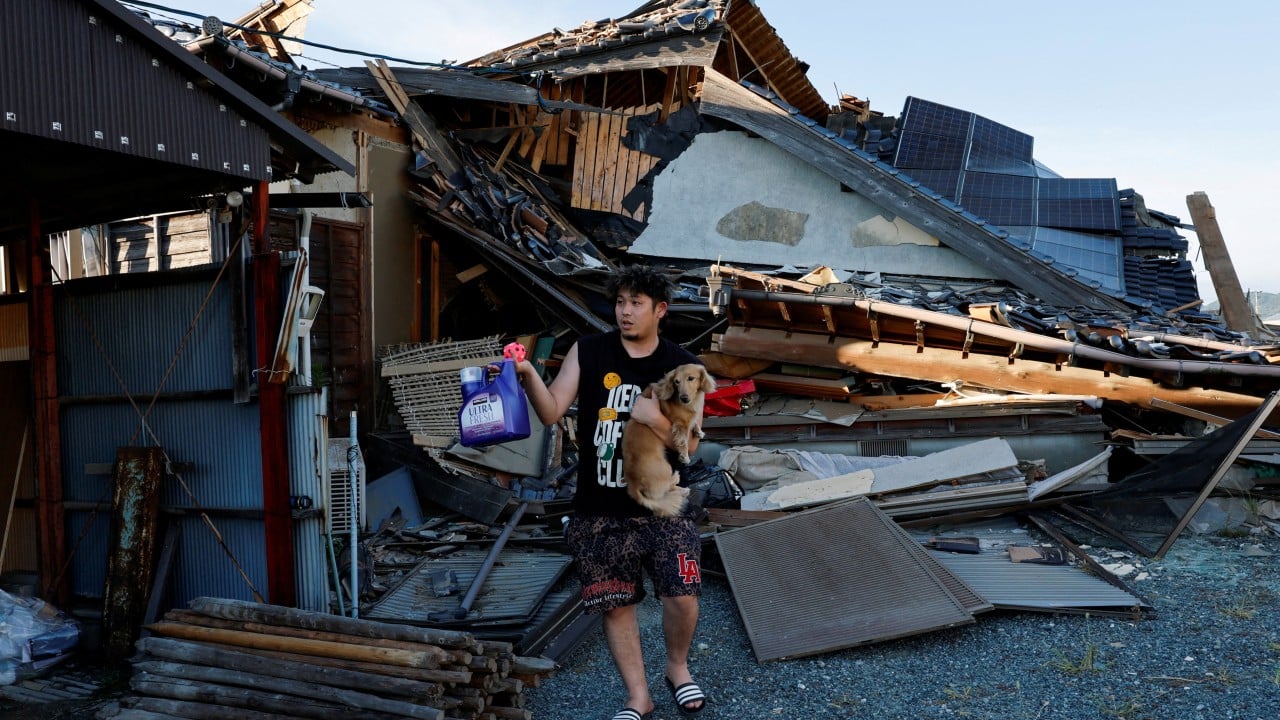
When a magnitude-7.1 earthquake struck Japan's Kumamoto Prefecture, the immediate physical shock was matched by an instantaneous digital shockwave. Within minutes, social media platforms flooded with fabricated rescue requests, AI-generated visuals of structural collapses, and a resurgence of the "artificial earthquake" conspiracy theory. Far from being random digital noise, this phenomenon follows a predictable informational propagation model during high-stress tectonic events. Analyzing how these falsehoods scale provides a blueprint for understanding modern information warfare during natural disasters.
The Three Vectors of Disaster Misinformation
The distribution of unverified claims following the Kumamoto event categorizes neatly into three distinct operational vectors, each serving a specific psychological or political function.
The first vector involves synthetic panic generation. This includes fabricated emergency distress signals, such as automated posts claiming individuals were buried alive at non-existent addresses, alongside deepfake video broadcasts mimicking mainstream media outlets. The objective of this vector is algorithmic manipulation, exploiting engagement-based ranking systems to maximize visibility by weaponizing human empathy.
The second vector centers on tectonic conspiracy theories. Posts asserting that seismic waves resulted from underground explosions rather than natural fault lines, or attributing atmospheric phenomena like unusual cloud formations to man-made weather modification, gained millions of impressions. These narratives appeal to a fundamental cognitive desire for agency during random, high-consequence events. Attributing a natural disaster to a hidden actor transforms a chaotic reality into a controllable, albeit malicious, narrative.
The third vector exploits social friction through xenophobic scapegoating. False reports blaming foreign nationals for arson, looting, or civil unrest surfaced rapidly, often recycling context-free footage from prior disasters like the 2024 Noto Peninsula earthquake. This vector operates on pre-existing societal fault lines, converting an environmental crisis into an ideological proxy war.
The Cost Function of Viral Falsehoods
The primary danger of disaster misinformation lies in resource allocation inefficiency. Emergency response systems operate under strict capacity constraints. Every minute spent by police, fire departments, or self-defense forces verifying a fake rescue request or investigating a nonexistent shopping mall explosion is a minute diverted from genuine life-saving operations.
Information propagation velocity routinely outpaces verification velocity. While official agencies require hours to aggregate verified ground data, generative tools and sensationalist accounts can synthesize and distribute compelling falsehoods globally in seconds. This creates an informational bottleneck where the public consumes high-velocity fiction while factual updates trickle through bureaucratic channels.
The structural vulnerability is compounded by platform architectures that reward emotional arousal over epistemic accuracy. Metrics such as view counts and repost velocity treat a fabricated warning about a collapsed building with the same weight as an official evacuation directive. Consequently, the cost of producing disinformation approaches zero, while the societal cost of consuming and rectifying it scales exponentially.
Mitigating Algorithmic Cascades
Addressing the proliferation of artificial earthquake myths requires moving past passive public service announcements and implementing structural friction into digital sharing mechanisms.
Platform operators must deploy emergency-mode protocols during verified natural disasters. These protocols should automatically downrank unverified sensory media, throttle the viral propagation of accounts lacking historical provenance, and pin official institutional feeds to the top of geo-targeted feeds. Users encountering sensational claims must adopt a strict verification hierarchy, cross-referencing primary institutional bulletins before engaging with or distributing emergency content.
Operational resilience during a crisis depends as much on informational hygiene as it does on physical infrastructure. Treating digital inputs with the same skepticism applied to structural integrity reports is the primary defense against systemic operational gridlock.