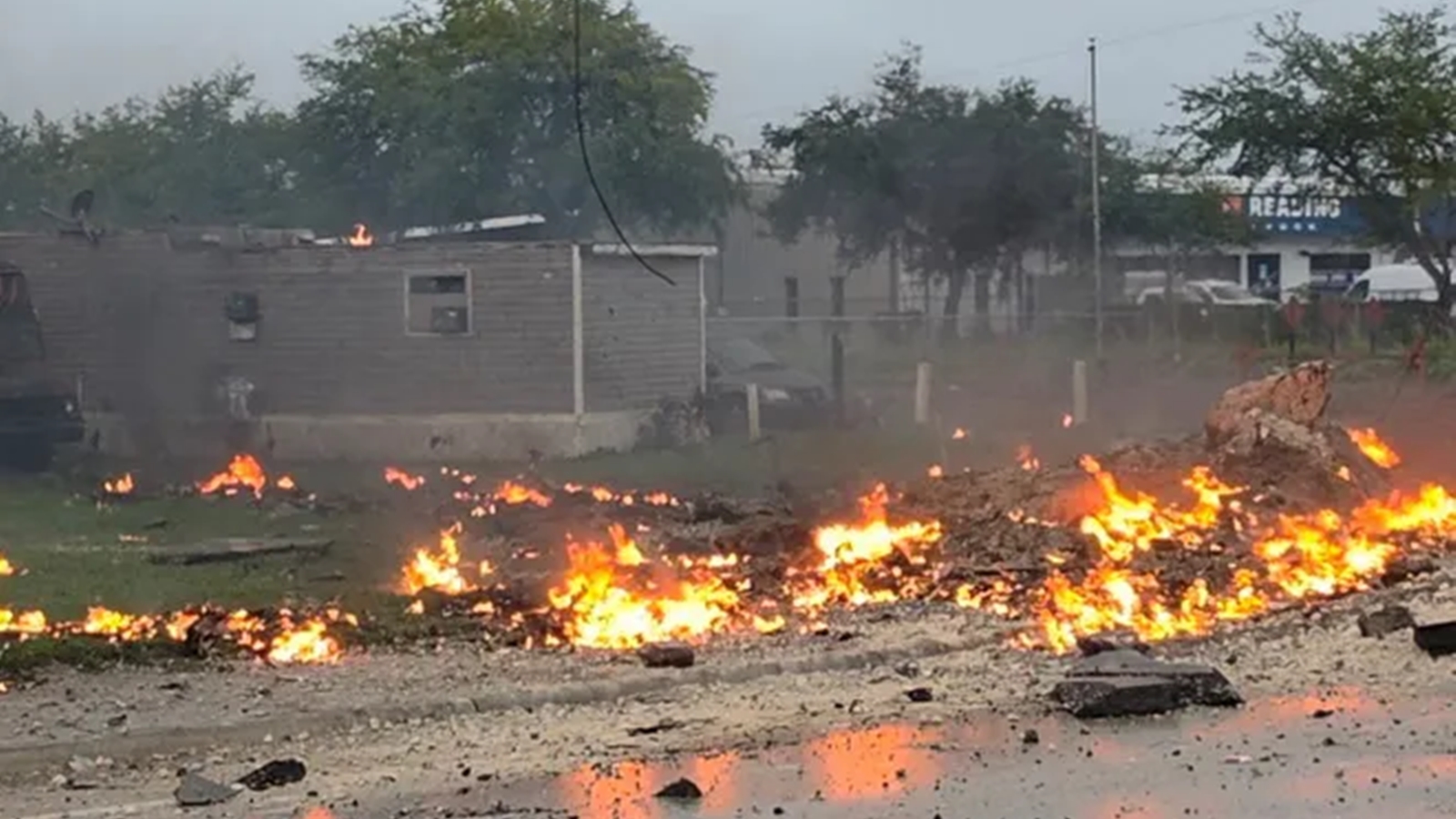
Fatal twin-engine business jet accidents rarely stem from a single mechanical breakage; instead, they occur when simultaneous propulsion loss collides with compressed decision timelines, high cockpit workload, and aerodynamic energy deficits during terminal approach phases. Analyzing the operational dynamics behind a fatal Florida business jet crash—marked by the final cockpit transmission indicating an unavoidable impact—requires separating sensationalist reporting from the rigid physics of multi-engine aerodynamics, fuel-system architecture, and human cognitive saturation.
Standard media coverage treats an aircraft crash as an isolated narrative event anchored by dramatic final words. From an aviation safety and systems engineering perspective, those final transmissions represent the terminal node of a cascading failure chain. To understand how a certified, dual-engine corporate aircraft transitions from routine descent to catastrophic terrain impact, investigators and safety analysts apply structured frameworks: the Swiss Cheese Model of accident causation, energy-state management equations, and Crew Resource Management (CRM) bandwidth limits.
The Physics of Simultaneous Propulsion Loss
Twin-engine turbine aircraft are engineered around redundancy. Under Federal Aviation Administration (FAA) Part 25 airworthiness standards, a multi-engine transport-category or commuter-category jet must be capable of sustaining climb performance and directional control following the failure of a single powerplant at any point past takeoff decision speed ($V_1$). Therefore, a total loss of thrust implies an event that bypasses engine-level isolation.
Common-Mode Failure Vectors
When both turbofan or turboprop engines lose power concurrently or in rapid succession, the root cause almost invariably lies in a shared upstream dependency rather than independent mechanical wear. Four primary mechanisms govern dual-engine flameouts in turbine business jets:
- Fuel Exhaustion or Starvation: Exhaustion occurs when the aircraft physically runs out of usable fuel due to faulty flight planning, unmonitored headwinds, or leaking fuel lines. Starvation occurs when fuel remains aboard the aircraft, but improper fuel-panel configuration, clogged crossfeed valves, or failed boost pumps prevent the fluid from reaching the engine-driven fuel pumps.
- Fuel Contamination: High-altitude turbine operations expose Jet-A fuel to extreme cold. If anti-icing additives (such as DiEGME) are absent or insufficient, dissolved water precipitates out of the fuel and freezes into ice crystals. During descent, warmer air can dislodge accumulated ice in the fuel lines, sending a slug of water or slush simultaneously into both fuel control units, extinguishing combustion.
- Aerodynamic Ingestion (Bird Strikes or Severe Weather): Large-scale ingestion of avian flocks or extreme concentrations of supercooled liquid water and hail during approach can exceed the surge margins of both compressor sections. While modern high-bypass turbofans undergo rigorous ingestion certification, dense flock encounters at low altitude leave zero time for relight sequences.
- Systemic Electronic or Sensor Faults: Full Authority Digital Engine Control (FADEC) systems govern modern business jets. While FADEC units feature dual-channel redundancy per engine, shared air-data computer anomalies or catastrophic electrical bus failures can disrupt fuel-metering logic if backup hydromechanical modes fail to engage.
The Energy Management Deficit
Once both engines cease producing thrust, the aircraft becomes a high-wing-loading glider. Unlike purpose-built sailplanes, which feature high aspect ratios and glide ratios exceeding 40:1, a swept-wing business jet typically exhibits a lift-to-drag ($L/D$) ratio between 12:1 and 15:1 in a clean configuration.
Total mechanical energy ($E_T$) at any point during an emergency descent is defined by the sum of potential energy (altitude) and kinetic energy (airspeed):
$$E_T = mgh + \frac{1}{2}mv^2$$
Where $m$ represents aircraft mass, $g$ is gravitational acceleration, $h$ is height above ground level, and $v$ is true airspeed.
During the final approach phase—typically below 3,000 feet above ground level (AGL)—both $h$ and $v$ are intentionally low to prepare for landing. Deploying landing gear and trailing-edge flaps dramatically increases parasitic and induced drag, cutting the effective glide ratio nearly in half. If dual-engine failure occurs when the aircraft is already configured for landing, the pilot faces an immediate energy deficit. Attempting to stretch the glide by raising the nose converts kinetic energy into momentary altitude, rapidly bleeding airspeed toward the aerodynamic stall threshold ($V_S$). Once the wing exceeds its critical angle of attack, airflow separates, lift collapses, and the aircraft enters an unrecoverable descent rate.
Cockpit Workload and Cognitive Saturation
The final radio call—"We’re going to crash"—is not merely an emotional artifact; it is an objective data point indicating that the flight crew had exhausted all aerodynamic and procedural options. Between the initial anomaly and that transmission lies a period of intense cognitive saturation governed by the Yerkes-Dodson law of arousal and performance.
The Aviate-Navigate-Communicate Hierarchy
Professional flight training enforces a strict prioritization matrix during emergencies:
- Aviate: Maintain aircraft control, establish best-glide airspeed ($V_{BG}$), and prevent an aerodynamic stall or loss of roll control.
- Navigate: Identify the nearest suitable landing surface—whether a runway, highway, or flat open terrain—and align the flight path accordingly.
- Communicate: Declare an emergency to Air Traffic Control (ATC) and coordinate cockpit checklists.
Under normal single-engine failure conditions, the pilot flying (PF) focuses exclusively on the first two steps while the pilot monitoring (PM) executes the Quick Reference Handbook (QRH) memory items and handles ATC communications. During a dual-engine failure at low altitude, this division of labor fractures.
Checklist Compression and Time-to-Impact
A typical turbine engine airstart checklist requires verifying ignition switches, confirming fuel boost pump pressure, checking interstage turbine temperature (ITT) limits, and maintaining a specific airspeed envelope to ensure sufficient windmill RPM through the compressor core. Executing this sequence takes between 45 and 90 seconds per engine.
If an aircraft loses both engines at 2,000 feet AGL while descending at 1,500 feet per minute, the crew has approximately 80 seconds before ground contact. Attempting an airstart in this window creates a lethal distraction trap. Every second a pilot spends looking inside the cockpit at overhead fuel panels or engine-indicating displays is a second removed from scanning outside terrain and monitoring airspeed decay. When crews prioritize restarting engines over flying the aircraft to a controlled forced landing, the probability of an asymmetric stall or uncoordinated impact spikes.
Known Facts Versus Investigative Hypotheses
In the immediate aftermath of an aviation disaster, distinguishing verified telemetry from analytical hypotheses prevents premature conclusions.
Verified Operational Parameters:
- Aircraft Profile: The incident involved a twin-engine business jet carrying nine occupants on an approach vector in Florida.
- Terminal Phase: The emergency manifested late in the flight profile, close to the destination airport, leaving minimal altitude buffer.
- Crew Awareness: The final ATC transmission confirms the pilots were conscious, aware of the aircraft's unrecoverable trajectory, and not incapacitated by hypoxia or structural breakup prior to impact.
Primary Investigative Hypotheses (Pending NTSB Verification):
- Fuel Management Anomaly: Given the timing of the failure—occurring at the end of a flight when fuel tanks are at their lowest levels—investigators routinely scrutinize fuel quantity gauges, refueling logs from the departure airport, and fuel-selector valve positions in the wreckage.
- Asymmetric Thrust Loss Preceding Total Failure: One engine may have failed earlier in the descent without triggering an immediate emergency declaration, prompting the crew to increase thrust on the remaining engine, which subsequently failed due to the same underlying fuel or mechanical issue.
- Environmental Ingestion: Florida’s coastal airspace presents high concentrations of migratory birds and localized convective weather cells; physical inspection of the turbine blades will immediately confirm or rule out foreign object damage (FOD).
Forensic Reconstruction Methodology
Determining the exact sequence of events falls to the National Transportation Safety Board (NTSB), which relies on physical metallurgy and solid-state data recovery rather than witness accounts.
Black Box Telemetry Extraction
Modern business jets carry two crash-hardened recorders: the Cockpit Voice Recorder (CVR) and the Flight Data Recorder (FDR). The CVR captures ambient cockpit audio, including switch clicks, automated ground proximity warning system (GPWS) alerts ("Sink Rate," "Pull Up"), and verbal checklist verification. Spectral analysis of the audio track can even determine engine fan rotational speeds ($N_1$) by isolating acoustic frequencies transmitted through the airframe.
The FDR logs hundreds of discrete parameters per second, including control surface deflections, angle of attack, fuel flow rates, exhaust gas temperatures, and electrical bus voltages. Plotting fuel flow against $N_1$ speed reveals the exact millisecond combustion ceased—and whether that cessation was commanded by fuel cutoff or caused by mechanical seizure.
Turbine Metallurgy and Witness Marks
When recorders are unavailable or damaged, engine teardown examinations provide definitive proof of power state at impact. Investigators inspect the compressor and turbine rotors for rotational signatures:
- High-Power Impact: If engines are spinning at high RPM upon striking terrain, titanium and nickel-alloy compressor blades bend opposite the direction of rotation, and molten metal splatter (from ingested dirt or aluminum vaporizing against hot turbine sections) coats the internal vanes.
- Unpowered Impact: If engines have flamed out prior to ground contact, blades exhibit minimal bending, cleanly sheared tips, and zero thermal splatter, confirming a lack of rotational kinetic energy.
Structural Limitations of Safety Redundancies
Aviation safety relies on defense-in-depth, yet every protective layer carries operational boundaries that fail under specific edge cases.
Automated stall-protection systems, such as stick shakers and stick pushers, alert pilots to impending aerodynamic stalls and physically force the nose down to recover airspeed. However, below 500 feet AGL, a stick pusher activating to prevent a stall forces the aircraft directly toward terrain that is already too close to clear. Similarly, Enhanced Ground Proximity Warning Systems (EGPWS) provide vital terrain-clearance alerts during controlled flight, but they cannot restore lost kinetic energy to an unpowered airframe.
Redundant fuel systems also depend on human interface accuracy. Crossfeed valves allow one wing tank to feed both engines to correct lateral weight imbalances. If a pilot opens a crossfeed valve while one fuel tank is running dry or leaking, the healthy tank can inadvertently pump its remaining reserves into the compromised side, depleting total usable fuel across both powerplants.
Operational Protocol for Flight Departments
Corporate flight departments and Part 135 charter operators cannot eliminate mechanical anomalies, but they can insulate flight crews against low-altitude energy traps and cognitive overload through strict Standard Operating Procedures (SOPs).
- Enforce Hard Altitude Gates for Engine Relights: Flight operations manuals must establish a non-negotiable minimum altitude floor—typically 3,000 feet AGL—below which crews are prohibited from attempting dual-engine restart checklists. Below this gate, the Pilot Monitoring must lock focus on configuring the aircraft for minimum sink rate, securing electrical buses to battery power, and preparing the cabin for a forced off-field landing.
- Mandate Stabilized Approach Energy Floors: Crews must execute an immediate go-around if airspeed or glide-slope parameters deviate outside stabilized criteria by 1,000 feet AGL in Instrument Meteorological Conditions (IMC) or 500 feet AGL in Visual Meteorological Conditions (VMC). Maintaining excess kinetic energy until crossing the runway threshold provides the only viable buffer against sudden thrust loss on short final.
- Implement Asymmetric Fuel-Management Audits: Require two-pilot verbal and visual verification before altering any fuel crossfeed or boost-pump configuration during descent. Furthermore, operators must enforce a strict minimum landing fuel reserve that accounts for maximum-drag go-around scenarios rather than minimum legal regulatory thresholds.


