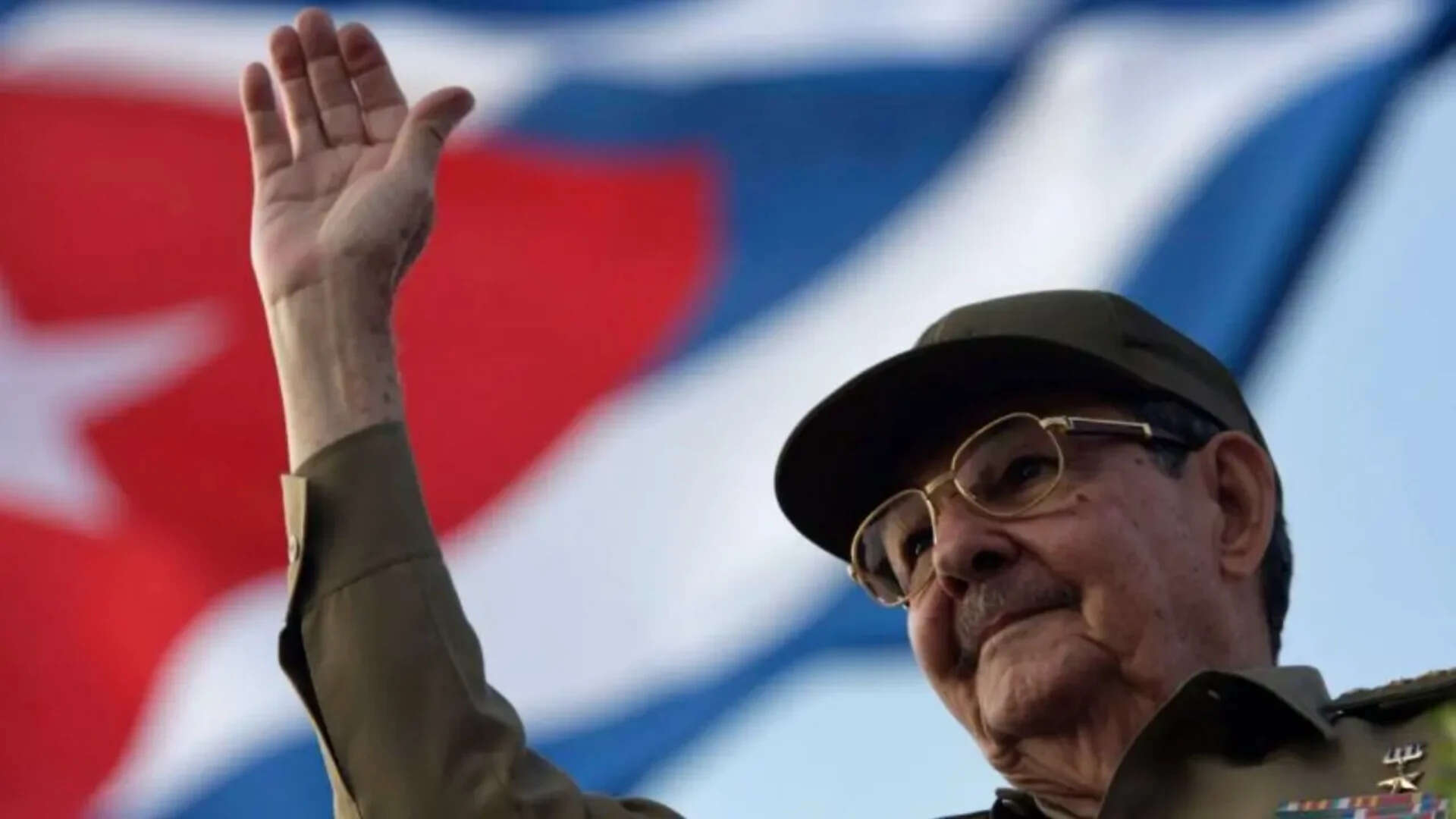
The federal criminal indictment of 94-year-old Raúl Castro by a Miami grand jury marks an inflection point in Washington’s Caribbean strategy, yet popular analysis fundamentally misinterprets the risk profile. The consensus view treats the indictment as an immediate precursor to open kinetic warfare—a flawed assumption that ignores the structural mechanics of modern coercive diplomacy. In reality, the legal maneuver functions not as a traditional casus belli, but as a mechanism designed to optimize economic leverage, systematically dismantle Havana’s internal economic monopolies, and satisfy domestic political requirements.
To evaluate whether this legal escalation will culminate in military conflict, the situation must be parsed through three distinct analytical frameworks: the Venezuelan Precedent, the Cost Function of Kinetic Intervention, and the Economic Architecture of Cuban State Survival.
The Venezuelan Precedent and the Extradition Pretext
The structural logic of the indictment—charging Castro with conspiracy to kill US nationals, four counts of murder, and the destruction of aircraft regarding the 1996 Brothers to the Rescue shootdown—directly replicates the strategic playbook executed against Caracas.
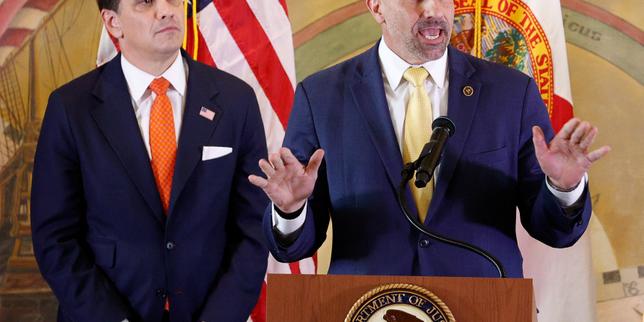
When US special forces entered Caracas to detain Venezuelan President Nicolás Maduro, the operational legitimacy of the extraction relied entirely on a prior federal indictment for narco-trafficking. Acting Attorney General Todd Blanche’s declaration that Castro is expected to appear in Miami "either by his own will or by another way" intentionally invokes this exact operational template.
This creates a structural bottleneck for the Cuban leadership. The legal framework establishes an ongoing, non-negotiable demand for extradition that serves two distinct functions:
- Asymmetry of Compromise: It removes the possibility of a status-quo diplomatic reset. By shifting the bilateral dispute from diplomatic non-compliance to international criminal law, Washington forces the Cuban regime into a binary choice between total defiance or systemic capitulation.
- The Regime Change Justification Portfolio: The indictment serves as a pre-packaged legal component. If Washington chooses to transition from economic coercion to physical intervention, the baseline justification has already survived grand jury scrutiny, removing domestic legislative delays.
The Kinetic Cost Function: Why War Remains Irrationally Expensive
While the legal architecture for an intervention is being assembled, the structural variables of the Caribbean theater indicate that immediate kinetic escalation remains a low-probability outcome. The cost function of an overt military invasion of Cuba contains three prohibitive variables that distinguish it from the Venezuelan intervention.
1. The Asymmetry of Urban Resistance Assets
Unlike the demoralized and fragmented Venezuelan command structure, the Cuban Revolutionary Armed Forces (FAR) and the Ministry of the Interior (MININT) have spent six decades preparing for localized asymmetric warfare. Even in a state of advanced material depletion, the institutional memory of the Cuban military is optimized for territorial defense. The deployment of ground forces would incur structural costs in personnel and political capital that far exceed the strategic value of the island's neutralization.
2. The Drone Proliferation Variable
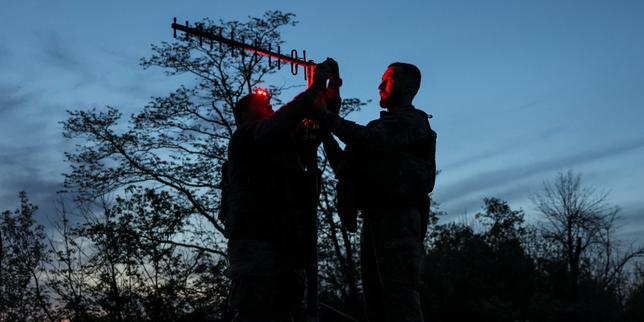
A recently disclosed intelligence report confirms that Havana has acquired several hundred long-range, low-cost reconnaissance and strike drones over the past forty-eight months. While incapable of challenging US airspace dominance, these assets provide Cuba with a highly effective anti-access/area-denial (A2/AD) capability across the Florida Straits. The potential for asymmetric retaliatory strikes on civilian infrastructure or commercial shipping lines in South Florida alters the risk-reward calculation for regional commanders.
3. The Migratory Pressure Valve
Any sustained kinetic operation or naval blockade would immediately destabilize the fragile civilian distribution network on the island, triggering an unmanageable mass migration event. For Washington, the domestic political liability of a massive maritime migration influx creates a direct structural counter-incentive to kinetic operations.
Dismantling the Corporate State: GAESA as the True Target
The strategic objective of this escalation is economic, targeting the structural foundation of Cuban state survival: Grupo de Administración Empresarial S.A. (GAESA).
GAESA is the military-run conglomerate that controls an estimated 70% of Cuba's retail, tourism, financial services, and foreign trade sectors. By indicting Raúl Castro—who institutionalized GAESA’s dominance—Washington is applying a high-pressure legal filter designed to paralyze the conglomerate's international banking access and supply lines.
The economic containment model operates via a multi-tiered bottleneck strategy:
- The Foreign Investment Freeze: By labeling the ultimate decision-maker of the Cuban state an indicted international fugitive, Washington effectively blacklists anyone doing business with GAESA. European and Canadian hospitality and logistics firms face severe compliance risks under the codified provisions of the 1996 Helms-Burton Act, which this indictment reinforces.
- The Energy Supply Blockade: The ongoing restriction on fuel imports has already caused systemic blackouts and a near-total collapse of manufacturing output. The indictment amplifies this by increasing the legal risk for global shipping lines and insurance syndicates handling tankers bound for Cuban ports.
- Dismantling the Monopolistic Privilege: US officials have signaled that any future economic engagement is contingent on the complete stripping of GAESA's commercial privileges. The strategic intent is to force the Cuban government to transfer economic management away from military entities and toward an independent private sector, effectively defunding the state security apparatus.
The Circle-the-Wagons Bottleneck
The primary limitation of this high-pressure strategy rests on a well-documented principle of authoritarian resilience: the siege narrative. Far from destabilizing the regime's inner circle, external legal threats of this magnitude typically eliminate any incentive for internal reform or moderate factionalism.
For the 94-year-old Castro and the ruling elite in Havana, handing over the historic leadership of the revolution is a structural impossibility. Consequently, the indictment reinforces a "circle-the-wagons" mentality within the PCC (Communist Party of Cuba). Hardliners can now successfully frame all internal economic discontent and calls for privatization not as legitimate civilian grievances, but as subversion orchestrated to support an aggressive foreign power. This reduces the immediate probability of the regime making the structural compromises Washington demands, locking both actors into a protracted, high-stakes standoff.
Strategic Forecast
Rather than an imminent outbreak of kinetic war, the bilateral relationship will shift toward a highly institutionalized economic siege designed to trigger internal systemic collapse. Washington will use the indictment as a legal anchor to prevent future administrations from easily offering sanctions relief, ensuring that the economic blockade remains absolute.
Concurrently, the US will deploy enhanced cyber and intelligence capabilities to monitor and disrupt GAESA’s shadow financial networks, while maintaining a visible military readiness posture in the Caribbean to deter asymmetric drone deployment. The strategic play is not a costly amphibious invasion, but the systematic application of economic and legal friction until the structural costs of regime survival become higher than the internal security apparatus can sustain.
The detailed security and diplomatic analysis in the following video breaks down the immediate operational implications of this shift on regional intelligence networks.
What Raúl Castro's planned indictment means for US-Cuba relations
This resource provides a direct look at the immediate institutional reactions and policy trade-offs being calculated in Washington and Havana following the indictment.