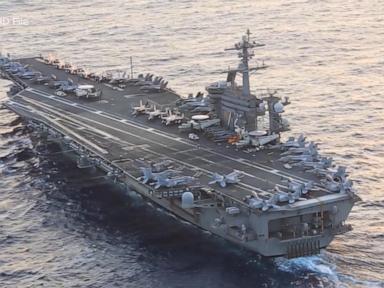
The return of the USS Abraham Lincoln following a 272-day deployment is not merely a routine homecoming; it represents a stress test of personnel endurance, mechanical depreciation, and force projection limits. Modern naval operations treat endurance as a variable to be maximized, but extended deployments exact steep costs that conventional metrics fail to capture. When a carrier strike group operates continuously at sea for over nine months, the underlying systems—human, mechanical, and logistical—experience compounding degradation that alters operational readiness long after port arrival.
Operating a nuclear-powered aircraft carrier and its embarked air wing for nearly nine consecutive months requires an examination of the structural variables governing modern naval warfare. These operations reveal three distinct cost vectors: physiological human capital depletion, deferred maintenance acceleration, and supply chain friction. Deconstructing these vectors exposes the trade-offs inherent in maintaining a continuous global presence without adequate rotational bandwidth. For a different perspective, read: this related article.
The Physiological and Psychological Threshold of Human Capital
Human endurance forms the absolute constraint on naval deployment length. While steel and nuclear reactors possess high fatigue limits, human cognitive and physical performance degrades predictably under conditions of sustained operational tempo. A 272-day deployment means nearly nine months of disrupted circadian rhythms, high-stress decision-making environments, and restricted living conditions for thousands of sailors and aviators.
Sleep deprivation is the primary operational hazard during extended carrier deployments. Flight deck operations, combat information center watches, and engineering maintenance schedules frequently enforce work-rest cycles that prevent adequate restorative sleep. Chronic sleep debt impairs reaction times, diminishes situational awareness, and increases error rates in complex tasks such as aircraft recovery and tactical navigation. Further coverage on this trend has been shared by The New York Times.
Retention data consistently demonstrates an inverse relationship between deployment length and career longevity. When sailors experience prolonged isolation and missed predictability milestones, the institutional cost manifests years later through the loss of experienced petty officers and mid-grade technicians. This human capital drain hollows out technical expertise, forcing commands to rely on younger, less experienced personnel who require closer supervision, which paradoxically increases operational risk.
Mechanical Depreciation and Deferred Maintenance Dynamics
A Nimitz-class aircraft carrier is an extraordinarily complex integration of mechanical, electrical, and digital systems. Continuous operation at sea accelerates wear and tear across propulsion plants, catapult mechanisms, arresting gear, and airframe structures. Saltwater environments create an unremitting corrosive pressure that requires constant mitigation, a task made difficult during high-tempo operational phases where maintenance must be triaged rather than comprehensive.
When deployment extensions occur, maintenance windows ashore are compressed. This creates a systemic backlog known in naval logistics as deferred maintenance. Minor engineering discrepancies that could be resolved swiftly during standard intermediate maintenance availability periods are left unaddressed due to operational commitments. Over 272 days, these minor issues compound. A valve leak left unchecked can lead to main reduction gear complications; minor corrosion on structural frames can expand beneath protective coatings.
The embarked air wing undergoes similar degradation. High sortie rates place intense stress on airframes, avionics, and engine components. Depot-level maintenance facilities ashore operate on strict schedules; when deployment extensions disrupt these rotations, aircraft miss critical overhaul intervals. The resulting maintenance debt requires extensive shipyard periods upon return, rendering the carrier strike group unavailable for subsequent tasking for months or even years.
Logistical Friction and Operational Tempo Bottlenecks
Sustaining a strike group nearly nine months away from home ports requires a complex logistical apparatus comprising underway replenishment vessels, military sealift command ships, and overseas supply hubs. This supply chain operates under conditions of extreme friction, where fuel, ordnance, spare parts, and provisions must be transferred via underway replenishment at sea regardless of weather or tactical threat environments.
The logistics burden scales non-linearly with time. Early in a deployment, spare parts inventories are optimized for standard operating profiles. As unexpected component failures accumulate, specific high-demand spares are depleted. Replenishing these items requires precise coordination across global transport networks, introducing vulnerabilities to supply chain bottlenecks.
Furthermore, extended deployments alter the strategic calculus of force management. When a single carrier is forced to absorb prolonged tasking to cover gaps in the global rotational schedule, it masks underlying shortfalls in overall force structure size. This approach relies on borrowing readiness from the future to satisfy present demands. The immediate tactical presence is bought at the expense of strategic flexibility, leaving fewer ready assets available if multiple contingencies emerge concurrently.
Strategic Realignment and Force Management Repercussions
Mitigating the systemic costs associated with prolonged naval deployments requires moving beyond the mindset of maximizing individual ship endurance. The historical baseline of six-month deployments was established precisely because it balances operational presence against human and mechanical degradation thresholds. Exceeding this baseline by nearly three months represents an emergency adaptation to capacity constraints rather than a sustainable operational model.
Restoring balance to naval force management necessitates aligning operational commitments with actual fleet size. If global security requirements demand continuous carrier presence in multiple regions, the Navy must either expand the active fleet to provide the necessary rotational base or accept higher risks of equipment failure and personnel burnout. Continuing to rely on extended deployments as a standard operating procedure degrades the long-term health of the force, substituting short-term visibility for long-term readiness.
The path forward requires strict adherence to operational tempo caps, protection of scheduled maintenance windows, and investment in human capital retention programs that insulate sailors from the compounding strains of extended isolation. Operational effectiveness is not measured solely by days spent at sea, but by the combat readiness retained when the anchor finally drops.