Commercial aviation security architecture operates on a foundational presumption of structural trust between flight deck crew members. When that internal trust vector fails, standard multi-layered security protocols—designed almost exclusively to defend against external interference—exhibit profound systemic vulnerabilities. The events surrounding Flydubai Flight 1073 on September 30, 2026, expose the limits of these operational safeguards during an insider threat scenario. Deconstructing the mechanics of the incident requires an examination of physical access control, human factors engineering within the flight deck, and the physical stress limits of narrowbody aircraft during extreme maneuvers.
The Flight Deck Access Dilemma
Modern flight deck security standards rely on reinforced doors designed to withstand ballistic threats and unauthorized external entry. However, these fortifications introduce a critical inverse security problem: containment. Once a security breach originates from inside the flight deck, the physical barrier that protects against external actors transforms into an impediment to internal rescue.
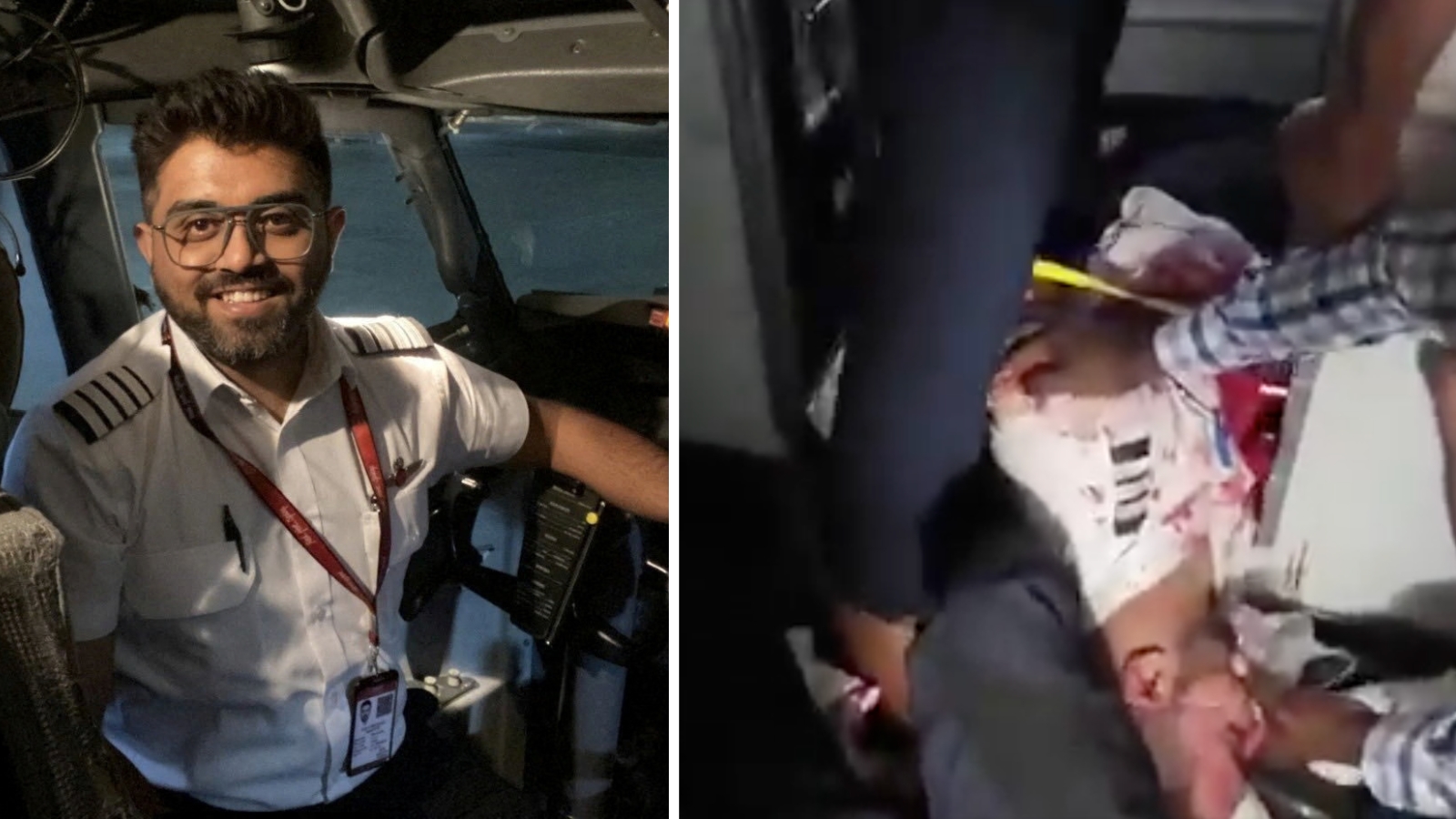
In the case of Flight 1073, the first officer initiated a physical assault on Captain Smit Machchhar while traversing Saudi and Jordanian airspace. Official investigations by the United Arab Emirates authorities established that the first officer utilized the aircraft’s standard emergency crash axe as a weapon during the altercation. This tool, mandated by aviation regulators for emergency egress and panel removal during onboard fires or structural jams, was weaponized within a confined workspace measuring mere cubic meters.
The operational parameters of the cockpit environment create a zero-sum defensive calculus:
- Restricted Mobility: Ergonomic constraints limit defensive maneuvering, leaving pilots vulnerable to blunt-force and edged trauma.
- Control Seizure: The physical proximity of flight controls means an incapacitated or compromised pilot can inadvertently or deliberately destabilize the aircraft flight path simply by slumping against or manipulating the control column.
- Isolation Factor: Reinforced doors muffle internal cockpit noise, delaying cabin crew awareness until telemetry anomalies or radical altitude deviations manifest.
Aerodynamic Stress and Structural Fatigue
The physical struggle inside the flight deck directly precipitated an abrupt altitude deviation. Flight-tracking data indicates that the Boeing 737 MAX 8 descended from approximately 34,000 feet to 17,000 feet in less than sixty seconds. This steep descent velocity forced the aircraft to cross structural design thresholds, driving ground speeds toward an estimated 600 miles per hour.
When an aircraft exceeds its operational V-speeds during an uncontrolled dive, dynamic pressure places extreme strain on control surfaces. Post-incident imagery from Tabuk, Saudi Arabia, confirmed that the aircraft's vertical stabilizer rudder detached entirely due to overspeed forces encountered during this rapid plunge. The survivability of the airframe under these conditions highlights the structural redundancy built into modern commercial hulls, yet it also emphasizes a stark engineering reality: aerodynamic forces can compromise control integrity long before structural break-up occurs.
Crew Resource Management and Intervention Metrics
The mitigation of the crisis on Flight 1073 depended entirely on a rapid breakdown of internal containment and external intervention. Severely wounded, Captain Machchhar executed a critical manual override by reaching the cockpit door release mechanism to signal for help before losing consciousness.
The subsequent intervention relied on three distinct layers of human capital present on the aircraft:
- Passenger Response: Occupants entering the flight deck immediately following the door opening physically restrained the first officer using improvised bindings, including headphone wires and cable ties.
- Deadheading Flight Crew: Two off-duty Flydubai pilots traveling as passengers stepped into the flight deck, assumed control of the compromised aircraft, and managed the emergency diversion to Prince Sultan bin Abdulaziz Airport in Tabuk.
- Medical Triage In-Flight: Professional medical personnel among the passengers stabilized Captain Machchhar’s trauma injuries, preventing rapid exsanguination prior to ground-based medical evacuation.
Relying on stochastic human intervention—such as the fortuitous presence of off-duty airline pilots and medical professionals in the passenger cabin—reveals an inherent systemic vulnerability in point-to-point commercial transit security.
Regulatory Adjustments and Operational Remediation
The operational aftermath of the incident triggered immediate diplomatic and regulatory friction regarding regional aviation corridors, leading to extended suspensions of direct commercial routes between the United Arab Emirates and Israel. Investigators and civil aviation authorities face the complex task of revising risk assessment matrices that previously overlooked internal psychological vetting failures in favor of perimeter defense models.
Future risk mitigation frameworks require systemic adjustments rather than surface-level procedural tweaks:
- Enhanced Psychological Monitoring: Integrating longitudinal behavioral tracking and vetting protocols to identify radicalization or acute psychological degradation among flight crews prior to flight assignment.
- Redesigned Cockpit Access Hierarchies: Developing fail-safes that allow authorized cabin crew intervention or remote override capabilities under specific verified telemetry distress signatures without compromising anti-hijacking protections.
- Emergency Equipment Stowing: Re-evaluating the physical accessibility and securing mechanisms of tools such as crash axes to ensure they cannot be readily detached and utilized as offensive implements during an internal security breach.
The strategic imperative for international carriers moving forward involves decoupling perimeter security assumptions from internal personnel trust models, ensuring that a compromise of the flight deck crew does not translate into an unmitigated catastrophic trajectory.