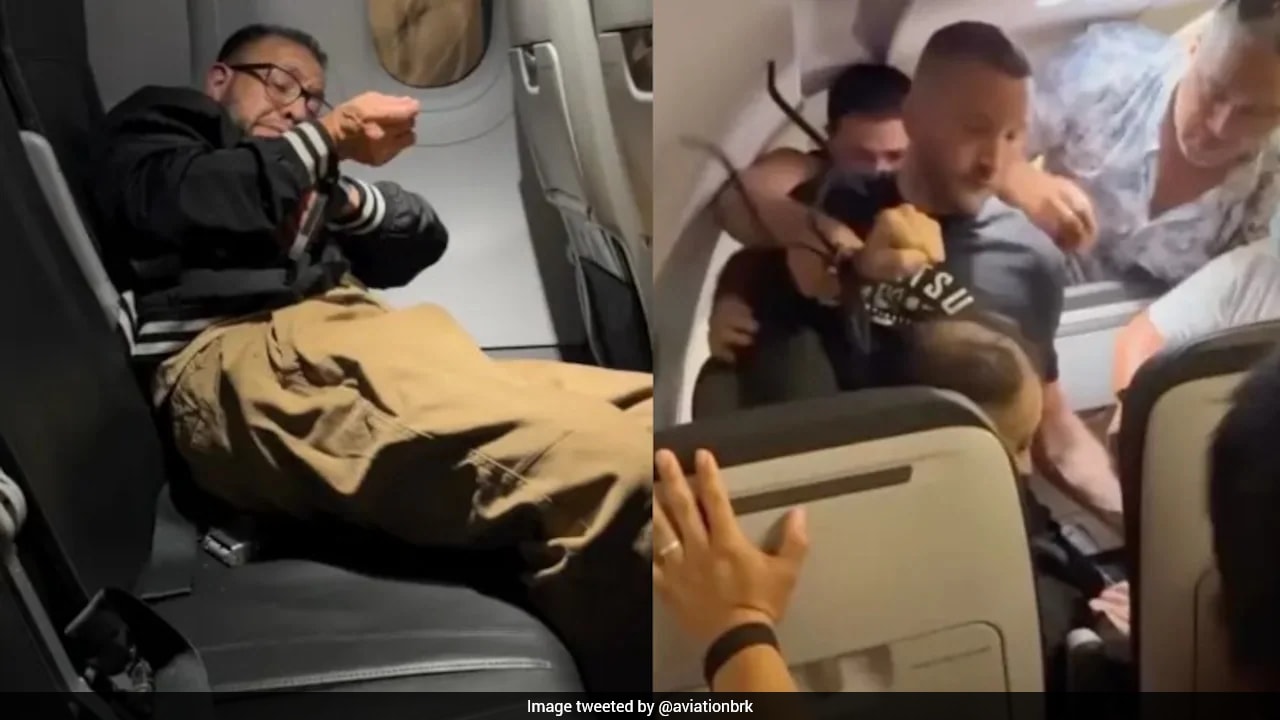
Commercial aviation operates on a zero-tolerance margin for cabin breaches, yet the mitigation of in-flight disruptions relies on a fragile combination of structural engineering and ad-hoc human intervention. When a passenger attempts to compromise an aircraft door mid-flight—as occurred on a recent Frontier Airlines flight—the incident exposes a critical intersection of physics, psychology, and tactical restraint. Analyzing this event requires moving past sensationalist reporting to examine the structural impossibility of mid-flight door decompression, the breakdown of cabin management, and the mechanics of civilian-led physical containment.
The Physics of Cabin Pressurization vs. Kinetic Interventions
Public anxiety regarding in-flight door breaches stems from a fundamental misunderstanding of aircraft design. The belief that a single non-compliant passenger can open an emergency exit at cruising altitude ignores the law of differential pressure.
Commercial aircraft operate as sealed pressure vessels. At a standard cruising altitude of 35,000 feet, atmospheric pressure drops to approximately 3.5 pounds per square inch (psi), while the internal cabin pressure is artificially maintained at roughly 11 to 12 psi to ensure human survival. This creates a pressure differential of 7.5 to 8.5 psi pushing outward against the airframe.
[Internal Cabin Pressure: ~11-12 psi] ---> Pushes Outward
                                           | Plug Door Design Seals Tighter
[External Atmospheric Pressure: ~3.5 psi] <--- Pushes Inward
Emergency exits on commercial airliners are engineered as "plug doors." To open, the door mechanism must first be pulled inward before it can be rotated and pushed outward.
- The Math of Resistance: A standard emergency exit door measures roughly 72 inches by 36 inches, yielding a surface area of 2,592 square inches.
- The Force Required: At a conservative differential pressure of 8 psi, the inward force holding the door sealed against its frame is over 20,000 pounds (9,000 kilograms).
No human being possesses the kinetic capacity to overcome this physical seal while the aircraft is pressurized. The actual risk of an attempted door breach is not immediate explosive decompression; instead, it is the acute disruption of cabin order, the potential destruction of the interior locking handle mechanism, and the tactical diversion of the flight crew from operational duties. The threat is operational, not aerodynamic.
The Cabin Management Breakdown: The Three Stages of Escalation
In-flight security failures follow a predictable trajectory. Passenger interference rarely occurs in a vacuum; it is the endpoint of an escalation chain that flight crews are trained to identify and defuse. When an incident escalates to physical intervention, it reveals a failure cascade across three distinct phases.
Phase 1: The Prodromal Behavioral Signals
Before a physical breach is attempted, non-compliant passengers exhibit indicators of acute psychological distress, intoxication, or hypoxia. These include spatial disorientation, verbal agitation, and fixation on exit points. Standard operating procedures dictate immediate verbal boundary-setting and the relocation of surrounding passengers to create a tactical buffer zone.
Phase 2: The Kinetic Breach Attempt
The moment a passenger moves toward an exit with intent to alter the door mechanism, the situation transitions from a behavioral disruption to an active security threat. At this juncture, the flight crew's primary objective shifts from customer service to cockpit preservation. Federal aviation regulations mandate that the flight deck door remain locked and barricaded, leaving the cabin crew to manage the threat with available resources.
Phase 3: The Containment Deficit
Cabin crews are trained in basic restraint techniques, but their physical capacity is limited by numerical disadvantage and the restrictive geography of the aircraft aisle. If a disruptive passenger possesses superior mass or aggressive intent, the cabin crew faces a resource deficit. This structural gap explains why commercial aviation remains uniquely dependent on civilian intervention during high-level disruptions.
The Mechanics of Civilian Intervention and Tactical Restraint
When a trained asset—such as a professional mixed martial artist—intervenes in an aviation security incident, the dynamic of the confrontation changes entirely. The tight constraints of an aircraft aisle restrict lateral movement, rendering traditional striking techniques both ineffective and dangerous to bystanders. Control requires the application of close-quarters grappling and joint manipulation.
The successful neutralization of the non-compliant passenger on the Frontier Airlines flight highlights the efficacy of leverage-based restraint over impact-based violence.
[Threat Identification] -> [Close-Quarters Grappling] -> [Positional Asphyxia Prevention] -> [Mechanical Restraint]
The intervention process follows a strict hierarchy of physical control:
- Securing the Center of Mass: In a narrow aisle, the primary objective is to eliminate the subject's mobility. This is achieved by taking the back or establishing a dominant top position (such as the mount or side control) to neutralize the leverage of the limbs.
- Isolating the Limbs: Once the torso is controlled, the intervenor must isolate the arms to prevent the subject from reaching for door levers, hidden items, or the crew's emergency equipment. Joint locks, such as Kimura or Americano variations, are used not to cause injury, but to force compliance and immobilization through leverage.
- Managing the Risk of Positional Asphyxia: Civilian intervenors face significant legal and physical liability if restraint compromises the subject's respiratory function. Prolonged pressure on the chest or neck must be avoided. The objective is stabilization until mechanical restraints, such as plastic flex-cuffs or seatbelt extensions, can be applied by the crew.
While civilian intervention can resolve an immediate crisis, it introduces severe systemic volatility. Flight crews cannot predict whether an intervening passenger possesses professional restraint training or erratic impulses that could exacerbate the violence.
The Operational Cost Function of In-Flight Disruptions
The financial and operational consequences of an in-flight security event extend far beyond the immediate disruption of the passenger cabin. For an airline like Frontier, which operates an ultra-low-cost carrier (ULCC) model optimized for rapid aircraft turnaround, a diverted flight causes severe logistical damage.
The cost function of a mid-flight diversion is calculated through several compounded variables:
$$\text{Total Diversion Cost} = C_{\text{fuel}} + C_{\text{fees}} + C_{\text{labor}} + C_{\text{logistics}} + C_{\text{reputation}}$$
- Fuel Burn and Dumping: A flight forced to make an emergency descent burns highly inefficient quantities of fuel at lower altitudes. If the aircraft is above its maximum landing weight, it must dump fuel or risk structural damage upon touchdown.
- Airport Landing and Handling Fees: Unscheduled landings incur premium fees from air traffic control and airport authorities, alongside emergency service deployment costs.
- Crew Duty-Time Limits: Aviation regulatory bodies enforce strict limits on crew duty hours. A diversion can easily push a crew past their legal limits, requiring the airline to fly in a replacement crew or cancel subsequent scheduled legs for that specific aircraft.
- Downstream Network Disruption: In a point-to-point network routing system, a delay of three hours in the morning cascades across the entire country by evening, causing multiple flight cancellations and missed connections for thousands of passengers.
The total economic impact of a single mid-flight violent disruption routinely reaches tens of thousands of dollars, exclusive of potential regulatory fines and long-term brand erosion.
Structural Vulnerabilities in Commercial Aviation Security
The reliance on passengers to subvert security threats exposes a fundamental vulnerability in the current architecture of commercial aviation. The system assumes that a self-correcting mechanism—cooperative passengers—will always step forward to fill the gap left by flight crew limitations and the absence of Federal Air Marshals on every domestic flight.
The limitations of this system are clear:
- Variable Passenger Capability: There is no guarantee that an aircraft will carry individuals with the physical capacity or psychological readiness to neutralize a violent threat.
- Legal Liability Ambiguity: Passengers who intervene risk personal injury, criminal charges, or civil lawsuits if their use of force is deemed excessive by ground jurisdictions.
- Risk of Escalation: Miscalculated civilian interference can transform a verbal confrontation or a confused, hypoxic passenger into a panicked, violent melee, increasing the risk of injury to innocent bystanders.
Airlines must re-evaluate their reliance on spontaneous civilian intervention. Relying on the chance presence of trained martial artists is a gamble, not a security strategy.
Actionable Security Protocols for Flight Operations
To mitigate the operational and physical risks of in-flight security breaches without relying on civilian luck, air carriers must implement a more rigorous, standardized cabin containment strategy.
- Deploy Standardized Mechanical Restraint Kits: Every commercial cabin must be equipped with professional-grade, quick-release mechanical restraints located at multiple designated stations, rather than relying on standard zip-ties or improvised materials.
- Implement High-Stress Grappling Modules for Crew: Flight crew security training must evolve past verbal de-escalation and basic posture management. Crews require mandatory, recurring training in close-quarters control tactics specifically designed for the dimensional limits of a narrow-body aircraft aisle.
- Establish Clear Passenger Intervention Triggers: Airlines must formalize the explicit legal and operational boundaries under which a flight crew can formally request civilian assistance. This protocol must define the exact verbal commands that authorize passenger intervention, removing the ambiguity of legal liability during an active cabin crisis.