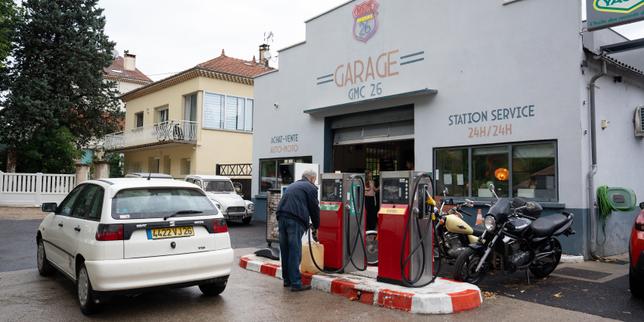
The recent downtrend in retail gasoline and diesel prices across French service stations is not a simple reflection of falling crude oil costs. It is the output of a multi-tiered supply chain governed by lagging transmission mechanisms, currency risk, and localized retail density. While mainstream reporting attributes lower pump prices to general market fluctuations, a structural analysis of the French energy sector reveals that retail price relief is dictated by three distinct structural pillars: Brent benchmark volatility, refining margin compression, and the asymmetrical phenomenon known as the "rockets and feathers" pricing effect.
Understanding this pricing matrix requires abandoning the assumption that international crude oil cuts translate immediately to the pump. French motorists and fleet logistics managers operating in this market are subject to a rigid cost function. To accurately forecast fuel costs or manage procurement strategy, operators must deconstruct the components that dictate the final price per liter. Recently making waves recently: The FOMO Spending Trap Why Young Earners Are Bleeding Money on Things They Hate.
The Three Pillars of French Fuel Cost Formulation
The final price of fuel at a French service station is determined by three independent but sequential variables. A bottleneck or shift in any single pillar alters the velocity at which pump prices drop.
Final Pump Price = (Crude Product Cost × Exchange Rate) + Refining Margin + Distribution Cost + Fixed Duties + Proportionate VAT
1. The Commodity and Currency Nexus
France imports the vast majority of its crude oil, predominantly priced in US Dollars (USD), while retail transactions occur entirely in Euros (EUR). Consequently, the actual commodity cost for French refiners is a joint function of the Brent crude benchmark and the EUR/USD exchange rate. A nominal drop in Brent prices can be entirely neutralized if the Euro depreciates against the Dollar simultaneously. More insights regarding the matter are explored by The Economist.
2. The Refining and Processing Premium
Crude oil cannot be introduced into a combustion engine. The cost of processing crude into finished Eurograde gasoline or diesel is represented by the refining margin (or crack spread). This margin fluctuates based on European refining capacity, regional maintenance schedules, and structural shifts—such as the structural deficit of diesel refining capacity in Europe, which historically forces France to import finished diesel from international markets.
3. Logistic, Retail, and Fiscal Overhead
Once refined, the product enters the domestic distribution network via pipelines, rail, and road transport to approximately 11,000 service stations across France. This final stage includes storage costs, local transport overhead, and the retail margin. Crucially, this pillar is anchored by a rigid fiscal framework: the TICPE (Taxe intérieure de consommation sur les produits énergétiques), which is a fixed volumetric tax per liter, and a standard 20% VAT applied on top of both the product cost and the TICPE.
The Rocket and Feather Mechanism in Retail Distribution
The primary point of friction for consumers during a market downturn is the observable delay between dropping crude prices and dropping pump prices. In economics, this asymmetry is defined by the "rockets and feathers" model: retail prices rise like rockets when wholesale costs surge, but fall like feathers when wholesale costs recede.
This lag is not inherently indicative of illegal collusion; rather, it is driven by rational inventory management and risk mitigation strategies among major retail operators (such as TotalEnergies, Carrefour, and E.Leclerc).
- Inventory Cost Accounting (FIFO Management): Service stations purchase fuel days or weeks before it is sold. Under First-In, First-Out (FIFO) accounting, a retailer who purchased stock at peak wholesale prices cannot cut retail prices immediately without taking a direct loss on that inventory. Prices only begin to drop significantly once the station depletes its expensive stock and replenishes its tanks with lower-cost wholesale fuel.
- Asymmetrical Search Theory: When fuel prices are high and rising, consumers become highly sensitive to price differences and actively seek out cheaper stations. This forces rapid alignment across competitors. Conversely, when prices begin to trend downward globally, consumer urgency to compare prices diminishes slightly, granting retailers a brief window to maintain higher margins and recoup losses incurred during the upward price spike.
Institutional Segmentation: Hypermarkets vs. Traditional Networks
The velocity of fuel price reduction in France varies drastically depending on the business model of the distributor. The French market is structurally unique due to the massive market share held by large-format grocery retailers (hypermarkets), which distribute more than 60% of the nation's fuel.
Hypermarkets utilize fuel primarily as a loss leader or low-margin traffic driver designed to attract consumers into their adjacent retail ecosystems. Because these entities rely on massive volume and rapid stock turnover, their inventory replacement cycle is significantly shorter than that of traditional standalone stations. A typical hypermarket station may deplete its fuel volumes every 24 to 48 hours, allowing them to integrate cheaper wholesale prices into their pumps far faster than a rural, lower-volume independent station.
Traditional oil company networks compete by offering premium additives, superior highway locations, and fleet management card integration. When wholesale prices drop, these networks deliberately slow their price descent to buffer their operational margins, creating a temporary but wide pricing spread between traditional stations and hypermarket forecourts.
Tactical Procurement Matrix for Fleet Operators
Relying on broad market sentiment is insufficient for logistics managers, corporate fleet directors, or high-volume transport operators. To capitalize on the structural descent of French fuel prices, procurement strategies must shift toward a data-driven model.
First, track the Rotterdan Product Plats rather than the crude Brent index. The Rotterdam spot market reflects the actual wholesale price of refined gasoline and diesel in Northwest Europe, serving as the true leading indicator for French supply costs with a 4 to 7-day lead time over domestic pump adjustments.
Second, evaluate the regional density of hypermarket fueling stations within your transit corridors. Routes featuring a high concentration of hypermarket fuel hubs adjust downward up to 72 hours faster than routes relying entirely on highway network stations (stations d'autoroute), where high fixed concession fees structurally inhibit rapid price reductions.
Third, distinguish between seasonal demand shifts and structural price drops. Gasoline prices typically face upward pressure heading into the summer driving season due to global demand spikes, whereas diesel demand is historically tethered to industrial output and winter heating requirements. A genuine macro-driven price drop will show simultaneous contraction across both products, while a localized drop may simply indicate a temporary regional supply surplus.