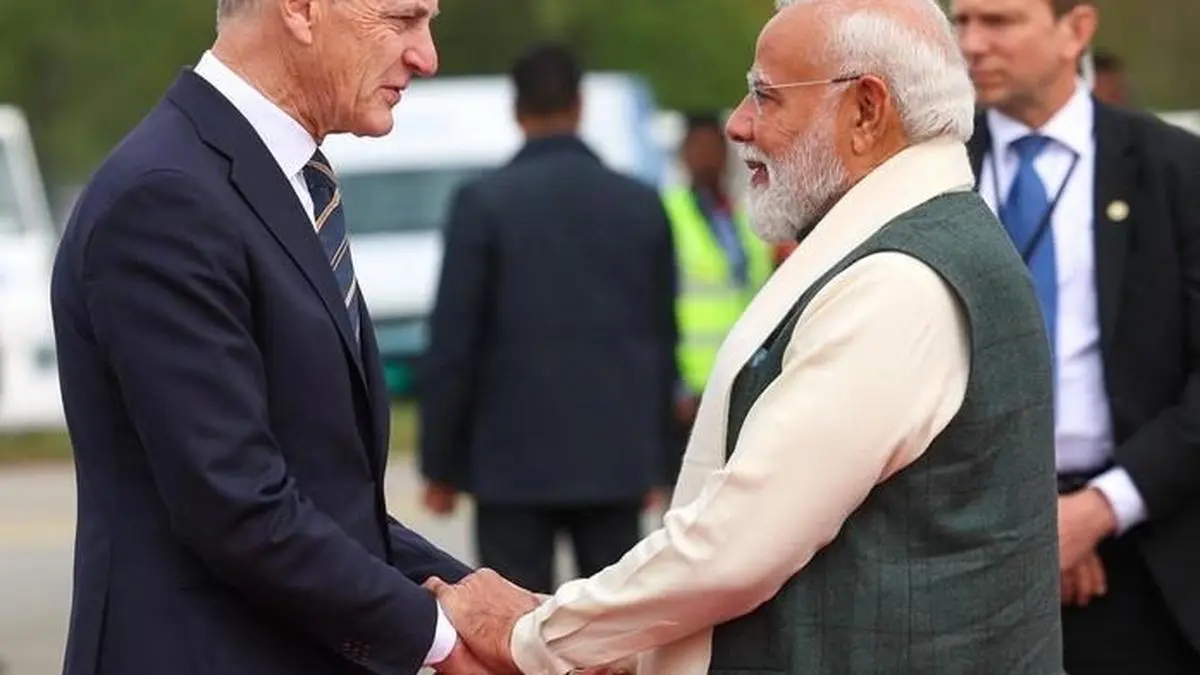
The arrival of the Indian Prime Minister in Oslo on May 18, 2026, marks the first bilateral visit by an Indian head of government to Norway in 43 years. This diplomatic inflection point addresses a major structural asymmetry in India’s European foreign policy, which has historically prioritized the continent's major economic cores—namely Germany, France, and the United Kingdom. The objective of this strategic realignment is to operationalize the Trade and Economic Partnership Agreement (TEPA) executed between India and the European Free Trade Association (EFTA). By shifting the bilateral relationship from purely diplomatic dialogue to structured capital allocation, both nations aim to unlock a highly complementary economic matrix.
The strategic rationale underpinning this summit is governed by a reciprocal supply-and-demand framework: India requires high-efficiency infrastructure technology, deep-water maritime expertise, and long-term sovereign capital to sustain its projected GDP growth trajectory; conversely, Norway requires high-yield, large-scale deployment destinations for its sovereign wealth assets alongside integrated access to global digital services and engineering capacity.
The Capital Allocation Architecture: Scaling Sovereign Investment
The economic relationship between New Delhi and Oslo is anchored by a sharp imbalance between liquid capital reserves and industrial deployment. Norway’s Government Pension Fund Global (GPFG), the largest sovereign wealth fund in the world, holds an estimated $28 billion in the Indian capital market. While this portfolio is highly liquid, it remains largely confined to secondary equity and debt instruments. The primary friction point in bilateral economic engineering is the conversion of this passive institutional investment into active greenfield and brownfield infrastructure capital.
The operationalization of the India-EFTA TEPA provides the institutional framework required to de-risk these capital flows. The treaty establishes a targeted investment commitment of $100 billion over a 15-year horizon across the EFTA bloc, with India positioning itself as the primary destination asset. To accelerate the velocity of this capital, the bilateral talks must resolve three core regulatory bottlenecks:
- Foreign Exchange Exposure Mitigation: Fluctuations in the INR/USD and INR/NOK currency pairs create a hedging premium that depresses the net realized returns for Norwegian institutional investors. Establishing direct currency clearing mechanisms or state-backed hedging facilities would lower these transactional friction costs.
- Asset Classification Standardization: Aligning India’s National Infrastructure Pipeline (NIP) taxonomy with Western European Environmental, Social, and Governance (ESG) compliance frameworks is essential for sovereign wealth funds bound by strict domestic statutory mandates.
- Arbitration and Reciprocity Protocols: Long-term capital deployment in complex infrastructure projects requires fast, predictable legal remedies. The implementation of clear, accelerated dispute resolution mechanisms within the TEPA framework is a prerequisite for scaling cross-border assets.
The Maritime and Hydrocarbon Energy Axis
The physical foundation of Indo-Norwegian commercial integration is governed by maritime logistics and energy security. Approximately 70% of the Norwegian companies operating within the Indian market are situated inside the maritime sector. This concentration reflects India's critical structural requirement to optimize its internal logistics and deep-water ports.
[Image of hydrogen fuel cell]
+-----------------------------------------------------------------------------+
|                        INDO-NORWEGIAN MARITIME MATRIX                       |
+-----------------------------------------------------------------------------+
|                                                                             |
|  NORWEGIAN INDUSTRIAL ASSETS               INDIAN INDUSTRIAL REQUIREMENTS   |
|  --------------------------               -----------------------------   |
|  - Deep-offshore extraction  ==========>  - Strategic Energy Security      |
|  - Liquefied Petroleum Gas   ==========>  - Long-term Fuel Contracts       |
|  - Green Shipping (LNG/H2)   ==========>  - Inland Waterway Decarbonization|
|  - Automated Port Logistics  ==========>  - Sagarmala Port Infrastructure  |
|                                                                             |
+-----------------------------------------------------------------------------+
The operational integration of these sectors is divided into two distinct industrial channels:
Hydrocarbon Logistics and Supply Chain Stabilization
India's domestic energy demand necessitates predictable, long-term input pricing to insulate its manufacturing sector from macroeconomic shocks. Equinor, Norway's state-controlled energy enterprise, currently exports Liquefied Petroleum Gas (LPG) to India primarily via spot-market transactions or short-term agreements. The strategic objective for Indian energy procurers is to transition these transactions into multi-decadal, high-volume supply contracts. Securing fixed-volume allocations reduces vulnerability to Middle Eastern or Russian supply disruptions, stabilizing the core input costs of India's domestic petrochemical and industrial manufacturing sectors.
Decarbonization of Maritime Infrastructure
The Indian government’s Sagarmala programme, which aims to modernize the country's 7,500-kilometer coastline, faces a steep technological deficit in port automation and low-emission shipping. Norwegian maritime entities possess specialized intellectual property in liquefied natural gas (LNG) propulsion, hydrogen fuel cell integration, and autonomous vessel traffic management systems.
Collaborative ventures established during this summit are designed to systematically inject this technical expertise into India’s coastal and inland waterways. This transfer of technology addresses an immediate operational bottleneck: reducing the carbon intensity of India's domestic freight logistics, which currently relies heavily on carbon-dense road transport.
The Digital Public Goods and Technology Transfer Engine
Beyond industrial infrastructure, the bilateral agenda indicates a profound shift toward digital asset integration. The signature of explicit Memorandums of Understanding (MoUs) concerning Digital Public Goods (DPGs) represents a significant evolution in international technology transfers.
India's development of the unified "India Stack"—comprising identity verification (Aadhaar), real-time payment interfaces (UPI), and decentralized data exchange protocols—has created a highly efficient, low-cost model for digital governance. Norway and India are creating a joint framework to export these open-source architectures to developing economies. This digital strategy serves dual interests:
- Geopolitical De-risking: It offers emerging markets a transparent, non-proprietary alternative to monopolistic digital architectures, establishing a stable, rules-based digital ecosystem.
- Commercial Interoperability: It creates an entry mechanism for Indian software engineering firms and Norwegian technology startups to jointly deploy regional enterprise platforms, scaling cross-border SaaS models across Europe and Asia.
The digital partnership also faces immediate structural constraints. Norway’s tech sector is experiencing a persistent engineering deficit, driving domestic firms to outsource development or invest directly in Indian startup hubs. Conversely, European expansion for Indian IT firms is frequently impeded by complex, fragmented regulatory barriers across the continent. The establishment of the Norway-India Business and Research Summit serves as a dedicated platform to harmonize these operational imbalances, matching Nordic capital and research facilities with Indian software talent.
Structural Bottlenecks and Strategic Risk Management
A clinical assessment of this bilateral integration reveals that execution risks could undermine these high-level policy frameworks. No international economic strategy operates without structural trade-offs.
+-----------------------------------------------------------------------------+
|                         EXECUTION RISK MATRIX                               |
+-----------------------------------------------------------------------------+
|                                                                             |
|  [Regulatory Asymmetry] ---------> Prolonged Compliance Alignments          |
|                                                                             |
|  [Geopolitical Churn]   ---------> Disrupted Supply and Value Chains        |
|                                                                             |
|  [Capital Trapping]    ---------> Secondary Asset Concentration             |
|                                                                             |
+-----------------------------------------------------------------------------+
The first limitation is the profound regulatory asymmetry between the two nations. Norway operates inside the European Single Market through the European Economic Area (EEA) agreement, binding its corporate entities to strict EU mandates regarding data privacy (GDPR), environmental supply-chain auditing, and rigorous carbon accounting. India's regulatory environment is undergoing rapid, non-linear transitions. Aligning cross-border corporate ventures to meet both jurisdictions' standards creates an administrative compliance burden that can stall medium-sized enterprises.
The second bottleneck relates to capital trapping. While India’s capital markets offer high growth potential, the repatriation of corporate profits and capital gains remains subject to complex tax compliance procedures and withholding taxes. If the TEPA implementation fails to provide a streamlined, predictable pathway for capital exit, Norway's sovereign and private funds will likely remain concentrated in passive, highly liquid secondary equities rather than the long-term, illiquid greenfield assets that India's infrastructure development requires.
Finally, international geopolitical tensions present an unpredictable variable. As supply chains fracture into regional, politicized Blocs, the Arctic region—where Norway holds direct territorial and strategic stakes—is becoming an arena of strategic competition. India's balanced diplomatic position regarding major global conflicts requires careful management when negotiating joint Arctic research initiatives and deep-sea maritime projects with a core NATO member state like Norway.
Directives for Sovereign and Corporate Leadership
To transform the policy objectives of the Oslo summit into quantifiable economic metrics, corporate and state actors should execute the following operational plan:
- Establish a Dedicated India-EFTA Infrastructure Sub-Fund: The National Investment and Infrastructure Fund (NIIF) of India should partner with the Norwegian GPFG to build a ring-fenced, co-investment vehicle tailored for green hydrogen and deep-water port logistics. This structure isolates sovereign capital from general market volatility and streamlines ESG compliance reporting.
- Harmonize Green Shipping Standards: The Ministry of Ports, Shipping and Waterways must fast-track the creation of dedicated regulatory sandboxes in major coastal hubs like Gujarat and Tamil Nadu. These sandboxes should permit Norwegian maritime firms to deploy and test autonomous, low-emission vessels under a pre-cleared legal framework, bypassing standard bureaucratized domestic licensing pipelines.
- Deploy Joint Digital Infrastructure in Third Markets: Industrial agencies from both nations should select a pilot country in Southeast Asia or Sub-Saharan Africa to deploy a combined digital governance package. This initiative should pair India's transaction architectures with Norway’s sustainable development funding, establishing a replicable framework for global digital infrastructure projects.
The economic dividends of this summit will not be realized through the mere signature of broad bilateral declarations. Success depends entirely on the rigorous engineering of project-level capital structures, the alignment of regulatory compliance taxonomies, and the systematic reduction of transactional friction across the Indo-Nordic corridor.