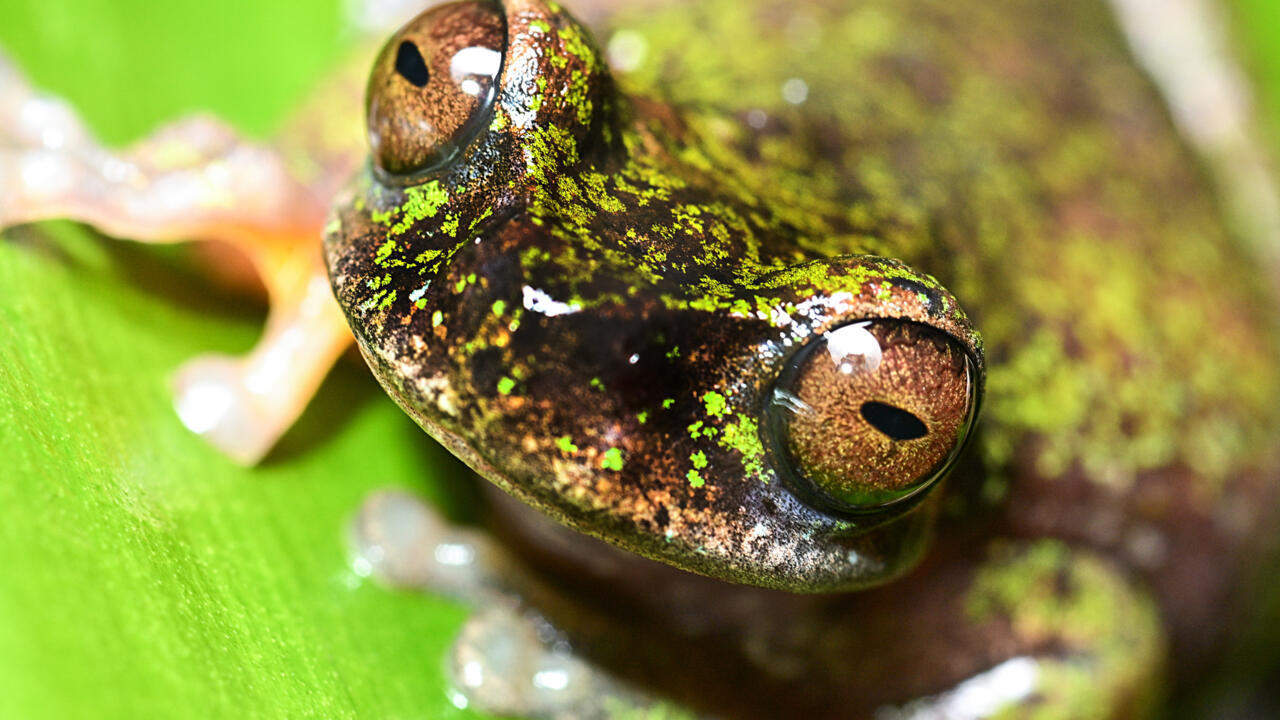
The identification of Isthmohyla nacientes, commonly designated as the spring or coffee frog within the Los Santos region of Costa Rica, challenges simplistic binaries that separate intensive agricultural landscapes from pristine wildlife reserves. Operating at elevations between 1,400 and 2,000 meters across Dota, Tarrazú, and León Cortés, this metallic green amphibian measures under four centimeters, yet its persistence inside active high-elevation coffee plantations provides a measurable case study in micro-habitat adaptation. Deconstructing this discovery requires moving past superficial descriptions to analyze the environmental variables, morphological constraints, and systemic vulnerabilities defining the species.
The Three Structural Pillars of Habitat Selection
Amphibian distribution within anthropogenic zones relies on three distinct environmental variables: thermal regulation, trophic resource availability, and hydrological continuity.
- Thermal and Moisture Regimes: High-elevation coffee shrubs provide structural canopy shade that mimics natural understory humidity. This architecture prevents desiccation in an organism with high cutaneous water loss rates.
- Trophic Specialization: The species does not consume agricultural output. Field observations confirm that metabolic energy is derived entirely from insect predation sustained by the micro-ecosystems of the plantation floor and foliage.
- Hydrological Dependency: Larval development requires direct access to stable, unpolluted headwaters. While adult forms utilize terrestrial vegetation, tadpoles rely strictly on adjacent aquatic matrices for metamorphosis.
The Cost Function of Agrochemical Integration
Coexistence within production landscapes introduces severe ecological friction. The biological cost function of this interaction is dictated by chemical vectoring pathways.
Agricultural Input Application
       │
       ├──> Atmospheric Drift (Airborne dispersal into riparian zones)
       └──> Soil Perkolation (Leaching into groundwater aquifers)
                │
                ▼
      Aquatic Larval Matrix (Tadpole exposure and developmental toxicity)
Pesticides and synthetic fertilizers applied to coffee shrubs do not remain static. Vector mechanisms operate through two primary channels: airborne drift into adjacent riparian corridors and subterranean percolation through soil layers into headwater springs. Because amphibian skin is exceptionally permeable, direct contact with these vectors compromises osmoregulation. Furthermore, larval stages developing within local creeks absorb concentrated chemical loads, establishing a demographic bottleneck that threatens future generational recruitment.
Acoustic Behavioral Mechanics
Communication strategies within Isthmohyla nacientes reflect evolutionary adaptation to noisy structural environments. Male specimens occupy perches on coffee shrubs after dark, utilizing inflatable translucent throats to broadcast short, high-pitched advertisement calls.
Acoustic output serves dual functions: establishing territorial boundaries and signaling reproductive readiness. Uniquely, documented behavioral repertoires include underwater courtship signaling. This dual-medium acoustic strategy maximizes reproductive success despite the physical fragmentation caused by agricultural clearing between isolated stream corridors.
Systemic Vulnerabilities and Management Protocols
The taxonomy of the species required decades of genetic verification, having been misidentified since initial observations in the 1960s until formal confirmation via genetic, morphological, and acoustic data. This latency exposes a critical monitoring failure in highland conservation frameworks.
Protection of endemic fauna in production zones cannot rely on passive tolerance by growers. Active management requires targeted buffer zones along stream headwaters, elimination of broad-spectrum agrochemicals that leach into local aqueducts, and legal protection of riparian vegetation strips that bridge fragmented plantation blocks.
Establish strict buffer zones along all headwaters within the Los Santos agricultural district to interrupt chemical vector pathways before runoff reaches larval development pools.