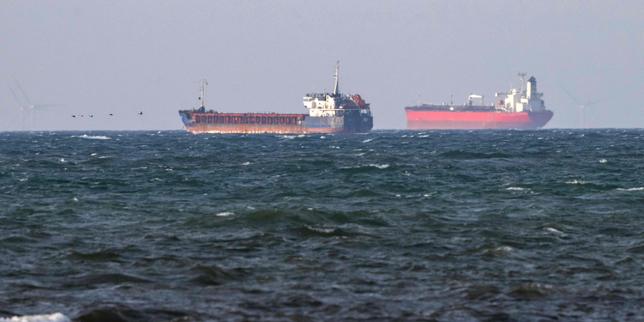
Sweden transferring an intercepted vessel associated with the Russian shadow fleet directly to Ukrainian custody marks a tactical evolution in maritime enforcement. For months, Western sanctions regimes relied on distant diplomacy, flag-state deregistrations, and theoretical tracking to curb the revenue streams funding offensive operations in Eastern Europe. Physical asset seizure deployed directly as a state-to-state transfer changes the risk calculus for shipowners operating aging tankers outside traditional Western insurance pools.
Understanding this development requires moving past superficial headline analysis. The transfer is not a symbolic gesture; it is a stress test of international maritime law, insurance liabilities, and regional naval logistics in the Baltic Sea.
The Mechanics of the Shadow Fleet
The shadow fleet functions through structural arbitrage. When traditional Western protection and indemnity clubs refused coverage for vessels carrying crude oil priced above the G7 price cap, an alternative maritime infrastructure emerged overnight.
This infrastructure relies on three core variables designed to evade regulatory visibility.
First, the asset tier consists of older tonnage, frequently vessels aged fifteen to twenty years that would otherwise face scrapping. These ships operate outside prime corporate registries, often shifting through shell companies incorporated in jurisdictions with minimal regulatory oversight.
Second, the insurance structure bypasses traditional Western maritime hubs. Coverage is provided by newly minted, undercapitalized insurers operating in non-aligned jurisdictions. These entities lack the balance sheet depth to cover catastrophic environmental disasters, effectively externalizing the financial risk of an oil spill onto coastal states along narrow transit choke points like the Danish Straits and the Baltic approaches.
Third, operational obfuscation defines transit patterns. Vessels routinely disable or manipulate automatic identification systems, conduct ship-to-ship transfers in international waters to blend crude origins, and utilize complex corporate ownership webs to insulate ultimate beneficial owners from asset forfeiture.
The Swedish Interdiction As a Legal and Operational Pivot
When Swedish authorities intercept a vessel linked to this network and redirect it to Ukraine, the action exploits a vulnerability in the shadow fleet business model. These operations depend on predictability and legal ambiguity. By physically seizing the asset and transferring it to a belligerent party, state actors are redefining the enforcement perimeter.
The legal justification typically roots itself in environmental protection or sanctions non-compliance. The Baltic Sea is governed by strict international environmental conventions, notably the Helsinki Convention and various International Maritime Organization protocols concerning vessel safety and pollution liability. Aging tankers lacking verifiable, first-tier insurance compliance present a clear and present ecological hazard to territorial waters.
Coastal states possess sovereign rights to inspect vessels suspected of violating environmental safety standards or navigating without adequate insurance certificates. Once an inspection reveals systemic non-compliance, detention mechanisms activate. Transferring the detained asset to Ukraine elevates the intervention from a domestic administrative penalty to a strategic asset denial operation.
The Economic Impact on Maritime Arbitrage
The financial viability of the shadow fleet rests on high profit margins offsetting high operational risks. Every disruption in the chain introduces friction that compresses those margins.
Insurgency of state action alters the cost function for shipowners and charterers in specific ways.
Insurance premiums, even within alternative markets, must price in the probability of permanent asset loss rather than temporary detention or fines. When vessels are permanently confiscated and transferred to external actors, the capital loss shifts from a manageable operating expense to a catastrophic balance sheet write-down for the shadow operators.
Financing costs escalate correspondingly. Investors backing the acquisition of aging tankers must now factor in sovereign seizure risk. As capital becomes more expensive or withdraws entirely due to compliance pressures, the supply of available tonnage contracts.
Crew availability similarly tightens. Seafarers operating on substandard vessels face criminal liability, detention, and physical danger when transiting contested or heavily policed regional waters. Retaining qualified crews requires paying hazard premiums that erode the low-cost advantage of shadow operations.
Regional Choke Points and Strategic Vulnerabilities
The geography of the Baltic Sea makes it an optimal laboratory for this type of enforcement. Narrow straits, shallow depths, and heavy traffic density force vessels into predictable shipping lanes within or adjacent to the territorial waters of European Union and NATO member states.
This geography creates systemic vulnerabilities for Moscow's export apparatus. A significant volume of Russian crude exits via Baltic ports such as Primorsk and Ust-Luga. To reach global markets, these tankers must navigate through Danish or Swedish waters.
Coastal surveillance networks, combining radar, satellite tracking, and maritime patrol aircraft, maintain continuous visibility over these transits. When enforcement agencies combine digital tracking with physical boarding protocols, the transit window narrows.
The primary constraint on scaling this strategy is not legal or intelligence-based, but operational capacity. Boarding, inspecting, securing, and moving a large crude carrier requires specialized naval infantry, legal clearance, secure port facilities, and diplomatic bandwidth. Scaling interdictions from isolated incidents to a systematic interdiction campaign demands dedicated resource allocation that strains domestic maritime law enforcement agencies.
Counter-Strategies and Evasion Adaptations
Shadow fleet operators do not remain static. Economic actors under pressure adapt their logistics to bypass new regulatory and physical threats.
Expect to see an acceleration of fleet aging mitigation through faster shell-company rotation. When a specific owning entity or vessel name becomes toxic due to regulatory flagging, assets are rapidly renamed, reflagged to non-compliant registries, and transferred to new shell entities before interception protocols can catch up.
Another adaptation involves shifting trans-shipment zones further away from European coastal monitoring. By conducting transfers in less accessible international waters or closer to destination markets like Asia, operators attempt to minimize exposure to regional European naval patrols.
The reliance on non-aligned flag states will also intensify. States that refuse to cooperate with Western maritime directives will see increased demand for their registries, creating diplomatic friction between Western capitals and jurisdictions that profit from facilitating shadow transits.
Systemic Realities of Maritime Sanctions Enforcement
Physical asset transfer establishes a structural precedent that goes beyond the immediate economic friction of delayed shipments. It signals a shift from passive compliance monitoring to active asset expropriation utilized as an instrument of statecraft.
The long-term efficacy of this approach depends entirely on the political will of littoral states to sustain high-intensity maritime operations in contested waters. If Sweden and neighboring states institutionalize vessel seizures as a standard enforcement mechanism, the capital risk profile of the shadow fleet will eventually approach prohibitive thresholds, forcing a structural restructuring of how sanctioned hydrocarbons reach willing buyers.
To permanently degrade the logistical network, maritime enforcement must transition from sporadic interdictions to a synchronized, multi-state containment architecture. This requires real-time intelligence sharing across all Baltic and North Sea capitals, standardized legal thresholds for environmental detentions, and pre-arranged protocols for asset disposition that eliminate bureaucratic delays between interception and final transfer.