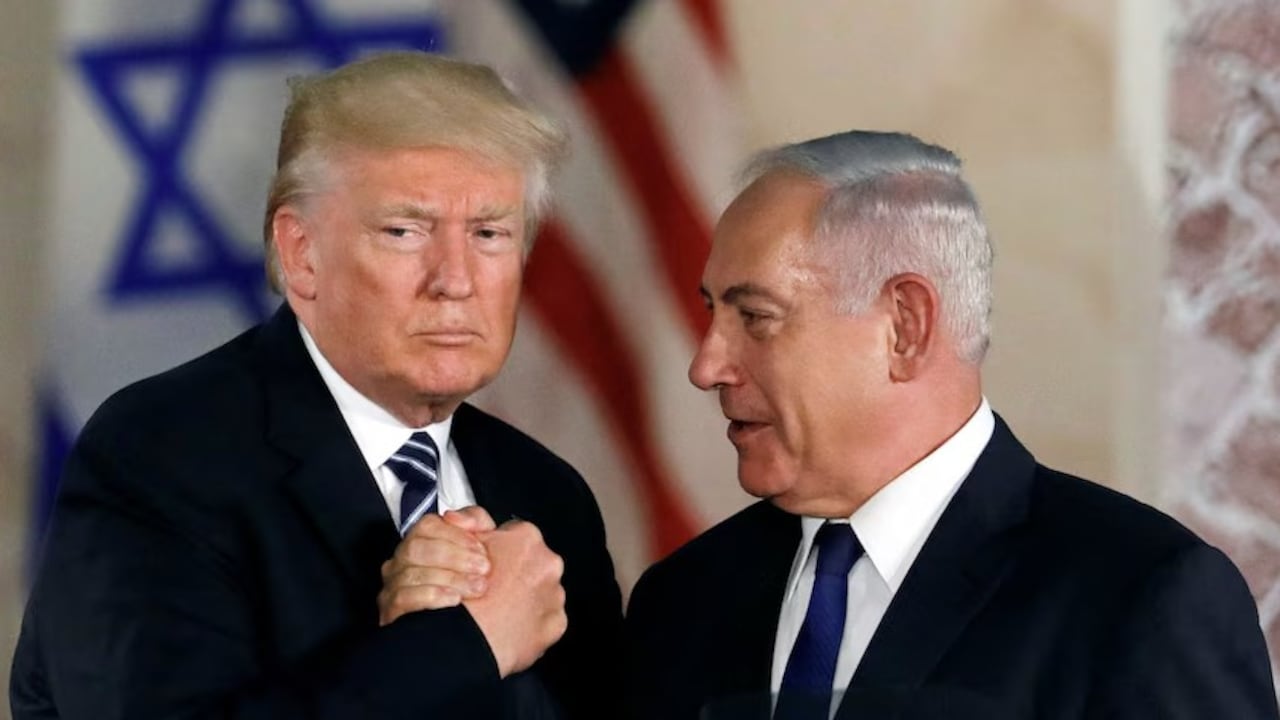
The regional balance of power in the Middle East functions as an asymmetric equilibrium where technological superiority offsets geographical and demographic deficits. When Israeli Prime Minister Benjamin Netanyahu publicly urged the United States to block the transfer of F-35 Lightning II aircraft and General Electric F110 engines to Turkey, he was not merely engaging in diplomatic posturing. He was attempting to defend the structural foundation of Israel's national security: the Qualitative Military Edge (QME). This intervention, occurring precisely as U.S. President Donald Trump departs for a NATO summit in Ankara, highlights a critical friction point between American transactional diplomacy and Israel's zero-sum security requirements.
To understand the strategic implications of this friction, the problem must be deconstructed into its component geopolitical, technical, and institutional mechanisms.
The Tri-Axe Framework of Regional Air Hegemony
Maintaining air superiority in the Eastern Mediterranean and broader Middle East relies on a strict distribution of capabilities. This equilibrium is maintained through three core pillars.
1. The Monopolization of Fifth-Generation Low-Observable Platforms
The cornerstone of Israel’s regional deterrence is its exclusive operational deployment of the F-35 (known locally as the Adir) within the Middle East, excluding Gulf partnerships that lack identical modification freedoms. If Turkey regains access to the Joint Strike Fighter program or secures the components to power its domestic alternative, this technological monopoly dissolves.
2. The Control of Subsystem Supply Chains
Modern air dominance is no longer defined solely by airframe acquisition; it is dictated by the software, sensor suites, and propulsion systems that power them. Turkey's dependence on American-made F110 engines for early variants of its indigenous KAAN fifth-generation fighter represents a structural vulnerability that Israel seeks to lock in permanently.
3. The U.S. Statutory Commitment to QME
By U.S. law, any arms sale to Middle Eastern nations must undergo an evaluation to ensure it does not undermine Israel’s capability to defeat any credible conventional military threat from any individual state or possible coalition. While Turkey is a NATO member, its geographical positioning and shifting ideological alignment place its defense acquisitions under intense scrutiny within this legal framework.
The Propulsion Bottleneck: Turkey’s Dual-Track Aviation Strategy
The current diplomatic flashpoint centers on two distinct aerospace assets: the finished F-35 airframe and the F110 turbofan engine. Turkey's strategic objective is not merely the procurement of American hardware, but the systematic elimination of its own domestic defense vulnerabilities.
[U.S. Engine/Airframe Ban] ──> [Halts F-35 Deliveries]
                             └──> [Starves KAAN Domestic Program of F110 Engines]
                                   └──> [Sustains Israeli Qualitative Military Edge]
Turkey was removed from the F-35 program in 2019 following its acquisition of the Russian S-400 Triumf air defense system. The technical rationale was absolute: operating a Russian radar-and-missile ecosystem in tandem with the F-35 would allow the S-400's data collection mechanisms to map the radar cross-section and low-observable signatures of the stealth fighter, compromising the platform across the entire NATO alliance.
However, Ankara's current focus has diversified. While readmission to the F-35 program remains a long-term goal, the immediate operational bottleneck is the KAAN stealth fighter project. Turkey requires imported American F110 engines to sustain the flight testing and early-stage production of the KAAN until its domestic engine programs mature—a process that typically takes a decade or more in aerospace engineering. By lobbying against the sale of both the F-35 and standalone jet engines, Israel aims to freeze Turkey's domestic fifth-generation program in its infancy, preserving a multi-generational gap in aerial capabilities.
The Strategic Divergence: Transactional vs. Structural Diplomacy
The public friction between Jerusalem and Washington stems from a fundamental mismatch in how the two administrations calculate geopolitical value.
The U.S. executive branch frequently operates on a transactional model of foreign policy. In this view, defense assets are valuable leverage tools to enforce alliance cohesion, secure economic concessions, or recalibrate bilateral relations with critical swing states like Turkey. The suggestion that a "big gift bag" could be brought to Ankara reflects a strategy of using high-value military hardware to smooth over systemic rifts within NATO.
Israel, conversely, views defense capabilities through a structural and existential lens. Rhetoric from Turkish leadership calling for the isolation of Israel, combined with shifts in regional alignments, elevates Turkey from a nominal, distant NATO partner to a potent long-term security variable. From the Israeli perspective, tactical diplomatic concessions by Washington create permanent structural deficits for Jerusalem. Once fifth-generation stealth technology or advanced propulsion manufacturing capabilities are transferred, they cannot be recalled if the recipient nation's foreign policy shifts further toward hostility.
Institutional Overrides and Legal Vulnerabilities
While executive intent is a powerful driver of foreign policy, the mechanism for executing an aerospace sale of this magnitude faces severe institutional constraints. The U.S. Vice President noted that any restoration of F-35 access or major engine sales requires strict congressional approval and adherence to statutory law.
The legislative barrier represents the primary vulnerability in any executive attempt to fast-track a defense deal with Ankara.
- The Countering America's Adversaries Through Sanctions Act (CAATSA): Turkey’s acquisition of the Russian S-400 triggers mandatory sanctions that can only be fully lifted if Ankara permanently removes the Russian systems from its territory or verifies their non-operational status to a degree that satisfies U.S. defense agencies.
- The Congressional Review Act: Congress retains the authority to block major defense asset transfers through joint resolutions of disapproval. The bipartisan skepticism toward Turkey's regional policy, coupled with aggressive lobbying from pro-Israel and Hellenic rings in Washington, creates a high legislative barrier.
- The Inter-NATO Balance: Turkey's territorial disputes with Greece—another NATO member seeking its own F-35 fleet—means any move to re-arm Ankara shifts the balance of power not just in the Middle East, but within Europe’s southeastern flank, compounding the geopolitical pushback.
Tactical Playbook for Regional Defense Procurement
The current impasse yields a clear strategic playbook for how defense procurement will be leveraged in the near term.
First, expect the U.S. executive branch to attempt a unbundling strategy. To appease Ankara without triggering a catastrophic breakdown with Jerusalem or a veto from Congress, Washington may offer lower-tier modernization packages—such as F-16 Viper upgrades or defensive avionics—while holding back the F-35 and the F110 engines required for the KAAN program.
Second, Turkey will likely accelerate its search for alternative propulsion sources, exploring joint ventures with non-Western defense consortia or investing heavier capital into its indigenous engine development, accepting years of program delays as the price of strategic autonomy.
Finally, Israel will continue to leverage its unique operational feedback loop with Lockheed Martin to integrate domestic electronic warfare suites and weapons systems into its own F-35 fleet. This ensures that even if Turkey eventually secures a fifth-generation platform, the Israeli variants will possess a distinct, modified capability edge that cannot be replicated by an off-the-shelf export model. The battle lines are no longer drawn merely on geographic maps, but within the software architecture and supply chains of global aerospace engineering.