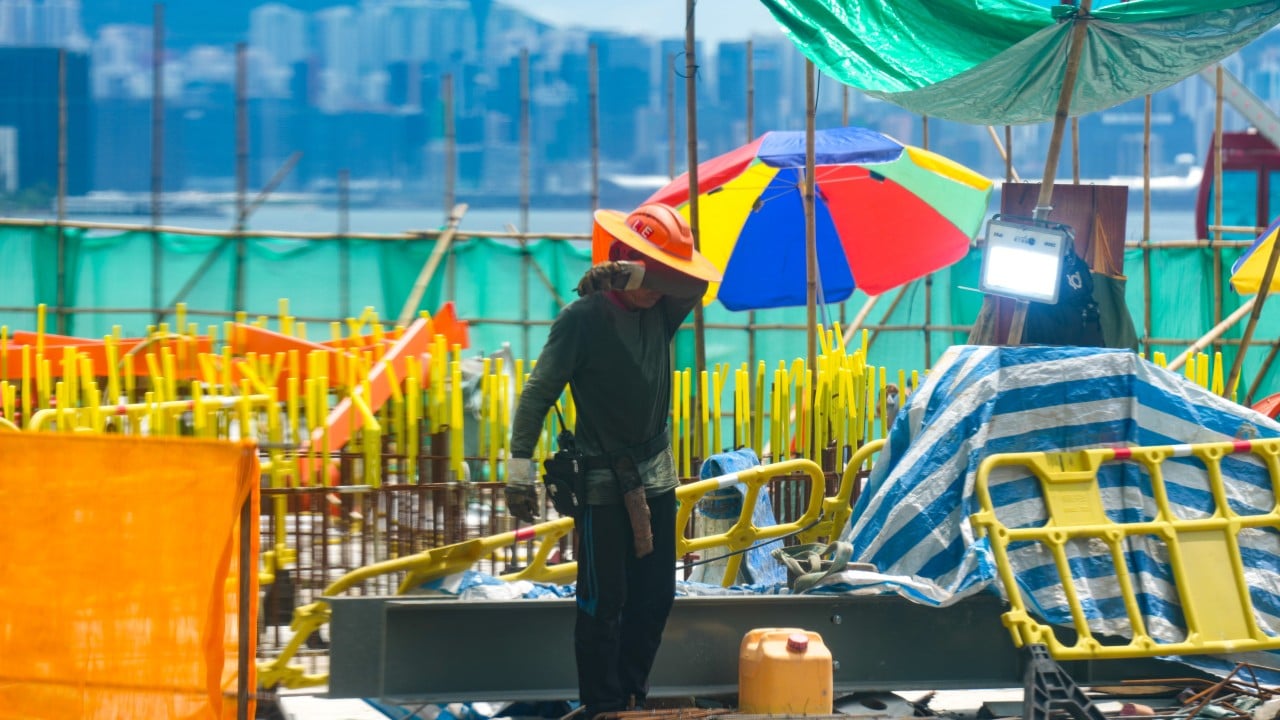
Managing thermal stress in dense urban environments requires moving beyond reactive compensation models and confronting the structural limits of labor safety frameworks. When regulatory authorities debate whether to formally reclassify hyperthermia and heatstroke as designated occupational diseases, the discourse frequently stalls on legal definitions rather than operational mechanisms. Modern industrial environments, characterized by high humidity, poor ventilation, and intense physical exertion, create thermal loads that standard warning systems fail to capture accurately.
The Failure of Static Thermal Metrics
Relying solely on ambient air temperature or generalized weather station readings creates a dangerous blind spot for outdoor and poorly ventilated indoor laborers. The human body cools itself primarily through the evaporation of sweat. In subtropical environments featuring high relative humidity, evaporative cooling efficiency drops sharply because the air is already saturated with moisture.
Standard meteorological measurements ignore three critical environmental variables that dictate actual physiological strain:
- Radiant heat loads emitted from surrounding concrete, asphalt, and metallic structures.
- Localized air velocity and wind movement patterns within confined or semi-enclosed workspaces.
- Metabolic heat generation specific to the intensity of manual labor tasks like construction, sanitation, and cargo handling.
When administrative warnings rely on macro-level indices, they frequently lag behind localized microclimate realities. A construction site flanked by reflective glass towers experiences radiant thermal loads significantly higher than a weather station situated in a manicured park or open coastal zone. Consequently, a baseline alert system can remain inactive while workers on site accumulate dangerous core body temperatures.
The Legal and Economic Cost Function
Reclassifying heatstroke as an explicit occupational disease alters the liability equation for employers, shifting the administrative and financial burden of proof. Under standard negligence frameworks, injured workers or their families must establish direct causation between workplace conditions and the medical emergency. This threshold is notoriously difficult to clear when symptoms manifest hours after shift completion or overlap with pre-existing conditions.
Designating heatstroke as an occupational disease introduces a presumptive legal standard. If a worker collapses under specific thermal thresholds, the condition is presumed to originate from employment unless the employer can demonstrate that comprehensive, mandated preventative protocols were strictly enforced. This shift alters corporate cost functions across high-exposure sectors:
- Capital expenditure increases for mandatory cooling infrastructure, such as automated misting stations, industrial ventilation blowers, and high-performance phase-change cooling vests.
- Operational friction rises as mandatory rest-period formulas interrupt continuous workflow schedules, forcing project managers to factor weather-driven delays into project delivery timelines and tender pricing.
- Insurance and compensation premiums adjust dynamically based on a firm's historical safety compliance audit trail, penalizing organizations that treat heat mitigation as an optional guideline rather than an engineering requirement.
Operational Controls Versus Administrative Warnings
Distinguishing between passive guidelines and enforceable operational controls clarifies why advisory notices frequently fail to protect frontline personnel. Issuing a public advisory places the practical decision-making power in the hands of supervisors who face direct commercial incentives to maintain project velocity. Under tight deadlines, frontline managers often rationalize pushing through amber or red alerts, viewing mandatory rest breaks as profit-destroying bottlenecks.
Effective thermal risk mitigation requires replacing discretionary supervision with deterministic engineering controls. Work pacing must be mathematically tied to real-time Wet-Bulb Globe Temperature measurements taken directly at the workface. Furthermore, personal protective equipment must evolve. Standard safety gear often traps body heat, necessitating the subsidization or mandatory provision of active cooling garments as baseline safety equipment, treated with the same regulatory seriousness as impact helmets.
The Strategic Play
Organizations operating in high-exposure sectors must abandon reactive compliance and implement an automated thermal safety protocol. Forward-looking operations should deploy localized weather sensors at every active site to trigger mandatory, non-negotiable work stoppages and rest rotations automatically, bypassing supervisory discretion entirely. Capital allocation must shift from post-incident compensation reserves to upfront investments in active personal cooling technology and shade engineering. Treating thermal stress as a predictable engineering variable rather than an unpredictable act of nature remains the only viable path to eliminating preventable workplace casualties.