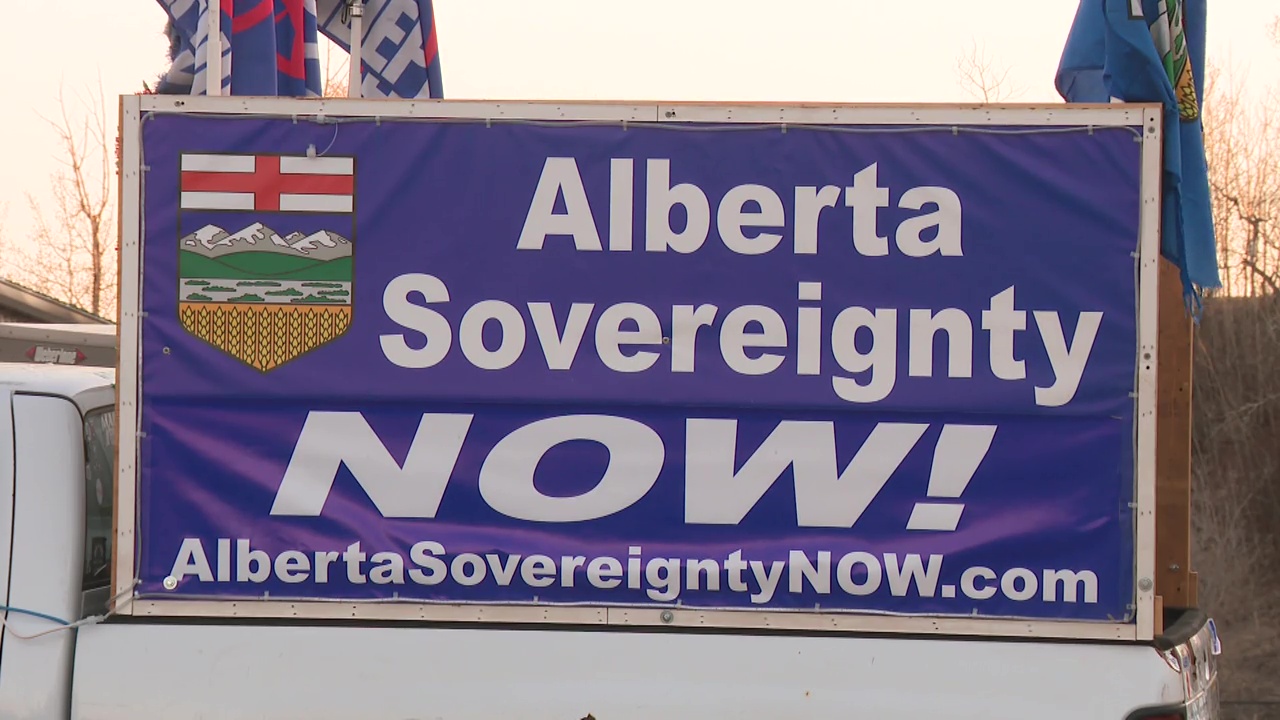
A nation-state is an economic and legal system governed by transaction costs, treaties, and constitutional lock-ins. The October 19, 2026 plebiscite in Alberta—structured as a "referendum on whether to hold a future referendum" regarding secession from Canada—presents an opportunity to dissect the structural physics of modern state fragmentation.
While political campaigns rely on the rhetoric of self-determination, an objective assessment reveals that secession operates within a rigid framework of institutional boundaries. By examining the structural constraints, asset distribution frictions, and market mechanisms that dictate the viability of regional independence, we can understand the reality of this constitutional challenge.
The Dual-Stage Hurdle: Demystifying the Clarity Act Framework
The primary structural bottleneck to regional secession in Canada is the legal architecture created after the 1995 Quebec referendum: the 1998 Supreme Court Reference re Secession of Quebec and the subsequent federal Clarity Act of 2000. This legal framework establishes a strict, dual-stage hurdle designed to prevent unilateral secession and convert political momentum into prolonged, multi-party negotiations.
+--------------------------+     +--------------------------+     +--------------------------+
|  1. Clear Expression     |     |  2. Federal Verification |     |  3. Multi-Lateral        |
|  - High Voter Turnout    | --> |  - House of Commons      | --> |     Constitutional       |
|  - Definitive Super-     |     |    Evaluates Clarity     |     |     Negotiation          |
|    majority (Not 50%+1)  |     |    of Question & Margin  |     |     (All Provinces + Fed)|
+--------------------------+     +--------------------------+     +--------------------------+
Stage One: The Clarity Test
The federal framework intentionally avoids defining an exact numerical threshold for a "clear majority." Instead, it assigns the House of Commons the power to evaluate the vote post-facto. This assessment relies on a two-variable function:
- The Clarity of the Interrogative Matrix: The question must isolate the issue of independence from alternative political arrangements, such as economic associations or asymmetric federal arrangements. The multi-layered question posed in Alberta's initial plebiscite escapes this federal scrutiny because it is merely a consultative vote to initiate a process, rather than a direct secession mandate.
- The Quantitative Margin: A simple 50% plus one majority is legally insufficient to trigger a constitutional obligation to negotiate. The federal evaluation accounts for total voter turnout, the absolute margin of victory, and regional distribution to verify a stable, long-term consensus.
Stage Two: The Structural Bottleneck of Multilateral Negotiations
A verified "yes" vote does not execute secession; it merely initiates an obligation to enter constitutional negotiations. This process introduces a high-friction environment governed by Section 41 of the Constitution Act, 1982.
Secession alters the composition of the Senate, the House of Commons, and the amendment formula itself. Consequently, any legally binding secession requires an amendment ratified by the federal Parliament and all ten provincial legislatures.
This requirement gives every province a veto over the terms of exit. This dynamic incentivizes non-seceding provinces to demand structural concessions to protect their own economic and political interests.
The Indigenous Treaty Blockade
The Quebec precedents of 1980 and 1995 operated primarily within a framework of language rights and cultural sovereignty. In Western Canada, however, the primary legal constraint on territorial modification is the existence of historic, nation-to-nation treaties between the Crown and Indigenous peoples. Specifically, Treaty 6, Treaty 7, and Treaty 8 cover the vast majority of Alberta's geographic footprint.
                        ┌──────────────────────────────┐
                        │     The Imperial Crown       │
                        └──────────────┬───────────────┘
                                       │
                        Historical Nation-to-Nation Treaty
                                       │
                        ┌──────────────▼───────────────┐
                        │   Indigenous First Nations   │
                        └──────────────┬───────────────┘
                                       │
                          Legal Challenge / Blockade
                                       │
                        ┌──────────────▼───────────────┐
                        │     Province of Alberta      │
                        │    (Attempted Secession)     │
                        └──────────────────────────────┘
The May 13, 2026 ruling by Alberta Justice Shaina Leonard—which favored several First Nations and paused the initial citizen-led initiative process—highlights a critical structural reality. The provincial government cannot unilaterally transfer or alter treaty obligations.
These treaties were signed with the Crown, and the fiduciary duties associated with them rest primarily with the federal government under Section 91(24) of the Constitution Act, 1867.
An independent Alberta would lack the constitutional standing to inherit these treaties without the explicit consent of the signatory First Nations. Because modern jurisprudence guarantees a deep duty to consult and accommodate, any structural attempt to alter the province's constitutional status without Indigenous consent faces immediate legal blocks. This creates an internal territorial challenge where large portions of land could legally remain part of Canada even if a provincial majority votes to leave.
The Capital Discount Factor: Market Mechanics Under Constitutional Stress
Data from the 1976 and 1994 Parti Québécois electoral victories reveal a clear relationship between political instability and capital flight. The mere possibility of a constitutional break introduces a risk premium that affects asset pricing, corporate relocation, and debt issuance.
The Provincial Bond Yield Spread
The fiscal impact of secessionist rhetoric shows up quickly in the credit markets. When political risk rises, the spread between Alberta provincial bonds and benchmark Canada bonds widens. This spread represents the market's quantification of constitutional uncertainty.
$$Spread = R_{provincial} - R_{benchmark}$$
Where:
- $R_{provincial}$ is the yield required by investors to hold Alberta's sovereign debt.
- $R_{benchmark}$ is the risk-free rate of the federal sovereign.
This risk premium is driven by two main factors:
- Currency Architecture Uncertainty: A seceding sub-state faces an immediate choice: use a foreign currency unilaterally (dollarization), negotiate a high-cost currency union, or launch an independent, unproven floating currency. Each option reduces liquidity and increases transaction costs for international trade.
- The Debt Subservience Function: Canada’s current national debt would have to be divided during secession. Whether allocated by population share (roughly 12%) or gross domestic product contribution (roughly 15%), an independent Alberta would start with a massive debt burden. This liability would have to be serviced in an environment with higher borrowing costs.
The Expressive-Committed Gap in Public Sentiment
The economic consequences of secession create a sharp divide between symbolic political alignment and actual voter behavior. Public opinion polling in early 2026 highlights this divergence:
| Metric Group | Stated Support Level | Realized Support Under Cost Constraints |
|---|---|---|
| Angus Reid (May 2026) | 35% Support for Secession | Not factored |
| Ipsos Stress-Test | — | 15% - 16% Committed Support |
This drop demonstrates the "Expressive-Committed Gap." When a poll functions as a cost-free way to express frustration with federal policies, support remains relatively stable. However, when voters face concrete economic trade-offs—such as losing their Canadian passport, facing international trade tariffs, or experiencing passport invalidation during a transition—support drops by more than half.
The Landlocked Border Bottleneck
The primary economic argument for Alberta independence relies on its rich natural resources, particularly its crude oil and natural gas reserves. However, this focus ignores a fundamental rule of infrastructure economics: landlocked commodities rely entirely on external transport networks.
+--------------------------+        +--------------------------+
|  Independent Alberta     |  --->  |  Rest of Canada / US     |
|  - High Production       |  Pipelines/Rail  - Sovereign Tolls        |
|  - Landlocked Geography  |        |  - Regulatory Bottlenecks|
+--------------------------+        +--------------------------+
Under international law, specifically Article 125 of the United Nations Convention on the Law of the Sea (UNCLOS), landlocked states have a right of access to the sea to enjoy freedom of the high seas. However, this right is subject to the terms and agreements of the transit states involved. Secession would turn the rest of Canada and the United States into transit states with the legal authority to set terms, regulatory steps, and environmental fees on Alberta’s energy exports.
An independent Alberta would lose its constitutional leverage under Section 92A of the Canadian Constitution, which currently protects interprovincial trade corridors from discriminatory provincial barriers. Instead, its export infrastructure would be subject to international trade law.
In this environment, neighboring jurisdictions could easily use regulatory delays or transit fees to protect their own industries. This vulnerability neutralizes the economic advantages of local regulatory freedom.
Strategic Play: Leveraging Friction Over Secession
The analytical reality of the October 19 plebiscite is that secession itself is structurally blocked. The true value of the referendum is not as an exit mechanism, but as a tool to shift federal-provincial leverage.
The most effective strategy for regional actors is to treat the referendum as a credible threat to extract specific, institutional concessions within Confederation. This approach avoids the high costs of an actual constitutional break while maximizing local autonomy.
- Establish Asymmetric Institutional Treaties: Use the political momentum from the vote to negotiate independent collection of personal income tax and the creation of a provincial pension plan. This replicates Quebec's structural model within Canada without triggering a constitutional crisis.
- Enact Interprovincial Legal Compacts: Build direct economic partnerships with adjacent provinces to secure trade corridors. This mitigates federal regulatory overreach without requiring formal constitutional amendments.
- Build Fiscal Stabilization Buffers: Channel resource revenues into an independent sovereign wealth fund structured to insulate the local economy from capital flight and bond market volatility. This builds financial resilience against shifting national policies.
The real goal of this constitutional friction is not to dismantle the state, but to renegotiate the terms of the federal arrangement from a position of measured, quantified strength.
For a deeper look into how regional political movements navigate these complex legal frameworks, this analysis of the Canadian constitutional structure provides an objective breakdown of the institutional and statutory mechanics that govern federal-provincial relations.
.jpg)