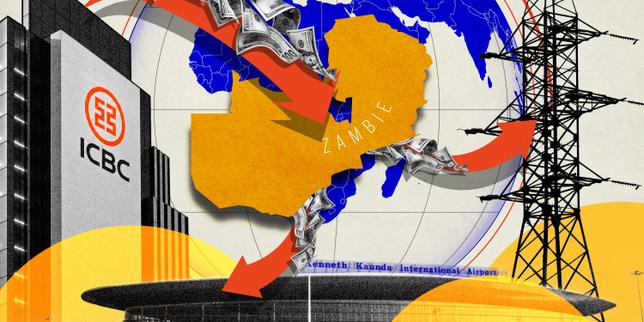
Zambia’s sovereign default in November 2020 was not a sudden liquidity shock caused by global commodity volatility alone; it was the mathematical endpoint of an uncoordinated, opaque, and structurally misaligned capital accumulation strategy. Between 2006 and 2019, Zambia’s external public debt expanded from under $1 billion to over $11.9 billion, with Chinese state-owned entities and policy banks accounting for roughly one-third of that total. Standard geopolitical commentary reduces this trajectory to predatory lending or "debt-trap diplomacy." Both labels obscure the actual mechanics of sovereign balance-sheet failure. A rigorous examination reveals a systemic breakdown across three operational layers: fragmented debt contracting, currency-mismatch exposure on non-tradable infrastructure, and the structural rigidity of modern sovereign debt restructuring regimes.
The Architecture of Sovereign Balance Sheet Failure
To understand why Zambia’s debt became unserviceable, one must separate the volume of capital borrowed from the structural terms governing its deployment. Sovereign solvency depends on a fundamental macroeconomic identity: the rate of return on borrowed capital must exceed the real interest rate on the debt, and the economy must generate sufficient foreign exchange to service external obligations. Zambia violated both conditions simultaneously. For a deeper dive into this area, we suggest: this related article.
The accumulation of Chinese credit in Lusaka did not flow through a single, monolithic sovereign treasury window. Instead, it operated through a decentralized network of institutional actors:
- Policy Banks: The Export-Import Bank of China (Exim Bank) and China Development Bank (CDB) provided the bulk of concessional and semi-concessional project finance.
- State-Owned Commercial Lenders: Institutions such as the Industrial and Commercial Bank of China (ICBC) and Bank of China extended commercial-rate facilities, often tied to specific engineering, procurement, and construction (EPC) contracts.
- State-Owned Enterprises (SOEs): Contractors like Sinohydro, China State Construction Engineering Corporation, and AVIC International acted simultaneously as builders and financial intermediaries, negotiating directly with line ministries before formal Ministry of Finance sign-off.
This fragmentation created a severe principal-agent problem within the Zambian state apparatus. Line ministries—specifically those overseeing energy, transport, and housing—were incentivized to maximize physical capital expenditure within electoral cycles. Because Chinese contractors brought pre-packaged financing from Beijing, ministers bypassed traditional domestic budgetary constraints and competitive tendering processes. The Ministry of Finance frequently inherited contingent liabilities and sovereign guarantees after commercial terms were already locked in, destroying central visibility over the nation’s aggregate debt-service schedule. To get more information on this issue, detailed coverage can be read at MarketWatch.
The Three Mechanisms of Toxic Credit Accumulation
Describing these loans as "toxic" requires precise financial definition. A debt instrument becomes structurally toxic to a sovereign borrower when its contractual features actively accelerate insolvency during an exogenous downturn. In Zambia’s case, three specific mechanisms converted manageable infrastructure financing into a default spiral.
1. The Currency and Cash-Flow Mismatch
The overwhelming majority of Chinese bilateral loans were denominated in US dollars, carrying interest rates ranging from 2% on concessional Exim Bank lines to upward of 6%–8% on commercial facilities, with relatively short grace periods of three to five years and maturities of ten to fifteen years.
Conversely, the assets financed by these loans—hydroelectric dams (such as Kafue Gorge Lower), paved highways, international airport terminals, and municipal water systems—generated revenues exclusively in Zambian Kwacha, or generated no direct user-fee cash flows at all. In corporate finance, funding long-duration, local-currency assets with short-duration, hard-currency debt is a textbook recipe for bankruptcy. When copper prices softened between 2015 and 2019, export earnings contracted, the Kwacha depreciated sharply against the dollar, and the local-currency cost of servicing dollar-denominated debt exploded. The fiscal budget had to absorb the foreign-exchange loss directly, crowding out essential public expenditure and forcing the government to issue high-yield domestic debt to stay current on external obligations.
2. Escrow Accounts and Revenue Ring-Fencing
Unlike traditional Paris Club bilateral lenders or Eurobond holders who rely on general sovereign creditworthiness and pari passu clauses, several Chinese commercial and policy lenders utilized collateralized lending structures. Under these arrangements, specific state-owned utilities—most notably the state power company ZESCO—were required to maintain offshore escrow accounts funded by electricity export receivables or dedicated domestic revenue streams.
This mechanism alters the hierarchy of sovereign debt service in practice, even if not in formal legal seniority. When liquidity tightens, ring-fenced escrow accounts continue to sweep hard currency automatically to service specific project loans, starving the central bank of gross international reserves. This creates an internal liquidity trap: the sovereign appears to have reserve buffers on paper, yet a substantial fraction of those inflows is legally encumbered and unavailable to defend the currency or pay general creditors.
3. Opacity and the Information Asymmetry Penalty
Non-disclosure agreements (NDAs) embedded in bilateral loan contracts prevented the Zambian government from publishing the exact terms, collateral arrangements, and total stock of Chinese debt. While intended by lenders to protect commercial pricing and prevent cross-default triggers across their global portfolios, this opacity inflicted a severe penalty on Zambia in international capital markets.
Between 2012 and 2015, Zambia issued three Eurobonds totaling $3 billion. Institutional investors priced these bonds based on incomplete public debt statistics. As rumors of undisclosed Chinese liabilities circulated, credit rating agencies and bondholders applied an escalating uncertainty premium to Zambian sovereign risk. When Zambia attempted to refinance or seek International Monetary Fund (IMF) assistance, the lack of a verified, comprehensive debt perimeter stalled negotiations. The IMF cannot legally disburse funds into an unsustainable debt situation without credible financing assurances from major creditors; without an accurate ledger of what was owed to whom, those assurances were impossible to secure.
The Cost Function of Infrastructure Over-Specification
A critical analytical failure in conventional coverage of Zambia’s debt crisis is the assumption that the underlying infrastructure projects were inherently wasteful. Zambia suffered from genuine infrastructure deficits, particularly in power generation and transport logistics. The economic failure lay not in the decision to build, but in the pricing and procurement structure that inflated capital expenditure per unit of output.
When bilateral loans are tied to single-source EPC contracts executed by state-affiliated firms from the creditor nation, price discovery vanishes. Without open international competitive bidding, project costs routinely inflate by 20% to 40% above global benchmarks. In economic terms, the sovereign borrower absorbs an implicit upfront equity loss equal to the procurement markup, while paying compounding interest on the inflated principal.
Consider the mechanics of a road rehabilitation project financed under a tied bilateral facility. If the true market clearing cost of constructing a kilometer of highway is $1.2 million, but a tied loan prices it at $1.8 million, the economic internal rate of return (EIRR) collapses before the first vehicle drives on the tarmac. Even if the road generates positive macroeconomic spillovers through reduced transport times, those tax-revenue spillovers cannot service a principal balance inflated by 50%. The state is left holding an illiquid physical asset whose net present value is deeply negative relative to its liability schedule.
The Restructuring Deadlock and Creditor Coordination Failure
Once Zambia missed a $42.5 million Eurobond coupon payment in November 2020, the crisis shifted from debt accumulation to debt resolution. Here, the structural misalignment of Zambia’s creditor base produced a historic multi-year paralysis.
Historically, sovereign debt restructurings followed a predictable sequence: the IMF conducted a Debt Sustainability Analysis (DSA), the Paris Club of traditional Western bilateral creditors agreed to a coordinated haircut or maturity extension, and private bondholders negotiated comparable treatment. By 2020, that architecture was obsolete. Zambia’s external debt was fragmented across three incompatible creditor blocs:
- Private Eurobond Holders: Seeking net present value preservation, swift resolution, and strict adherence to transparency and comparability of treatment.
- Multilateral Development Banks (World Bank, African Development Bank): Retaining preferred creditor status, refusing principal haircuts while providing concessional grants and new liquidity.
- Chinese Official and Semi-Official Lenders: Operating without a unified domestic clearinghouse, divided internally between the Ministry of Finance, the People’s Bank of China, Exim Bank, CDB, and commercial SOEs.
The G20 Common Framework for Debt Treatments, launched in late 2020 specifically to handle cases like Zambia, assumed that China could act as a single, monolithic bilateral creditor analogous to a Paris Club member. That assumption proved false.
Inside Beijing, institutional incentives clashed. Exim Bank viewed its concessional loans differently from CDB, which insisted its facilities were commercial loans exempt from official bilateral restructuring. Meanwhile, Sinosure—the state export credit agency that insured many of the commercial loans—operated under accounting rules that penalized principal write-downs far more severely than maturity extensions or interest-rate reductions. Reaching consensus required inter-ministerial coordination across competing bureaucratic factions in Beijing before a single negotiating position could be presented to the Official Creditor Committee (OCC) co-chaired by China and France.
This internal friction dragged Zambia’s restructuring out for over three years. During this period, interest arrears accumulated, domestic investment froze, and the uncertainty premium depressed the broader economy. Private bondholders refused to finalize a deal without clarity on the concessions granted by Chinese lenders, enforcing the "comparability of treatment" doctrine. Conversely, Chinese negotiators resisted deep net-present-value haircuts, arguing that multilateral institutions—whose low-interest loans formed a substantial share of Zambia’s debt stock—should also absorb losses rather than relying on preferred creditor immunity.
Operational Lessons and Structural Vulnerabilities
Evaluating Zambia’s trajectory requires distinguishing between documented empirical facts and broader geopolitical hypotheses. It is an established fact that tied, opaque, dollar-denominated lending accelerated Zambia’s debt-to-GDP ratio past 120% and complicated the subsequent workout. It is an unsubstantiated hypothesis that Beijing engineered this default to seize strategic physical assets like Kenneth Kaunda International Airport or ZESCO. Throughout the restructuring impasse, no strategic sovereign assets were seized; rather, Chinese lenders faced prolonged non-payment and eventual net-present-value losses through extended maturities and reduced coupon rates. The outcome was a lose-lose coordination failure, not a masterstroke of asset appropriation.
However, the structural vulnerabilities exposed by the Zambian case remain active across emerging markets. Any sovereign finance ministry operating under similar institutional constraints faces identical failure modes if three systemic controls are absent:
- Centralized Debt-Contracting Authority: Sovereign guarantees and external borrowing powers must reside exclusively within the Ministry of Finance, backed by statutory prohibitions against line ministries negotiating vendor-financed EPC contracts independently.
- Mandatory Parliamentary Disclosure: Legal frameworks must nullify non-disclosure clauses in public debt contracts. Transparency is not a governance luxury; it is a prerequisite for maintaining accurate risk pricing in global bond markets and preventing hidden balance-sheet subordination.
- Currency-Matched Project Finance: Hard-currency sovereign debt should be restricted strictly to projects that directly generate hard-currency export revenues or demonstrably substitute for essential imports. Local-currency public goods must be funded via domestic capital markets or ultra-long-term, deeply concessional multilateral facilities.
The Strategic Imperative for Sovereign Borrowers
The resolution of Zambia’s Official Creditor Committee agreement and subsequent Eurobond restructuring establishes a new baseline for emerging-market debt workouts, yet the underlying friction between bilateral policy lending and global capital markets remains unresolved. Sovereign debt managers in frontier economies can no longer rely on rapid debt-restructuring mechanisms when liquidity shocks hit; the fragmentation of global creditors guarantees multi-year workouts that inflict permanent output losses on the domestic economy.
To insulate national balance sheets from a repeat of the Zambian spiral, finance ministries must immediately transition from volume-driven infrastructure procurement to strict liability-driven asset management. Every external loan proposal must be subjected to an independent, pre-contracting Debt Sustainability Stress Test that models a simultaneous 30% terms-of-trade shock and a 25% currency depreciation. Any facility containing undisclosed collateralization, offshore revenue ring-fencing, or single-source procurement markups exceeding 15% above international engineering benchmarks must be rejected outright, regardless of the grace period offered. In a fractured global credit environment, institutional discipline at the point of origination is the only viable defense against sovereign insolvency.