The targeted drone strike on the Barakah Nuclear Power Plant in the United Arab Emirates marks a structural shift in asymmetric warfare within the West Asian theater. By bypassing traditional air defense perimeters to strike an auxiliary electrical generator outside the inner security boundary, the deployment of this unmanned aerial system establishes an alarming precedent. It moves critical civilian nuclear infrastructure from the periphery of strategic deterrence directly into the operational targeting matrix of regional combatants.
India’s rapid, highly critical diplomatic response, labeling the strike an unacceptable and dangerous escalation, reflects far more than routine bilateral solidarity. For New Delhi, the destabilization of the Al Dhafra region presents an immediate threat to its macroeconomic stability, energy security architectures, and expatriate capital flows. Analyzing this event requires evaluating the specific failure points of physical infrastructure, the mechanics of cross-border asymmetric projection, and the compounding economic pressures now forced upon Asian net energy importers.
The Kinematics of Asymmetric Penetration
The operational profile of the attack demonstrates a calculated exploitation of defense vulnerabilities. According to the United Arab Emirates Ministry of Defence, three unmanned aerial vehicles entered Emirati airspace from a western trajectory across the Saudi Arabian border. While air defense systems successfully intercepted two vectors, the third penetrated the perimeter, detonating against an external electrical generator.
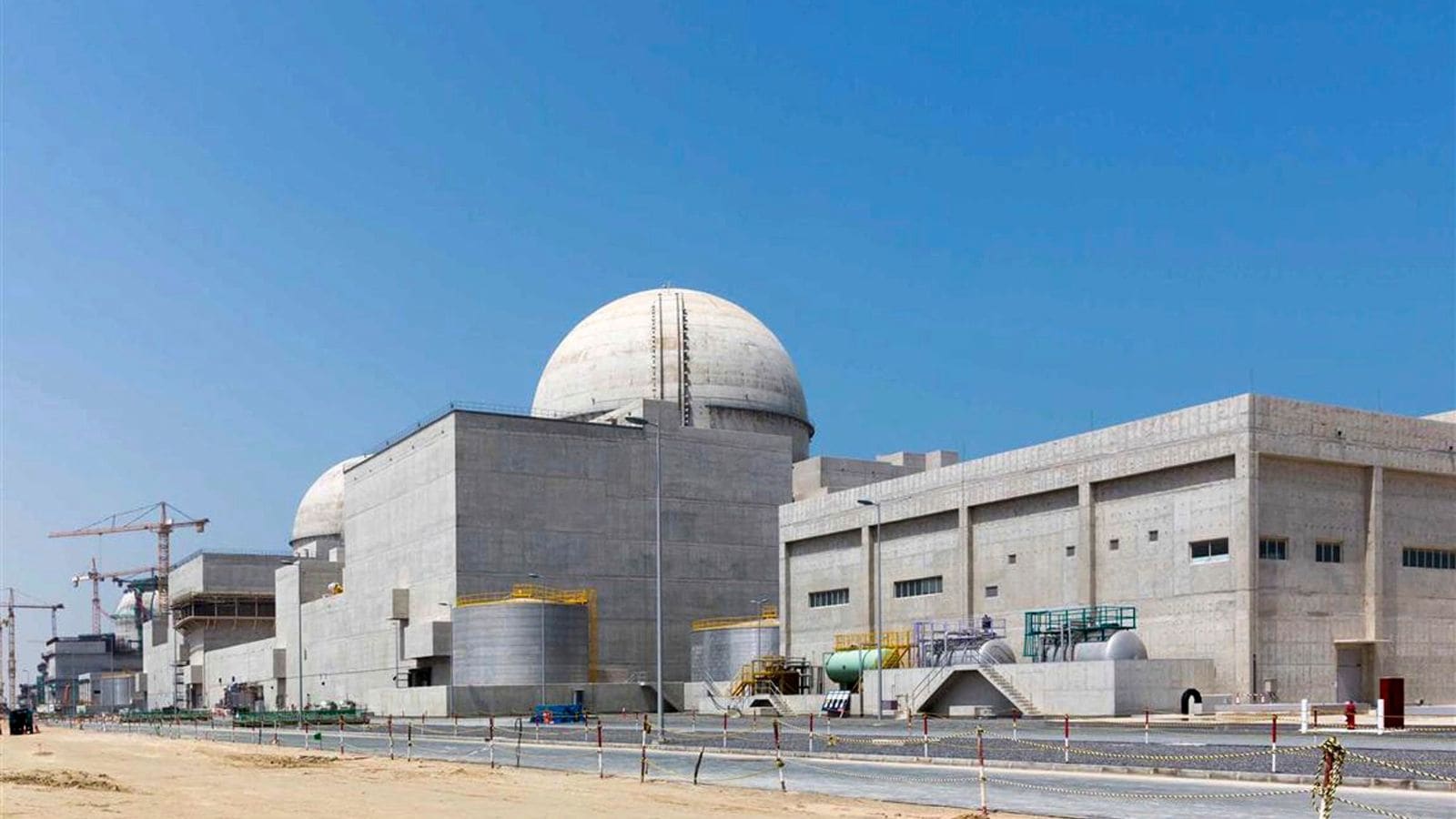
The structural architecture of modern nuclear facilities relies on a strict dual-perimeter defense design:
- The Protected Area (Inner Perimeter): Encased within reinforced concrete containment structures engineered to withstand direct kinetic impacts, containing the reactor core, primary cooling loops, and spent fuel pools.
- The Owner-Controlled Area (Outer Perimeter): Housing secondary switchyards, administrative facilities, and auxiliary power generation assets necessary for maintaining baseline plant equilibrium.
[ Western Border Entry ] ---> ( UAV Vector 1 ) ---> Intercepted
                         ---> ( UAV Vector 2 ) ---> Intercepted
                         ---> ( UAV Vector 3 ) ---> Penetration ---> [ External Generator Strike ]
                                                                             │
                                                                             ▼
                                                                 [ Unit 3 Loss of Offsite Power ]
                                                                             │
                                                                             ▼
                                                                 [ Diesel Generator Activation ]
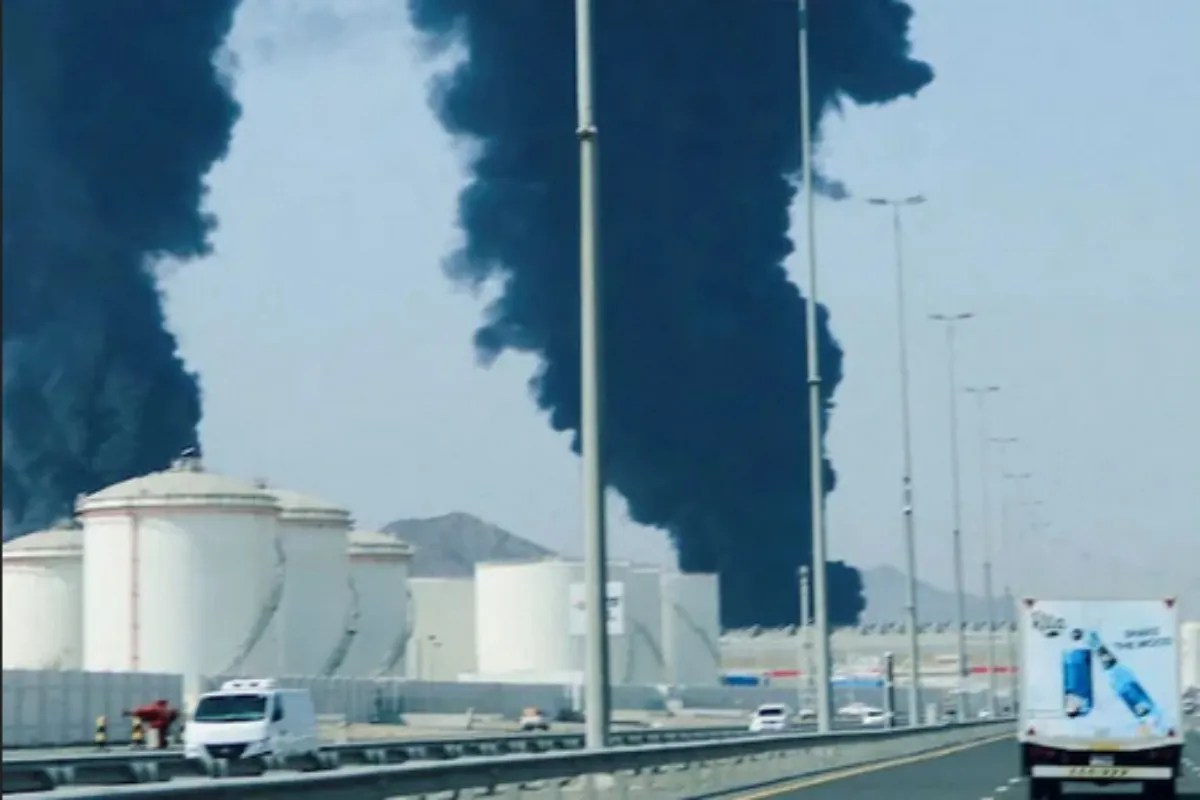
By targeting the outer perimeter, the strike exploited the vulnerability of secondary auxiliary systems. Although the International Atomic Energy Agency confirmed that radiological containment remained entirely uncompromised, the strike triggered a localized fire that forced Unit 3 of the Barakah facility to isolate from the external grid. The reactor immediately transitioned to emergency diesel generators to sustain its critical safety functions and residual heat removal loops.
This operational disruption exposes a fundamental vulnerability in infrastructure defense: the high cost-symmetry differential. Low-cost, low-radar-cross-section loitering munitions can systematically exhaust sophisticated, multimillion-dollar surface-to-air missile batteries. When distributed across multiple vectors, these platforms can overwhelm localized radar tracking arrays, allowing secondary or tertiary units to exploit blind spots in terminal defense perimeters.
The Tri-Border Conflict Matrix
The geopolitical origin of the strike cannot be isolated from the ongoing regional war involving Iran, Israel, and the United States. Following the initial military actions on February 28, the theater has devolved into an intense war of attrition. The breakdown of the Islamabad diplomatic channel on April 12 removed the primary institutional framework preventing a broader regional escalation, leaving the standing truce fragile.
The current escalation functions via three distinct operational layers:
                  ┌────────────────────────────────────────┐
                  │      Primary Confrontation Vector       │
                  │       US / Israel <───> Iran           │
                  └───────────────────┬────────────────────┘
                                      │
                                      ▼
                  ┌────────────────────────────────────────┐
                  │    Asymmetric Counter-Projection       │
                  │   Targeting of US-Hosting Gulf States  │
                  └───────────────────┬────────────────────┘
                                      │
                                      ▼
                  ┌────────────────────────────────────────┐
                  │    Strategic Maritime Chokepoint       │
                  │   Blockade of the Strait of Hormuz     │
                  └────────────────────────────────────────┘
The first layer is the primary confrontation vector between the United States-Israeli alliance and Tehran. The second layer involves asymmetric counter-projection, where regional actors target Gulf Cooperation Council states that host Western military assets. Because the UAE hosts critical American logistics and air base infrastructure, its industrial assets are increasingly viewed as viable proxy targets to apply pressure on Washington.
The third layer is the maritime choke-point strategy centered on the Strait of Hormuz. Iran’s functional blockade of this passage has removed approximately 20% of the global petroleum supply from active maritime transit. This choke-point strategy transforms a regional territorial conflict into an acute global energy crisis, amplifying the strategic value of any infrastructure disruption within the GCC.
Macroeconomic Contagion and the Indian Vulnerability
New Delhi’s diplomatic intervention is driven by direct domestic vulnerabilities. The Indian economy faces a highly challenging fiscal environment where energy-driven inflation risks causing structural damage across multiple sectors. The economic fallout of this regional instability impacts India through three direct vectors.
The Energy Cost Function
The Indian domestic market relies on imports for over 85% of its crude oil requirements and nearly 50% of its natural gas consumption. The closure of the Strait of Hormuz, compounded by infrastructure vulnerabilities like the Barakah strike, has pushed global crude prices well above $100 per barrel.
$$\Delta \text{Fiscal Deficit} \propto \Delta \text{Global Oil Price}$$
For every sustained ten-dollar increase in the price of a barrel of oil, India's current account deficit expands by roughly 0.5% of gross domestic product. This structural imbalance accelerates capital flight, driving the Indian Rupee to record lows near 96.39 against the US dollar, which in turn increases the cost of all dollar-denominated commodity imports.
Expatriate Capital and Remittance Corridors
The United Arab Emirates houses over 3.5 million Indian nationals, who generate a critical share of India's annual inward remittances.
[ West Asian Conflict Escalation ]
               │
               ▼
[ Infrastructure Security Degradation ]
               │
               ▼
[ Capital Flight & Diaspora Relocation ] ───> [ Collapse of Annual Remittance Inflows ]
Physical security threats to Emirati infrastructure alter local risk calculations. If high-value industrial zones or urban centers face ongoing drone or missile threats, the resulting capital flight and potential repatriation of the diaspora would severely disrupt India's balance of payments.
Bilateral Trade and Institutional Interdependence
The Barakah facility represents a $20 billion capital investment that generates approximately 25% of the UAE's domestic electrical grid capacity. India's long-term economic strategies rely heavily on deep integration with this infrastructure through comprehensive trade agreements and joint renewable energy grids.
Any systemic threat to the Emirati power grid undermines the foundational stability required to sustain these long-term bilateral investments.
The Limits of Modern Nuclear Deterrence
The Barakah strike exposes a clear limitation in international humanitarian law and the enforcement capabilities of global watchdogs. While United Nations Secretary-General António Guterres and IAEA Director-General Rafael Grossi issued immediate statements reaffirming that military actions targeting peaceful nuclear facilities violate international law, these frameworks lack real-time enforcement mechanisms.
The expanding operational reach of low-cost loitering munitions has altered traditional deterrence calculations:
- Attribution Deficits: The deployment of unmanned systems from border regions allows state and non-state actors to maintain plausible deniability. This undercuts the standard retaliatory mechanisms that define conventional deterrence statecraft.
- Defense Cost Asymmetry: Protecting expansive civilian energy infrastructure requires continuous, highly resource-intensive air defense operations. In contrast, an adversary can sustain a high-frequency offensive posture at a fraction of the capital cost.
- Normalization of Infrastructure Targets: Mirroring the operational patterns observed during the 2022 invasion of Ukraine and ongoing anxieties surrounding Iran's Bushehr facility, contemporary combatants increasingly treat energy infrastructure as a viable target for kinetic pressure.
Strategic Outlook
The strike on the Barakah facility demonstrates that the security of civilian nuclear infrastructure is now directly tied to regional conflict dynamics. For net energy-importing economies like India, treating these incidents as isolated regional events is no longer a viable policy posture.
To mitigate these systemic risks, state planners and corporate enterprise entities must execute three distinct strategic shifts. First, global energy supply chains must undergo rapid structural diversification, accelerating the development of domestic alternative energy infrastructures to reduce exposure to vulnerable maritime choke-points. Second, modern air defense doctrines must pivot toward scaling cost-effective, directed-energy interception capabilities and advanced electronic warfare mitigation arrays. These technologies are essential to offset the unfavorable cost-symmetry curve imposed by loitering munition swarms. Finally, international diplomatic efforts must focus on establishing binding, multi-lateral enforcement mechanisms that impose severe, unambiguous economic penalties on any actor targeting civilian nuclear assets. Failing to establish these guardrails guarantees that vital energy infrastructure will remain a highly vulnerable point of leverage in future asymmetric conflicts.