The economics of modern motorsport rely on a delicate equilibrium between driver optimization, sponsor retention, and manufacturing stability. When an elite asset is abruptly removed from this equation, the operational shock waves expose the fragility of the entire system. The sudden passing of two-time NASCAR Cup Series champion Kyle Busch at age 41 due to a severe, undisclosed illness serves as a catastrophic case study in operational risk management within high-stakes athletics.
Busch was not merely a driver; he was an integrated corporate entity responsible for shifting millions of dollars in enterprise value across multiple racing organizations. To evaluate his legacy and the immediate crisis his absence creates, analysts must move past standard emotional narratives. Instead, the situation requires an unyielding evaluation of the specific mechanical and organizational variables that defined his structural impact on the sport.
The Tri-Convertible Volume Metric
Evaluating a racing career usually defaults to surface-level statistics like total championship trophies. A more accurate methodology measures a driver’s multi-tiered system efficiency. Busch’s career operated across a unique statistical framework defined by three distinct tiers of production, yielding a historical total of 234 victories across NASCAR’s national touring series.
The three tiers of this production model include:
- The Premier Cup Tier (63 Victories): The highest optimization level, demonstrating sustained performance against elite resource-rich competition. This tier governs primary enterprise value and top-line sponsor valuation.
- The Secondary Development Tier (102 Xfinity Victories): A high-volume sector used to extract maximum track time, refine low-grip vehicle setups, and systematically suppress the win probabilities of developmental drivers.
- The Tertiary Utility Tier (69 Truck Victories): A strategic asset sector serving dual purposes—generating historical statistical dominance while functioning as a proprietary driver development pipeline through his former race team, Kyle Busch Motorsports.
This multi-tiered output created a compounding competitive advantage. By cross-training across distinct vehicle weight packages, engine configurations, and aerodynamic profiles within a single weekend, Busch gathered real-time data on track surface evolution. This data feedback loop outpaced teams relying solely on standard simulation models or isolated single-series schedules. The underlying mechanism was simple: sheer volume of competitive repetitions reduced variance in track-surface adaptation.
The Economics of Polarization and Sponsor Security
The financial viability of a modern racing team hinges on the conversion of driver identity into corporate marketing returns. Busch’s market positioning represented a highly volatile risk profile that challenged conventional sports sponsorship frameworks.
Traditional sports marketing favors low-variance, universally accepted brand ambassadors to minimize reputational risk. Busch operated on an alternative model: maximized polarization. Within this architecture, fan hostility and fan loyalty are treated as equal components of a singular metric: engagement density.
[Driver Performance & Identity] ---> [High Polarization: Fan Loyalty vs. Hostility]
                                              |
                                              v
                                  [High Engagement Density]
                                              |
                                              v
                        [Guaranteed Media Value / Airtime Yield]
This polarization created an ironclad guarantee of media value. Broadcast cameras consistently tracked his vehicle due to the structural certainty of a narrative flashpoint, whether through an aggressive overtaking maneuver, a mechanical failure, or an unvarnished post-race critique. For sponsors, this guaranteed a high baseline of airtime yield that was entirely decoupled from his actual finishing position.
The vulnerability of this model became apparent during his transition from Joe Gibbs Racing to Richard Childress Racing (RCR). When a primary long-term sponsor exited the sport, the high-variance nature of his public persona created a customer acquisition bottleneck. Corporate risk compliance departments frequently hesitated to align with a high-friction asset, despite the guaranteed on-track ROI. This friction underscores a permanent limitation in sports analytics: when polarization exceeds a corporate board's risk tolerance, on-track efficiency metrics lose their conversion power.
Team Infrastructure and Replacement Economics
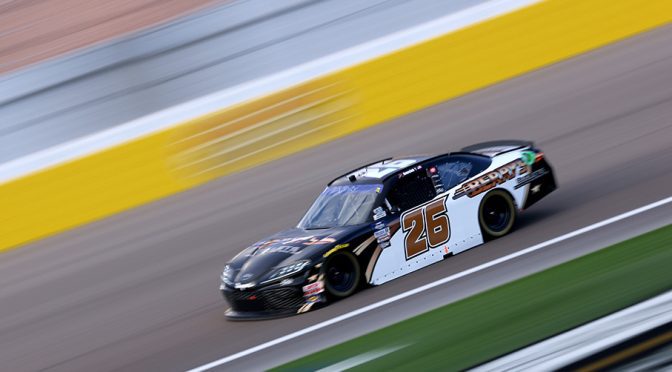
The immediate operational dilemma facing Richard Childress Racing is one of asset substitution under extreme time constraints. In the NASCAR ecosystem, a driver cannot be easily replaced by a generic backup; the entire mechanical architecture of the team is custom-built around the primary driver’s physical and behavioral specifications.
- Ergonomic and Biosensor Alignment: Seat inserts, steering wheel telemetry preferences, and pedal resistance profiles are molded precisely to the driver’s anatomy to optimize physical endurance under high G-force loads.
- Chassis Communication Telemetry: The crew chief-driver relationship relies on a highly specific verbal shorthand regarding vehicle handling characteristics (e.g., distinguishing between a "mechanical loose" condition mid-corner versus an "aerodynamic tight" condition on entry).
- Sponsor Valuation Continuity: Contracts frequently contain performance clauses or explicit stipulations demanding a driver of equivalent public stature to trigger full funding tranches.
The substitution of an elite asset with a developmental driver like Austin Hill creates an immediate performance bottleneck. While a substitute may possess competent technical baselines, they lack the historical data-matching capabilities required to diagnose handling deficiencies during brief practice sessions.
The resulting drop in structural efficiency is measurable. RCR’s No. 8 team must transition from a model optimized for race victories to a defensive, risk-mitigation model focused on maintaining baseline charter points. The drop-off in point-generation efficiency directly damages the team's share of the end-of-year revenue distribution, proving that the sudden removal of a top-tier driver introduces a steep financial penalty that insurance models rarely fully cover.
Physical Depreciation and Executive Decision Functions
The intersection of elite athletic performance and acute medical crises highlights the aggressive physical toll embedded in professional stock car racing. Though outsiders frequently view motorsport through a purely mechanical lens, the human component is subjected to severe environmental stress.
Drivers operate inside a cockpit where ambient temperatures regularly exceed 49°C (120°F) for sustained periods of three to four hours. Under these conditions, cardiovascular strain matches that of marathon runners, with heart rates maintaining an average of 150 to 170 beats per minute. This baseline physical depletion severely compromises the human immune system’s ability to suppress or recover from standard biological pathogens.
A notable indicator occurred during a road-course event earlier in May at Watkins Glen, where Busch required mid-race medical consultations and immediate post-race interventions for a severe respiratory illness. The interaction between extreme G-forces, rapid elevation shifts, and localized barometric pressure changes inside a closed helmet cabin exacerbates sinus and pulmonary inflammation.
When an athlete consistently pushes their physical system past standard recovery boundaries to maintain organizational performance targets, the margin for biological error narrows to zero. The rapid transition from an active competitor to a fatal medical emergency illustrates that the human body remains the ultimate single point of failure in high-performance mechanical systems.
Strategic Realignment Strategy for Racing Franchises
The structural void left by an elite performer's sudden exit demands an immediate pivot in executive strategy. Organizations cannot rely on the emotional narrative of recovery or tribute to sustain corporate viability; they must execute a cold reallocation of capital and human resources.
First, management must immediately renegotiate corporate partner agreements to decouple short-term valuation from track results, pivoting instead toward historical content monetization and legacy brand activation. This protects top-line revenue from the inevitable short-term dip in on-track performance.
Second, engineering departments must re-index their vehicle simulation loops. An elite driver can frequently mask an aerodynamically deficient chassis through aggressive inputs and unnatural vehicle control. A tier-two replacement driver cannot. Therefore, the data model must shift from optimizing peak theoretical speed to broadening the vehicle's stable operating window. The car must be made more mathematically predictable to lower the error margin for the new occupant.
Finally, racing sanctioning bodies must re-evaluate their medical monitoring frameworks. The current self-reporting model used by drivers incentivizes the concealment of severe symptoms to protect playoff eligibility and sponsor mandates. Implementing mandatory, automated biometric profiling—such as continuous heart-rate variability tracking and hydration-level monitoring via standard wearable sensors—is the only way to remove the executive burden of safety from the athlete's hands. Franchises that proactively adopt these biometric risk mitigation strategies will preserve their human capital; those that continue to rely on driver stoicism will remain exposed to catastrophic operational shocks.