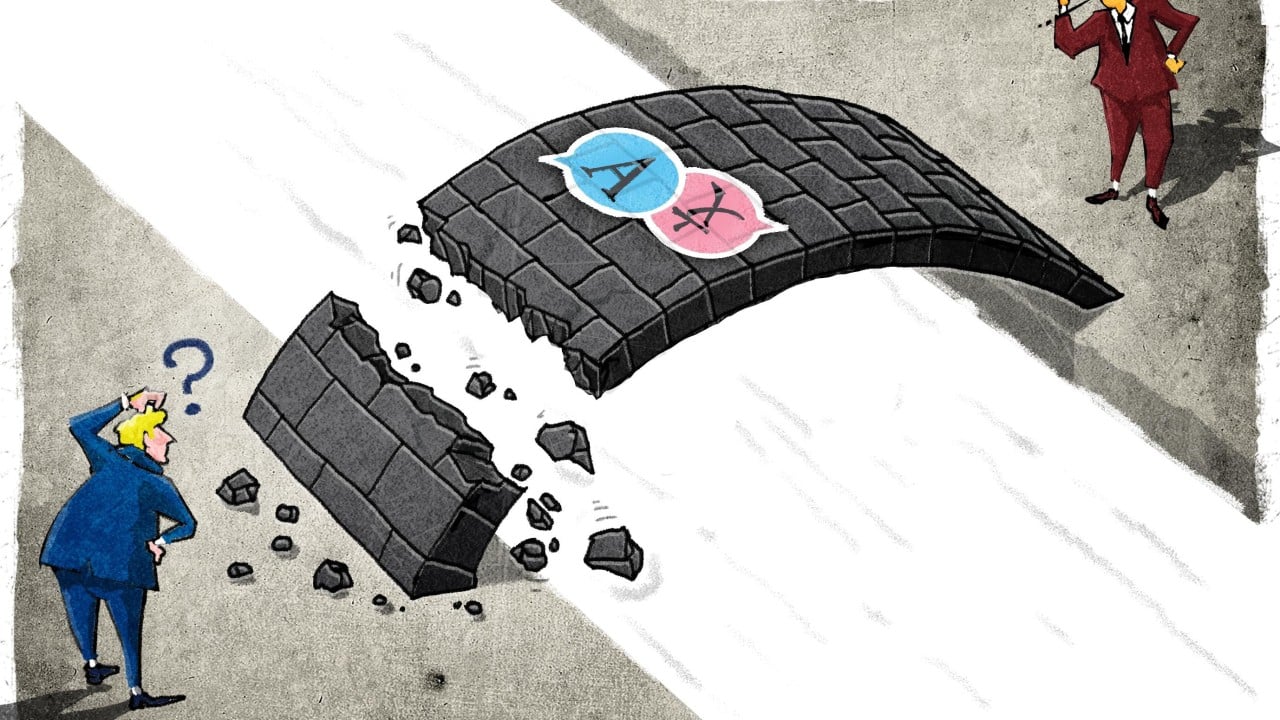
The Structural Misalignment in Sino-American Intelligence Analysis
Washington struggles to decode Beijing’s strategic intent because Western analytical models rely on mirror-imaging democratic institutional incentives, transactional economic trade-offs, and short-term political election cycles. Chinese statecraft operates under a fundamentally different decision-making architecture driven by long-term regime security, ideological risk aversion, and institutional party-state supremacy.
When American foreign policy analysts evaluate Chinese actions, they systematically miscalculate state behavior by applying liberal market assumptions to a state-capitalist political structure. This failure creates systemic strategic blind spots in trade policy, military deterrence, and diplomatic signaling. Understanding Beijing requires dismantling Western analytical assumptions and mapping the structural mechanics of the Chinese Communist Party policy formulation process. Meanwhile, you can explore similar developments here: Inside the Iranian Execution Surge Designed to Crush Internal Dissent.
Three Pillars of Chinese Strategic Calculus
Beijing’s decision-making apparatus rests on three structural imperatives that override conventional cost-benefit economic logic.
1. The Party-State Supremacy Principle
Western observers frequently isolate economic policy from political control. In Beijing's framework, economic efficiency is secondary to institutional control. The primary objective of state policy is not GDP maximization, but the preservation and reinforcement of Party authority over critical state infrastructure, capital flows, and information networks. To understand the bigger picture, check out the detailed report by The New York Times.
- Capital Allocation Control: Credit is directed toward state-owned enterprises (SOEs) despite lower returns on capital compared to private enterprises, ensuring state dominance over key economic sectors.
- Information Sovereignty: Tech sector regulation prioritizes data security and party oversight over market capitalization or international expansion.
- Institutional Discipline: Anti-corruption mechanisms serve a dual purpose: enforcing administrative compliance and eliminating competing power centers within the bureaucracy.
2. Comprehensive National Security Architecture
The traditional Western separation of domestic security, economic security, and military defense does not exist within Chinese strategic planning. Under the framework of Comprehensive National Security, foreign trade dependencies, demographic trends, and internal ideological unity are processed as national security variables.
       [ Party Central Leadership ]
                   |
     +-------------+-------------+
     |                           |
[Domestic Stability]     [Economic Sovereignty]
     |                           |
     +-------------+-------------+
                   |
      [External Projective Power]
This integrated approach means economic sanctions or strategic trade restrictions from Washington are viewed not as negotiable market adjustments, but as existential security threats requiring asymmetric defensive or retaliatory measures.
3. Asymmetric Time Horizons
American political leadership operates within two- to four-year policy cycles, favoring short-term achievements and immediate diplomatic wins. Chinese policy planning operates across multi-decade implementation horizons. This temporal imbalance allows Beijing to absorb short-term economic friction to secure long-term structural dominance in critical supply chains, technology standards, and geopolitical alliances.
The Four Sources of Strategic Miscalculation in Washington
The persistent misreading of Chinese strategy stems from structural analytical errors embedded within the American national security and intelligence apparatus.
Mirror-Imaging Institutional Incentives
Washington analysts routinely project Western bureaucratic behavior onto Chinese officials. In a liberal democracy, political leaders are incentivized to signal compromise and economic progress to voters. Within the CCP administrative system, bureaucratic incentives favor strict compliance with top-down mandates, extreme risk aversion, and ideological alignment over pragmatic problem-solving.
Misinterpreting Economic Friction as Policy Failure
When Chinese economic growth decelerates or real estate markets contract, Western analysts frequently diagnose these events as policy failures or administrative incompetence. In many instances, these contractions represent deliberate policy choices designed to deflate speculative bubbles, reduce moral hazard, and reallocate capital into sovereign industrial priorities like advanced manufacturing and clean energy infrastructure.
The Misapplication of Rational Choice Theory
Standard deterrence theory assumes state actors process risk through direct cost-benefit trade-offs. Beijing evaluates risk through a matrix of regime survival, sovereign integrity, and historical legitimacy. Actions that appear economically irrational to Western observers—such as aggressive trade restrictions against major economic partners—are logically consistent when weighed against internal security requirements.
Overreliance on Open-Source Operational Signals
Washington analytical frameworks rely heavily on visible legislative processes, open market signals, and public debates. Chinese decision-making occurs within closed, centralized party organs. Relying on public statements or external trade metrics leads to delayed or inaccurate reads on strategic policy shifts.
Mapping Beijing's Policy Execution Mechanism
To anticipate Chinese strategic moves, analysts must track the structural pathway of policy formulation from central ideology to execution.
[ Central Ideological Directives ]
               |
               v
[ Five-Year Plans & Strategic Frameworks ]
               |
               v
[ Bureaucratic & Provincial Implementation ]
               |
               v
[ State Sector & Regulatory Enforcement ]
Phase 1: Central Ideological Framing
Policy directives originate within top party leadership and are articulated through high-level ideological concepts. These concepts are not mere political rhetoric; they serve as absolute operational parameters for all state ministries and sub-national governments.
Phase 2: National Strategic Frameworks
Ideological directives are translated into high-level policy guidelines, including Five-Year Plans and sectoral development blueprints. These documents establish quantitative targets for resource allocation, industrial prioritization, and research funding.
Phase 3: Bureaucratic and Provincial Alignment
Provincial governments and state ministries compete for central funding by aligning their local development strategies with national frameworks. This dynamic creates rapid, massive capital concentration in designated strategic industries, leading to sudden market expansion or production overcapacity.
Phase 4: Regulatory and Economic Enforcement
State institutions, financial regulatory bodies, and state-owned banks execute enforcement through credit rationing, regulatory investigations, and market access restrictions, enforcing central priorities across the economy.
Strategic Play: Calibrating Policy Analysis
To eliminate systemic misjudgments, strategy teams and policy analysts must abandon conventional mirror-imaging and implement a structural analytical model.
First, decouple economic analysis from market-efficiency assumptions. Every policy signal from Beijing must be assessed through the lens of party-state preservation and comprehensive national security rather than short-term return on investment.
Second, audit supply chains and strategic dependencies by mapping state-backed capital flows rather than current commercial pricing. Areas receiving state-directed credit and regulatory protection indicate future points of structural dominance or economic leverage.
Third, adjust analytical timelines to evaluate policy impacts across ten- to twenty-year horizons. Short-term market volatility or bureaucratic delays rarely signal a strategic retreat by Beijing; they typically indicate tactical adjustments within a persistent long-term trajectory.