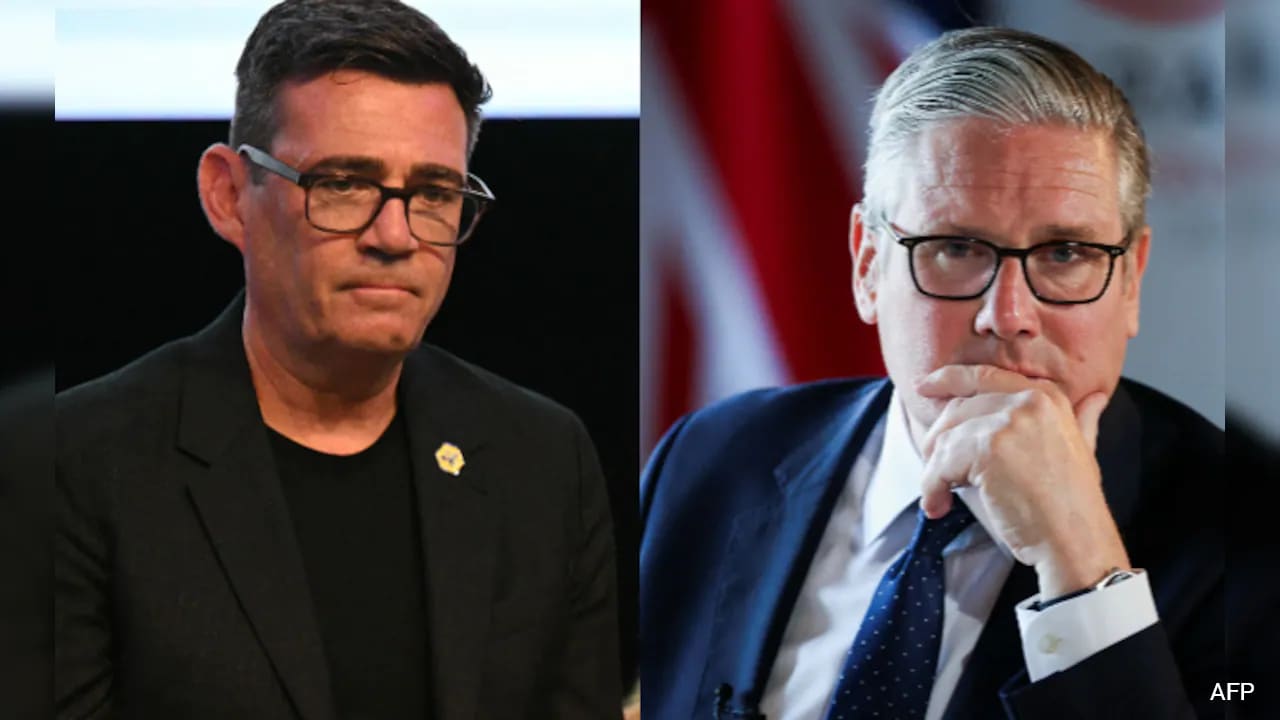
The British political commentariat is obsessed with a retro 1990s drama that no longer exists. Every time Keir Starmer’s poll numbers take a hit or a budget causes friction backbenches, the columnists trot out the same tired narrative: Andy Burnham is waiting in the wings, ready to swoop into a convenient by-election, march into Westminster, and mount a heroic coup.
It is a fantasy. It ignores the brutal structural mechanics of the modern Labour Party, the realities of regional power, and the evolution of political capital in the UK.
The lazy consensus treats the journey from the Greater Manchester combined authority to Downing Street as a simple matter of ambition and timing. They see Burnham as a prime minister-in-waiting who just needs to find a safe seat. This view is entirely wrong. Moving from the mayoralty back to the backbenches of the House of Commons would not be a promotion; it would be a voluntary political castration.
The Westminster Trap
The media treats Parliament as the undisputed center of the political universe. I have watched commentators analyze the UK political scene for decades, and their biggest blind spot remains their inability to comprehend power outside the SW1 postcode.
To challenge Keir Starmer, Burnham would first have to become an MP. Think about what that actually requires under the current regime. He would have to signal his intent, abandon his mandate in Manchester, and hope a safe seat opens up. Then, he would have to secure the nomination from a National Executive Committee (NEC) that is utterly dominated by Starmer’s allies.
The current Labour leadership has spent years systematically purging independent voices from the parliamentary selection shortlists. They do not tolerate wildcards. The idea that Morgan McSweeney and the party machine would hand Burnham the keys to a safe seat on a silver platter is laughably naive.
Imagine a scenario where he somehow bypasses the machine and wins a by-election. What happens the day he enters the Commons? He becomes a backbencher. He loses his executive power, his massive media profile, and his ability to command regional policy. He becomes just another face in a sea of hundreds of Labour MPs, bound by the strict discipline of the government whips.
If he steps out of line, the whip is withdrawn. If he conforms, he loses the very "King of the North" outsider brand that makes him popular in the first place. The moment Burnham steps back into Westminster, he enters an arena designed to crush his specific type of leverage.
The Mathematical Impossibility of a Coup
Let’s look at the cold, hard numbers that the pundits ignore. In 2021, Starmer quietly re-engineered the Labour Party’s leadership election rules. This was a calculated move to insulate his leadership from insurgencies.
Under the current rules, any challenger needs the nominations of 20% of Labour MPs just to get on the ballot. In a parliamentary party packed with loyalists selected by the current regime, finding dozens of MPs willing to sign their political death warrants for an outsider is a monumental task.
The rules of the game have changed:
- The 20% Threshold: A candidate needs a massive chunk of the Parliamentary Labour Party (PLP) before ordinary members even get a vote.
- The NEC Gatekeepers: The central party controls the shortlists for any upcoming vacancies, ensuring ideological alignment.
- The Selection Vetting: Potential rebel candidates are weeded out long before they can build a factional base in parliament.
Burnham’s popularity lies with the public and ordinary party members, not with the PLP. The MPs in Westminster remember his previous leadership campaigns. They remember him as the candidate who tried to please everyone and ended up pleasing no one in 2015. They see him as an opportunist who used regional devolution to build a personal fiefdom. He does not have a loyal ideological faction within the current parliament to trigger a rebellion.
The Myth of the Outsider Savior
The core flaw in the Burnham-as-savior narrative is the assumption that his brand translates nationally without the regional context. Burnham is effective precisely because he can blame Whitehall for everything that goes wrong in the North. He plays the role of the frustrated local defender fighting against a distant, indifferent capital.
The second he takes a seat in Westminster, that entire act evaporates. He becomes part of the problem.
Look at the historical precedents. Politicians who attempt to bridge the gap between regional executive power and Westminster factional leadership almost always fail. The skills required to manage a combined authority—pragmatic deal-making with local businesses, public public-relations stunts, and cross-party consensus—are useless in the toxic, tribal warfare of the House of Commons.
I have seen political figures destroy their careers by misunderstanding where their true strength lies. Burnham’s power is geographic. It is rooted in the specific grievances of the north-west of England. Transplanting that to the national stage requires appealing to suburban voters in the South, rural communities in Wales, and the financial interests of the City of London. The "King of the North" moniker is a gilded cage; it keeps him relevant, but it permanently limits his national reach.
Power Shifted While Westminster Slept
The real story isn't how Burnham takes over Westminster, but how regional mayors are making Westminster increasingly irrelevant to the daily lives of voters.
While the Prime Minister manages the endless crises of national governance, mayors are quietly gaining control over transport, housing, and skills training. Burnham has a direct mandate from millions of people. He answers to his electorate, not to a chief whip in Downing Street. He can command national media attention on his own terms without asking permission from Number 10.
Why would anyone trade an executive position with real, tangible power over a major European region for the hope of leading a fractious, exhausted national party in the twilight of its electoral cycle?
The media keeps asking the wrong question. They ask how Andy Burnham can get back into the game at Westminster. They should be asking why he would ever want to. The assumption that the ultimate goal of every ambitious politician is to sit in a cramped office in SW1 is a relic of a bygone era. Burnham has built a different model of political relevance—one that relies on standing outside the castle gates, not begging for entry.
Stop waiting for the Manchester comeback. The rules are rigged against it, the math doesn't work, and the prize isn't worth the sacrifice.


