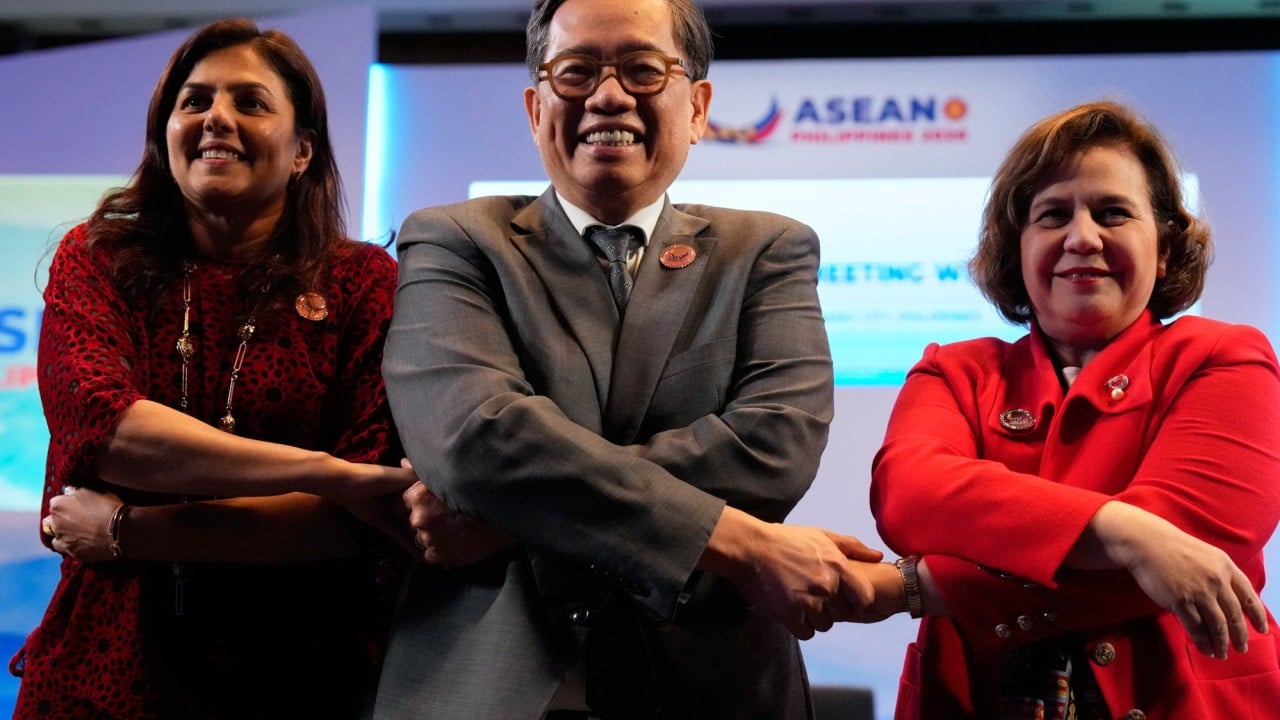
Turkey has officially secured full Dialogue Partner status with the Association of Southeast Asian Nations (ASEAN), marking a monumental institutional upgrade for Ankara during the 59th ASEAN Foreign Ministers' Meeting in Manila. This designation makes Turkey the 12th external partner of the Southeast Asian bloc, bypassing a strict institutional moratorium on new partnerships through years of methodical defense diplomacy, targeted trade expansion, and quiet diplomatic groundwork. Far from an empty ceremonial title, this status grants Ankara institutional access to security, economic, and socio-cultural frameworks in one of the world's most economically dynamic regions.
The milestone did not happen overnight. It represents the culmination of a multi-decade foreign policy shift designed to diversify Turkey's geopolitical portfolio away from its traditional Western anchors.
The Long Game of Institutional Creep
Diplomatic status inside ASEAN is notoriously difficult to acquire. The bloc operates on consensus, balancing competing superpowers while protecting its central role in regional architecture. When Ankara signed ASEAN's Treaty of Amity and Cooperation in 2010, few foreign policy analysts predicted it would lead to a permanent seat at the table. At the time, Turkey's foreign policy was heavily consumed by its immediate neighborhood and its stuttering European Union accession bid.
By 2017, however, Ankara had secured Sectoral Dialogue Partner status. That stepping stone was not just about exchanging pleasantries at annual summits. It was about embedding Turkish state institutions into the bureaucratic machinery of Southeast Asia.
- The Asia Anew Initiative, launched in late 2019, systematically expanded Turkey's diplomatic footprint.
- New embassies opened across mainland and maritime Southeast Asia.
- Defense sales shifted from opportunistic trades to long-term industrial co-production frameworks.
When ASEAN leaders weighed applications against a rigid institutional moratorium, Ankara's persistent bureaucratic engagement won over skeptical member states. It proved that Turkey was willing to do the slow, unglamorous work of regional integration rather than simply showing up for photo opportunities.
The Defense Industrial Engine
You cannot understand Turkey's ascension to Dialogue Partner status without looking at hardware. Traditional diplomatic soft power matters, but defense exports sealed the deal.
Over the past decade, Southeast Asian nations have faced acute maritime security challenges, territorial disputes in the South China Sea, and internal counterinsurgency demands. Major global defense suppliers often attach heavy political conditionalities to their arms sales. Ankara filled a vacuum by offering advanced military technology with fewer political strings attached.
Take, for instance, the expanding web of defense pacts across the region. Turkey has negotiated major defense-industrial agreements with Indonesia, Malaysia, and the Philippines. These arrangements range from armored land vehicles and naval assets to sophisticated unmanned aerial systems and multi-role aviation platforms.
A hypothetical example illustrates the mechanics of this strategy: an ASEAN member state requiring coastal patrol vessels to protect exclusive economic zones faces years of procurement delays from Western shipyards. By turning to Turkish defense firms, that same state can secure co-production agreements, technology transfers, and rapid delivery schedules. This transactional utility transformed Turkey from a distant transcontinental observer into an indispensable security partner.
Balancing Acts in a Fragmented World
Skeptics point out that Turkey's bilateral trade volume with ASEAN remains modest compared to economic titans like China, Japan, or the United States. That criticism is mathematically correct. Bilateral trade figures hover around the low billions, a fraction of what Beijing or Washington moves through the Malacca Strait annually.
Yet measuring geopolitical relevance solely through raw trade volume misses the point entirely.
Turkey occupies a unique structural niche. As a NATO member that fiercely guards its strategic autonomy, Ankara maintains independent channels with Moscow, Beijing, Kyiv, and Western capitals. For ASEAN—an organization terrified of being forced to choose sides in a deepening US-China cold war—bringing in a capable, middle-power actor like Turkey dilutes great-power pressure. Ankara provides an alternative vector for trade, technology, and diplomatic coordination without carrying the baggage of a superpower hegemon.
Furthermore, Turkey's humanitarian footprint in the region has built deep reservoirs of goodwill. Ankara's long-standing diplomatic involvement in the Mindanao peace process in the southern Philippines—where a Turkish diplomat chaired the Independent Decommissioning Body—demonstrated a genuine commitment to regional stability. State agencies like the Turkish Cooperation and Coordination Agency (TIKA) and disaster relief organizations have quietly established operational credibility on the ground.
The Real Test Ahead
Achieving Dialogue Partner status is the easy part. Managing the institutional obligations is where diplomacy usually founders.
Ankara must now operationalize its new standing by aligning its national strategies with the broader ASEAN Community Vision. This means moving past bilateral defense sales and crafting comprehensive, region-wide frameworks for digital transformation, supply chain resilience, and green energy transition. If Turkey treats its new title as a mere badge of diplomatic prestige, the relationship will stagnate. If it treats it as a mandate for permanent economic and security integration, it will fundamentally alter its economic geography.
The institutional upgrade recognizes a multipolar reality that has been forming for years. Power is drifting away from traditional Atlantic-centric hubs toward the Indo-Pacific. Turkey has formally anchored itself to that shift, signaling that its strategic horizon extends far beyond its immediate borders.