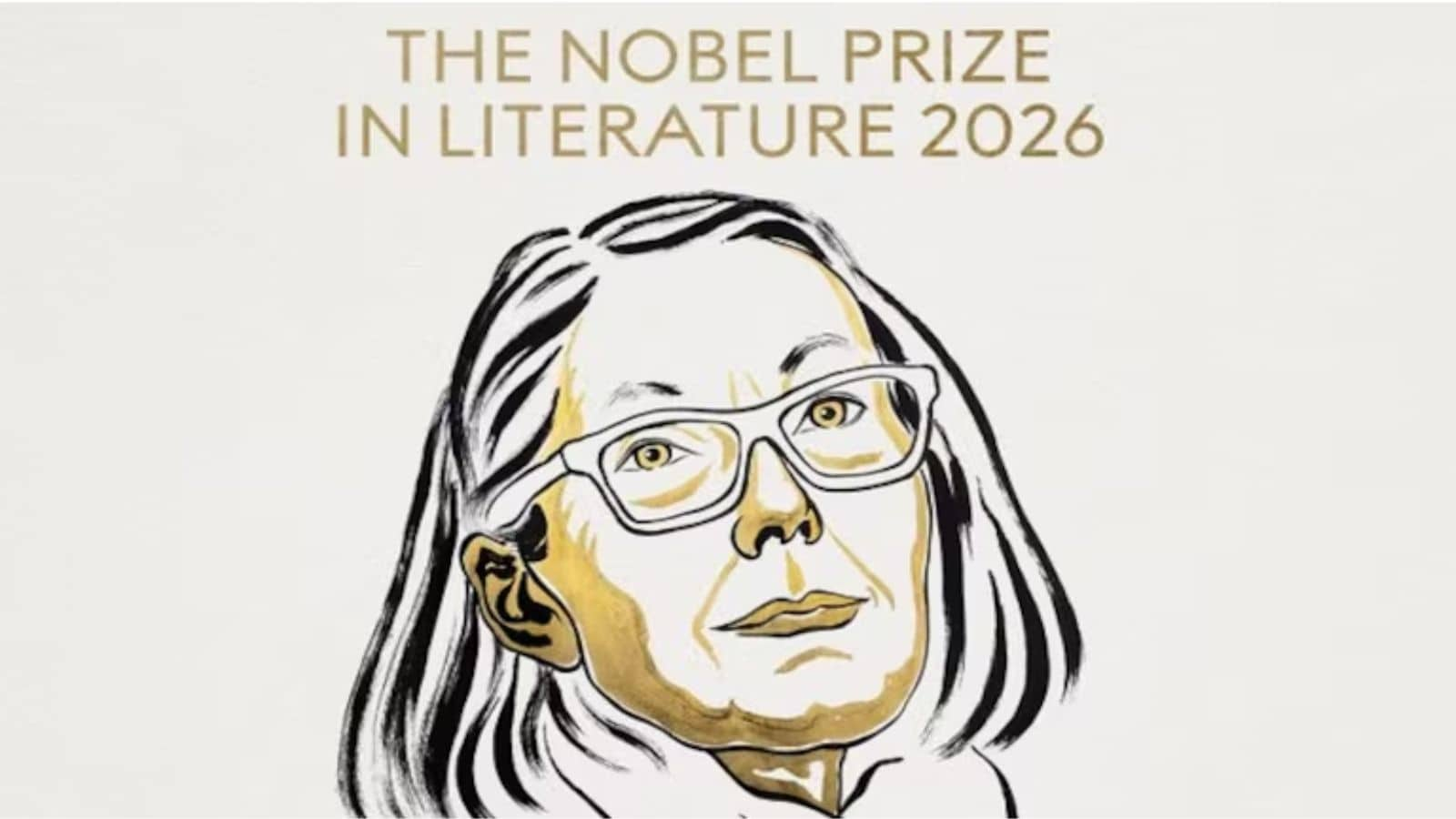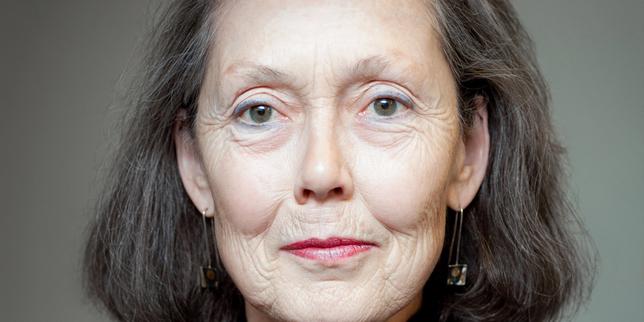
The Swedish Academy spent decades rewarding architects of grand, linear edifices before realizing that the foundation had already cracked. When they handed the Nobel Prize in Literature to Anne Carson, they did not merely honor a singular career built over four decades. They capitulated to a seismic shift in how modern writing actually functions.
Carson does not write books in the conventional sense. She compiles artifacts. She excavates. Her texts arrive as vellum blocks, accordion-fold coffins, and verse novels that refuse to choose between ancient Greek philology and contemporary grief. To understand why her Nobel victory matters is to understand why traditional literary criticism spent thirty years misclassifying her output.
Most prize citations are bureaucratic poetry. The Academy stated that Carson won for her "bold and inventive oeuvre that, in playful dialogue with the classical tradition, has created new forms for contemporary literature." Strip away the institutional polish, and the citation points to a rare disruption. Carson took dead languages and made them bleed with contemporary anxiety. She treated Sappho, Stesichoros, and Catullus not as museum artifacts behind glass, but as drinking buddies who happened to live two millennia ago.
Consider Autobiography of Red. Published in 1998, it masquerades as a verse novel about Geryon, a mythical red-winged monster slaughtered by Heracles. In Carson's hands, the myth mutates into a contemporary tale of queer desire, photography, and alienation. The monster becomes a shy young man with a camera. The mythological hero becomes an emotionally vacant lover. The narrative structure defies categorization. It is an essay wrapped in poetry, dressed up as a novel, anchored by a scholarly obsession with archaic fragments.
Then came Nox. Following the death of her estranged brother, Carson produced an elegy that rejected the bound book format entirely. Distributed as a facsimile of a scrapbook housed in a box, Nox consists of scanned photographs, torn dictionary pages, handwritten marginalia, and translated fragments of Catullus. It is a physical object that forces the reader to unfold grief horizontally across a table. It is sculpture. It is mourning translated into a physical architecture.
For years, conservative literary gatekeepers viewed these experiments as eccentricities. They asked where the plot went. They wondered why essays on Emily Brontë bled into personal confessions about domestic isolation, as seen in The Glass Essay. They stumbled over lines that shifted registers from stark classical scholarship to vernacular punchlines without warning.
The Academy's belated recognition of this methodology signals an industry-wide exhaustion with standard fiction. The traditional three-act novel, manufactured for airport bookstores and algorithmic optimization, feels increasingly hollow against the backdrop of an attention economy in freefall. Carson's work proves that readers do not need hand-holding. They crave density, associative logic, and the friction of disparate ideas colliding in real time.
Her background explains the rigor. Carson spent decades teaching ancient Greek and Latin at various universities. She knows the rules of the grammar house better than the critics who police it. Yet her entire career operates as an exercise in calculated demolition. She breaks the vessel precisely to examine the light shining through the cracks.
Her influence now stretches across generations of writers who refuse to stay in their structural lanes. Poets write essays; essayists write verse; translators become creators in their own right. By validating Carson, the Nobel committee acknowledged that the boundaries separating genres are administrative fictions.
Carson was in Reykjavik, Iceland, listening to the wind when the news reached her. When asked later about her writing process, she offered her standard instruction.
Start in the middle.
The advice is characteristically unpretentious. It also dismantles the illusion of linear progress that underpins most writing advice. There is no pristine beginning. There is only the messy, ongoing present, caught somewhere between an ancient fragment and an unwritten tomorrow.