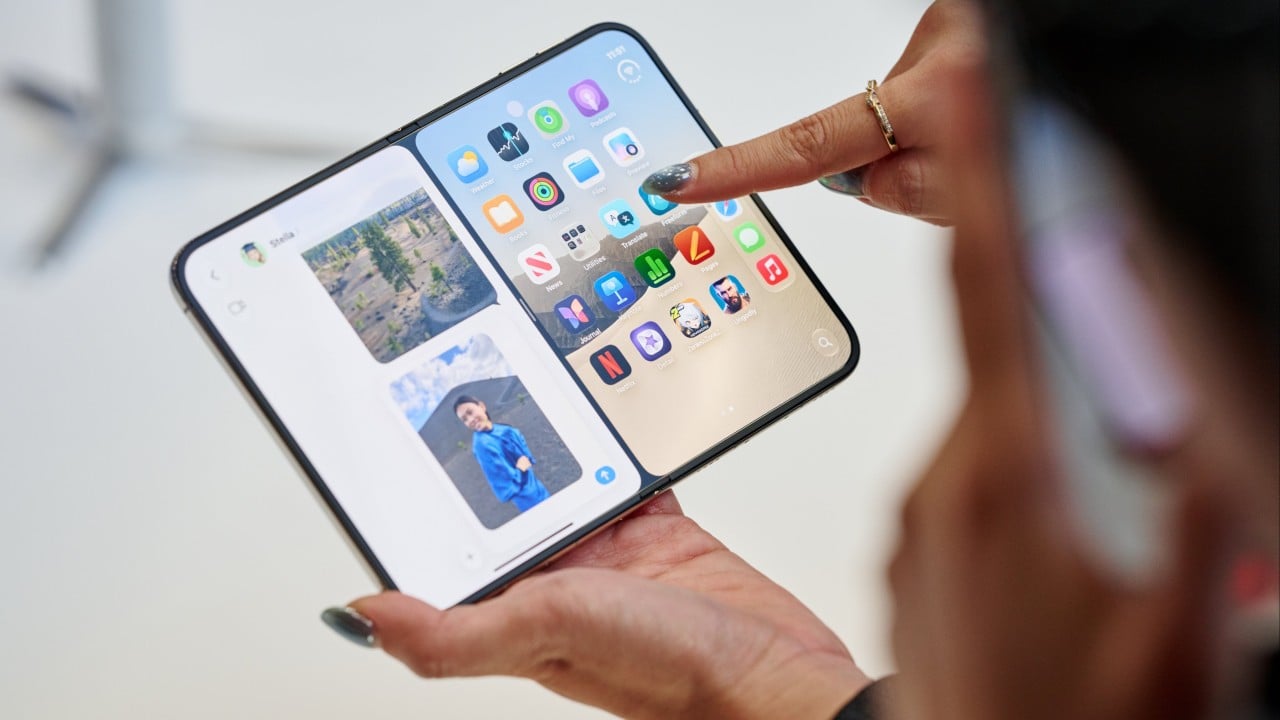
The lazy consensus of the tech commentariat has spent years declaring foldables a gimmick. They pointed to fragile polymer screens, astronomical price tags, and a visible crease, diagnosing the entire category as a solution in search of a problem. Then Apple introduces a book-style foldable device, and the narrative shifts overnight from dismissal to utter confusion. The recurring headline across industry blogs asks why a notoriously cautious company would deign to enter an unpopular market.
That question is fundamentally backwards. Apple is not entering a dying niche out of desperation. The rest of the industry spent half a decade validating the hardware mechanics for them, absorbing the research and development costs, and taking the consumer backlash for early failures so Cupertino could watch, wait, and strike precisely when the components matured.
The Mechanics Of The Pivot
For years, analysts measured foldable success through quarterly unit shipments compared to monolithic slabs, entirely missing the point of the form factor. A foldable phone is not a phone trying to be a tablet. It is a pocket-sized workstation that eliminates the need to carry secondary portable computing hardware for specific high-density tasks.
Look at the material science data. Ultra-thin glass yields crossed eighty-five percent efficiency, and panel production costs dropped significantly. When Apple engineers built their folding hardware, they bypassed the frantic race-to-market cycle that plagued Android competitors who shipped half-baked hinges years prior. By utilizing advanced structural glass frames and specialized encapsulation layers to diffuse light transmission, they solved the optical crease problem that media outlets claimed was physics-bound.
Deconstructing The Popularity Fallacy
Critics love to point out that foldables account for a small percentage of total global smartphone volume. This statistic is a distraction. Premium hardware categories are never judged by raw volume during their growth phase; they are judged by margin and ecosystem retention.
Market data from industry trackers reveals that while Android foldable shipments faced contractions elsewhere due to component cost spikes, the arrival of Apple's folding hardware instantly claims a massive chunk of global foldable revenue.
| Metric | Android Early Era (2023-2025) | Apple Entry Phase (2026) |
|---|---|---|
| Primary Focus | Speed-to-market and shock value | Crease elimination and thermal dissipation |
| Average Price Point | 1,200 to 1,800 USD | 2,000+ USD premium tier |
| Form Factor Priority | Tall, narrow candy bars | 4:3 aspect ratio tablet canvas |
The financial reality is brutal. Android manufacturers treated foldables as experimental playground projects. Apple treats them as an expansion of the ultra-premium tier, sitting safely above the standard pro lineup. When a device starts at two thousand dollars and commands a multi-gigabyte RAM allocation paired with custom silicon, it ceases to be a gadget for early adopters. It becomes a luxury asset for power users who demand split-screen multitasking workflows without carrying a separate slate.
The Real Strategic Play
I have watched corporate strategy teams blow millions trying to force form factors onto consumers before the software layer was ready. The mistake is always the same: they design the hardware and hope developers figure out the UI later.
Apple did the exact opposite. By ensuring that iOS architecture scales seamlessly from a compact outer display to an expansive internal canvas, they removed the friction that killed previous attempts. You do not need to retrain users on how to interact with their apps; the canvas simply grows to accommodate more data.
Stop listening to analysts who call a product category unpopular right before it hits an inflection point. They mistook a multi-year gestation period for a permanent rejection. The foldable market was never unpopular. It was just waiting for an adult to show up and build it right.