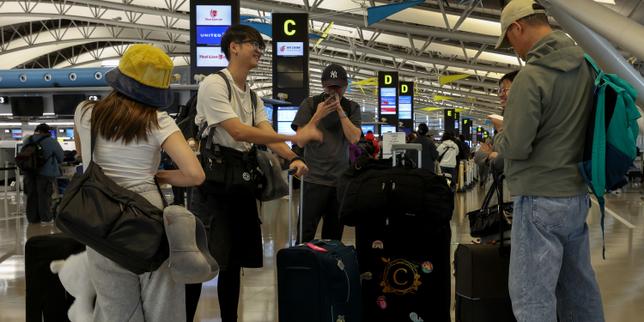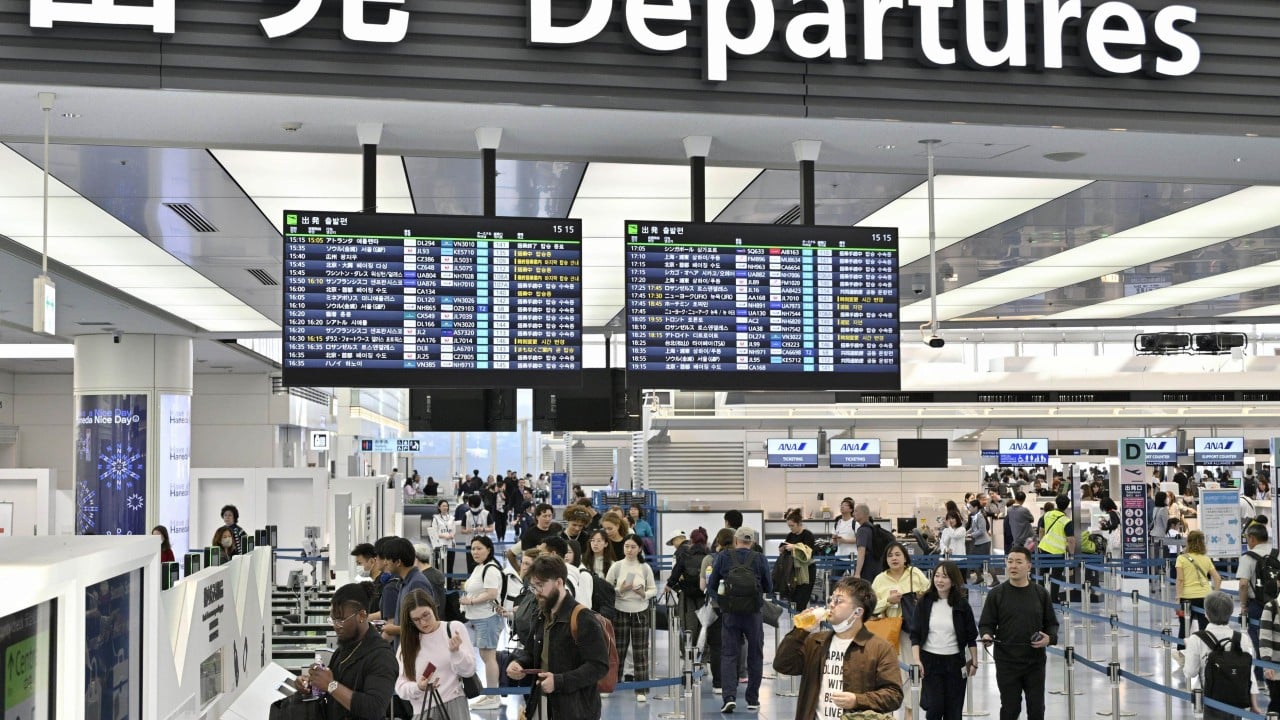
The surge in Japanese outbound travel preceding the 2026 Golden Week is not a mere seasonal spike; it is a calculated consumer response to a clear price-hike signal in aviation fuel surcharges. When the Ministry of Land, Infrastructure, Transport and Tourism (MLIT) allows airlines to adjust fuel surcharges based on the average price of Singapore kerosene, a predictable lag exists between market spot price changes and the ticket price at checkout. Rational actors are currently exploiting this window, treating international travel as a depreciating asset that must be locked in before the inevitable upward adjustment of the fuel cost component.
The Mechanism of Fuel Surcharge Volatility
The cost structure of an international flight from Japan is bifurcated into the base fare and the fuel surcharge (nenryo fukaunchin). While base fares fluctuate according to yield management algorithms and demand density, the fuel surcharge is a transparent, formulaic add-on revised every two months. Don't forget to check out our previous coverage on this related article.
The current rush is driven by a specific convergence of variables:
- The Two-Month Lag: Surcharges for April and May travel are typically set based on the average fuel price from December and January.
- Price Threshold Levels: Airlines use a tiered table where specific price bands in Yen-denominated Singapore kerosene trigger fixed surcharge increases.
- The Currency Multiplier: Because jet fuel is traded in USD, the continued weakness of the Yen acts as a force multiplier on the fuel surcharge, even if the global price of crude remains stable.
This creates a "buying floor." Travelers who book before the next revision cycle effectively capture a discount equal to the delta between the current surcharge and the projected increase. On long-haul routes to Europe or North America, this delta can exceed 30,000 Yen per person, creating a significant incentive for families to accelerate their booking timelines. To read more about the history of this, Travel + Leisure offers an excellent summary.
The Golden Week Compression Effect
Golden Week represents the most rigid period in the Japanese corporate and academic calendar. Because the holidays are fixed, the elasticity of demand is remarkably low; people will travel regardless of price, but they will optimize when they pay. This year, the "rush" is characterized by two distinct behavioral shifts:
1. Strategic Front-Loading
We are seeing a departure from the traditional booking curve. Normally, Golden Week bookings follow a standard distribution peaking 60 to 90 days out. This year, the curve is heavily skewed toward the earliest possible booking window. Consumers are not just securing availability; they are hedging against the inflationary pressure of the fuel surcharge. This front-loading creates an artificial scarcity in lower fare buckets earlier than usual, further driving up the base fare and creating a self-fulfilling prophecy of high-cost travel.
2. Destination Shift based on Duration-to-Fuel Ratio
The fuel surcharge is not proportional to the distance in a linear sense; it operates in zone-based buckets. Travelers are currently calculating the "value-to-surcharge" ratio.
- Short-haul (Korea, Taiwan): Low surcharge impact relative to total cost.
- Medium-haul (Southeast Asia): High sensitivity; the surcharge can represent 25% of the total ticket price.
- Long-haul (USA, EU): Extreme sensitivity; the surcharge often dictates the choice between Economy and Premium Economy.
The Macroeconomic Headwinds: Beyond the Surcharge
While the fuel surcharge is the immediate catalyst, the outbound rush must be viewed through the lens of Japan's broader macroeconomic environment. The "Buy Now" mentality is a defense mechanism against three specific pressures.
The Purchasing Power Deficit
The Yen’s performance against the Dollar and Euro has fundamentally altered the "on-the-ground" cost of international travel. A traveler today faces a double-tax: the fuel surcharge at the point of purchase and the diminished purchasing power at the point of consumption. By securing the flight early, travelers are attempting to "cap" the total cost of the trip, even as hotel and dining costs abroad remain volatile.
Supply-Side Constraints
Aviation capacity has not yet fully recovered to 2019 levels on many routes, particularly those affected by the closure of Russian airspace for Japan-Europe flights. This detour adds 2 to 3 hours of flight time, directly increasing fuel consumption and, consequently, the justification for higher surcharges. Travelers recognize that seats are a finite resource in a constrained supply environment.
Quantifying the Cost Function of Outbound Travel
To understand the traveler's logic, one must look at the Total Cost of Trip ($TC$) formula:
$$TC = (BF + FS) + (V_{local} \times ER) + OC$$
Where:
- $BF$: Base Fare (Yield managed)
- $FS$: Fuel Surcharge (Formulaic/Lagged)
- $V_{local}$: Local expenses in foreign currency
- $ER$: Exchange Rate
- $OC$: Opportunity Cost of vacation time
The current consumer behavior is an attempt to solve for $FS$ before it becomes a larger variable in the equation. However, this logic has a potential flaw: by rushing to book, consumers are signaling high demand to airline yield management systems, which responds by raising the $BF$ (Base Fare). In many cases, the increase in $BF$ caused by the rush may actually exceed the savings gained by avoiding the next $FS$ hike.
Operational Challenges for the Travel Industry
The sudden influx of bookings creates a liquidity surge for airlines and travel agencies (like JTB and HIS), but it introduces significant operational risks:
- Customer Service Bottlenecks: The concentration of bookings into a narrow window before the surcharge change stresses legacy booking systems and human support staff.
- Inventory Imbalance: Early exhaustion of "Saver" and "Value" fare buckets leaves only high-tier "Flex" tickets available for the actual holiday period, potentially alienating late-deciding high-net-worth travelers.
- Hedging Risk: For airlines, the surge in early bookings at current fuel surcharge levels means they are locked into prices that may not cover the actual cost of fuel at the time of flight if spot prices continue to climb.
The Demographic Divergence
The rush is not uniform across all segments. Data suggests a widening gap in travel behavior:
- The Resilient Affluent: High-income travelers are less sensitive to the surcharge but are booking early to secure business class seats on limited-capacity routes.
- The Budget-Constrained Family: This group is the most sensitive to the fuel surcharge. For a family of four, an increase of 20,000 Yen per person is a 80,000 Yen hit to the budget—often the difference between traveling and staying domestic.
- The "Revenge Traveler": Post-pandemic sentiment still lingers, where the desire for international experiences outweighs the logical fiscal constraints. This group is likely to take on debt or dip into savings to fund the Golden Week excursion.
The Limitation of the "Rush" Strategy
Booking early to avoid fuel surcharges is a valid tactical move, but it carries inherent risks that are often overlooked.
- Non-Refundability: The cheapest fare buckets—those most sought after during this rush—are typically the least flexible. If the fuel price were to unexpectedly drop (a "downward revision"), those who booked early are locked into the higher rate.
- Exchange Rate Volatility: If a traveler books the flight but the Yen weakens further by the time of the trip, the 10% saved on the fuel surcharge could be easily wiped out by a 15% increase in the cost of hotels and meals.
Strategic Play for the Q2 Travel Window
The current outbound rush is a rational response to a transparent pricing mechanism. However, for the travel industry and the savvy consumer, the play is not just about beating the clock on the fuel surcharge.
The strategy should be to pivot toward destinations where the "Surcharge-to-Distance" ratio is optimized and the local currency has not appreciated as aggressively as the USD. This means shifting focus toward Southeast Asian markets (Vietnam, Thailand) or specific European corridors where airline competition is maintaining lower base fares despite fuel pressures.
Investors should monitor the revenue reports of major Japanese carriers (ANA, JAL) for a Q1 spike in "Advanced Ticket Sales," which will serve as a leading indicator for Golden Week performance. The real test will be the "fill factor" of these flights; high booking volume is beneficial only if the yield management teams successfully balanced the base fare against the fixed fuel surcharge to maintain margins.
Ultimately, the Golden Week rush is a case study in market transparency. Because the MLIT fuel surcharge formula is public knowledge, the "information asymmetry" that usually favors the airline is removed, allowing the consumer to act as a temporary arbitrageur.