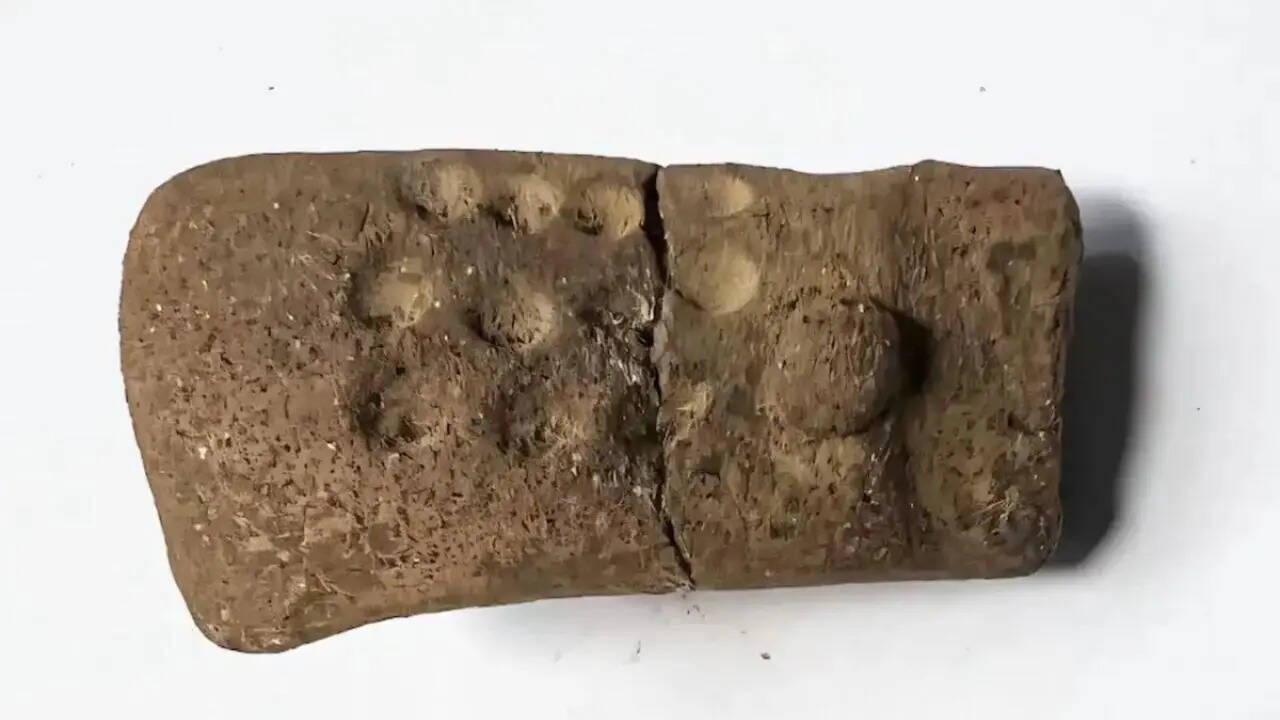
Archaeology loves a good mystery, especially when it can be used to capture headlines and secure funding. The latest media obsession centers on a 2,700-year-old ceramic figurine from Guatemala, sporting 11 mysterious dots carved into its surface. The mainstream consensus is already solidifying: academe claims these dots are forcing us to rethink the very origin of early Mesoamerican writing. They see the dawn of a complex hieroglyphic system.
They are looking at it completely wrong.
This isn't the birth of a sophisticated linguistic script. It is something far more practical, ubiquitous, and ancient. By treating every mark on an artifact as a proto-word, researchers are blinding themselves to the actual behavioral patterns of ancient societies. The rush to find "the earliest writing" has created a blind spot the size of the Maya lowlands.
The Obsession with Textual Over-Interpretation
Mainstream Mesoamerican archaeology has a glaring bias: it values the scribe over the artisan. When the Chocholá-style or middle preclassic figurines pop up with abstract notation, the immediate reflex is to loop them into a narrative of nascent literacy.
Let's break down why this assumption fails basic anthropological logic.
Early writing systems—whether we are talking about Mesopotamian cuneiform, Egyptian hieroglyphs, or Oracle Bone script in China—do not emerge as isolated, random dots on decorative figurines. Writing evolves from administrative necessity. It starts with accounting. It tracks grain, livestock, beer, and labor.
- Cuneiform began as token impressions tracking temple commodities.
- Egyptian Hieroglyphs quickly aligned with royal display and state bureaucracy.
- Maya Writing emerged alongside divine kingship to record dynastic lineages and political triumphs.
Eleven dots on the chest or face of a small ceramic figure do not fit this pattern. To suggest these marks represent a transitional writing system is to misunderstand how communication technologies actually scale. You do not invent an alphabet to scratch 11 identical marks on a clay doll.
The Missing Nuance: Tattoos, Tallies, and Tools
If it isn't writing, what is it? The lazy consensus refuses to look at the most obvious, cross-cultural explanations for geometric body modification or notation.
+------------------+-----------------------------+-----------------------------+
| Feature          | Academic Interpretation     | Material Reality            |
+------------------+-----------------------------+-----------------------------+
| 11 Point Dots    | Proto-hieroglyphic glyphs   | Scarification / Tally Marks |
+------------------+-----------------------------+-----------------------------+
| Placement        | Early linguistic syntax     | Ritual body ornamentation   |
+------------------+-----------------------------+-----------------------------+
| Context          | Elite intellectual elite    | Domestically produced token |
+------------------+-----------------------------+-----------------------------+
When you examine the ethnographic record of indigenous Mesoamerica, abstract patterns on figurines almost always correlate to one of three things:
- Scarification and Tattooing: Permanent body alteration was a widespread method for marking status, lineage, or tribal affiliation. The dots aren't words; they are a literal representation of skin modification.
- Astronomical Tallies: Simple counting systems for lunar cycles or agricultural steps do not require a linguistic grammar. A farmer tracking a 11-day cycle isn't writing poetry; they are keeping a calendar.
- Gaming or Divination: Dice, lots, and ritual counters frequently utilize basic dot arrays.
By labeling these marks as "writing," archaeologists cheapen the actual, staggering intellectual achievement of true Maya hieroglyphics, which utilized a highly complex logosyllabic system requiring immense cognitive leaps.
Dismantling the Premise of the Discovery
People are asking: "Does this discovery push back the timeline of literacy in the Americas?"
The brutal, honest answer is no. It only pushes back the timeline of academic desperation to find something first.
I have spent years analyzing how material culture is interpreted in both field reports and academic journals. Time and again, institutions blow massive opportunities for genuine insight because they force artifacts into pre-existing sexier categories. A "written tablet" gets a grant; a "tattooed figurine" gets a dusty shelf in a regional museum storage unit.
Consider the physical reality of the object. It is a small, portable ceramic figure. In the Middle Preclassic period (around 900–400 BCE), the regional networks of Guatemala were highly localized. True writing requires standardization across a wide geographic area so that different elites can read the same message. If only three people in a valley understand what your 11 dots mean, you don't have a writing system. You have an inside joke or a private ledger.
The Danger of Linear Evolution Models
The current narrative relies on a flawed, linear model of human progress: first come dots, then come symbols, then comes a full script. This is an outdated Eurocentric framework wrapped in new-age terminology.
Human expression is non-linear. Cultures frequently use highly sophisticated art styles alongside incredibly simple notation systems without ever feeling the need to develop a phonetic alphabet. The Inca managed a massive, complex empire using the quipu—a system of knotted cords—without ever inventing a single written word on paper or stone.
To assume that every dot on a Guatemalan figurine is a stepping stone to the Dresden Codex is an insult to the varied ways human beings solve problems.
How to Actually Read Mesoamerican Material Culture
Stop trying to force-fit every discovery into the "history of writing" box. If you want to understand what the 11 dots actually signify, you must look at the mechanical and social context of Preclassic ceramic production.
Step 1: Analyze the Tool Marks
Look at how the dots were made. Were they incised with a sharp obsidian blade before firing, or pressed with a hollow reed? Pre-firing marks indicate the creator intended the meaning from the object's inception. Post-firing scratches suggest the object's meaning changed over its lifecycle, likely used as a tally or memory aid by its subsequent owners.
Step 2: Correlate with Skeletal Evidence
Cross-reference the dot patterns with bioarchaeological data from the same era. Do we see evidence of cranial modification, dental filing, or bone scarring that matches the geometric layouts found on these figurines? If the skeletal record shows physical evidence of body piercing or scarification patterns that match the artifacts, the case for "proto-writing" completely evaporates. It becomes a portrait.
Step 3: Accept the Limits of Knowing
The hardest pill for researchers to swallow is that some marks are purely aesthetic. Human beings doodle. They decorate. They add texture because smooth clay looks boring. Admitting that 11 dots might just be the ancient equivalent of a textile pattern doesn't land you a feature article in a major science publication, but it has the distinct advantage of being true.
The True Cost of Academic Myopia
The downside of my contrarian view is obvious: it makes the world less mysterious. It replaces a romantic narrative about ancient scribes inventing language in the jungles of Guatemala with a mundane reality of domestic crafts, body art, or simple counting. It doesn't generate clicks. It doesn't drive tourism to newly excavated sites.
But sticking to the romantic consensus comes at a much higher cost. When we misclassify basic cultural markers as primitive writing, we miss the actual genius of Preclassic peoples. We overlook their mastery of ceramic technologies, their complex systems of body politics, and their localized ritual practices.
The Chocholá figurine isn't a book waiting to be deciphered. It is a mirror reflecting a deeply tactile, visual culture that didn't need an alphabet to communicate identity, power, and sacred space. Stop looking for words where there are only marks.