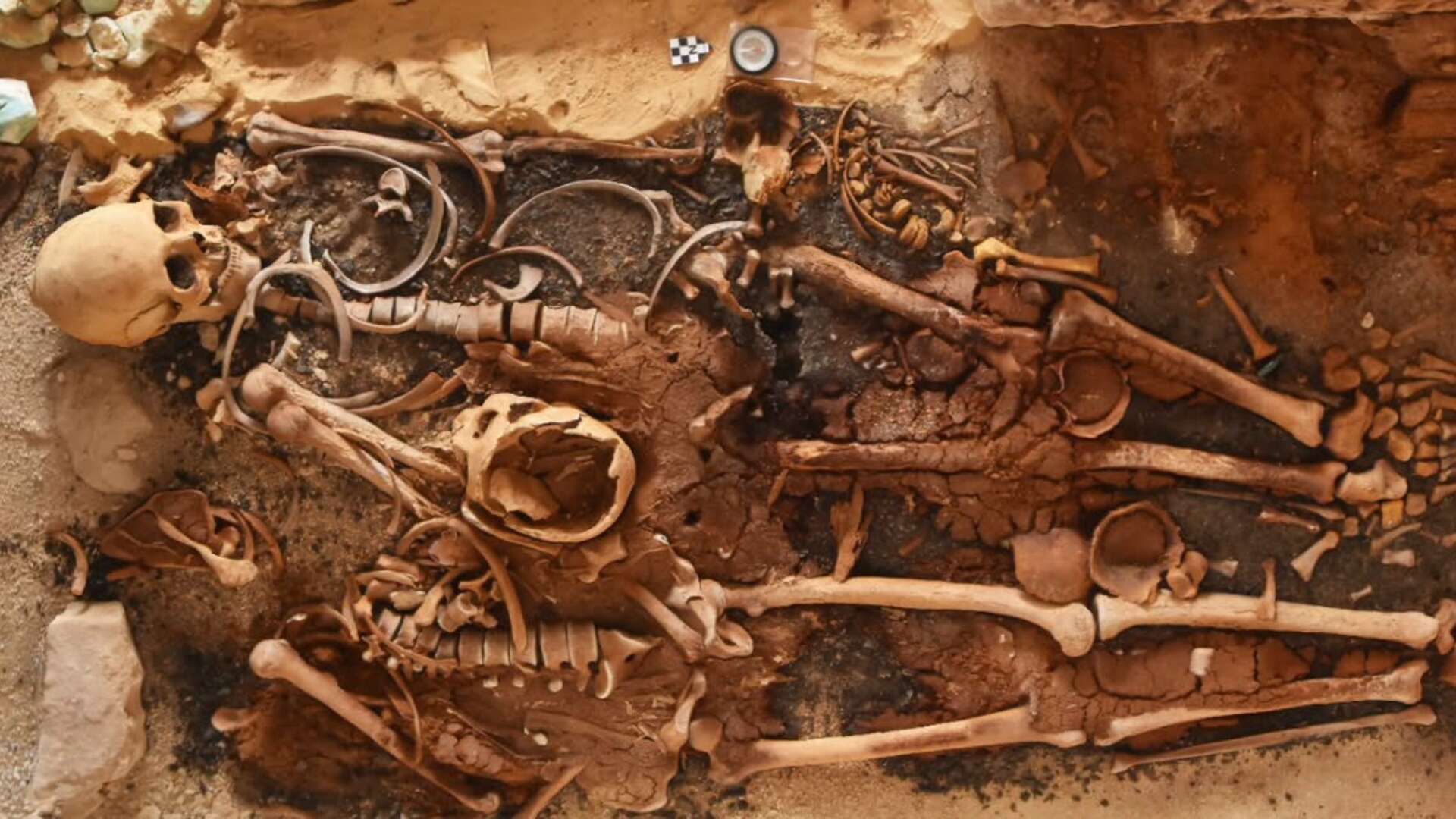
The media recently stumbled over itself to report on the discovery of 18 ancient Egyptian tombs containing mummies with golden tongues. The headlines practically wrote themselves, dripping with predictable, sensationalized awe. They painted a picture of glinting treasures, mysterious burial rites, and the eternal quest for the afterlife.
They completely missed the point.
The lazy consensus in mainstream reporting treats these golden tongues as elite, hoardable wealth or bizarre, isolated occult anomalies. Writers who do not know a scarab from a shabti imply that these artifacts are proof of a decadent ruling class obsessed with bling even in death.
This is fundamentally wrong. It misunderstands Greco-Roman Egyptian economy, theology, and the brutal reality of ancient preservation. If you look at the actual data from excavations like Oxyrhynchus and Taposiris Magna, the presence of foil amulets is not a flex of immense riches. It is a sign of a highly standardized, mass-produced religious insurance policy.
The Myth of the Elite Bling
Let us dismantle the primary misunderstanding immediately. Mainstream articles love to equate gold with exclusive, billionaire-level status. But during the Ptolemaic and Roman periods in Egypt, thin gold foil was not reserved solely for the pharaonic elite.
Think about the physics of the artifact. We are not talking about solid gold ingots shaped like tongues. We are talking about micro-thin foil leaf. It is light. It is fragile. It uses a fraction of an ounce of precious metal.
The Reality Check: In the ancient Mediterranean, gold leaf was an accessible commodity for the upper-middle class, provincial administrators, and well-to-do merchants.
To view these tongues as a sign of staggering, unattainable wealth is to misunderstand ancient inflation and manufacturing. This was the spiritual equivalent of buying a premium insurance premium, not commissioning a superyacht. I have looked at excavation inventories where hundreds of these small gilded amulets turn up in relatively modest provincial cemeteries. The narrative of exclusive royal luxury collapses under the weight of sheer volume.
Dismantling the "Silent Mummy" Misconception
The internet's favorite question right now is some variation of: Why did Egyptians cut out tongues and replace them with gold?
The very premise of the question is flawed. Nobody was running around slicing out tongues post-mortem just to shove a piece of metal in the jaw.
What Actually Happened to the Body
During the embalming process, organic tissue shrinks, decomposes, and dries out. The tongue, being a highly vascular muscle, effectively disappears or shrivels into nothingness during the natron salting phase.
The gold tongue was not a replacement for a surgically removed organ. It was a prosthetic placeholder for an organ that naturally degraded during mummification.
The Real Theology: The Court of Osiris
The standard explanation is that the golden tongue allowed the deceased to speak to Osiris, the god of the underworld. But the nuance missed by surface-level articles is how they spoke.
- The Problem: In Egyptian myth, the dead had to undergo the Negative Confession. You had to look a jury of 42 divine judges in the eye and prove you were innocent of a laundry list of sins.
- The Threat: If your physical tongue rotted, you were literally speechless before the court. A silent soul is a condemned soul.
- The Fix: Gold was considered the literal flesh of the gods. By placing a tongue of incorruptible metal into the mouth, the deceased was not just getting a microphone; they were transforming their speech into divine, unassailable truth.
You were trying to hack the system. The golden tongue was a metaphysical lawyer, ensuring that whatever words came out of your mouth carried the weight of a god, making it impossible for Osiris to find you guilty.
The Dark Side of the Golden Find
While it is easy to romanticize these discoveries, the focus on the gold obscures a much grimmer archaeological reality.
Finding 18 tombs with intact foil elements is actually a miracle of survival, not an indicator of how rare the practice was. The sad truth of Egyptology is that for every golden tongue found today, hundreds were ripped out and melted down centuries ago by grave robbers, Roman soldiers, and nineteenth-century antiquities traffickers.
If you want to understand the true distribution of this burial practice, you cannot just look at the intact gold. You have to look at the damaged maxillae and fractured jawbones of mummies in ransacked tombs. The physical trauma left on the skeletal remains tells us that golden tongues were likely far more common than current statistics suggest. We are looking at the tiny fraction of evidence that grave robbers deemed too small or too troublesome to scrape out of a skull.
Stop Asking if It's Beautiful, Start Asking Who Made It
The real story isn't the dead people. It is the living industry behind them.
The presence of these standardized foil amulets across multiple tombs points directly to a thriving, commercialized mortuary industry. Embalming workshops were businesses. They had catalogs.
Imagine a scenario where a grieving family enters a workshop in Alexandria circa 100 BCE. The embalmer offers tiers of service.
- Tier 1: Full internal organs removed, imported resin, gold foil amulets for the eyes, tongue, and fingers.
- Tier 2: Standard natron treatment, local resin, a single tongue amulet.
- Tier 3: Basic salt wrap, no gold.
The 18 tombs found are evidence of a highly organized, assembly-line approach to salvation. The artisans making these tongues were stamping them out using templates. It was a volume business.
When you look at the discovery through an economic lens rather than a mystical one, the romantic fog clears. You are not looking at a scene from an adventure movie; you are looking at the ancient world's equivalent of a funeral home upselling a family on a premium copper casket liner.
The Actionable Takeaway for History Consumers
The next time a major discovery breaks the internet, change your analytical framework.
- Ignore the material value. Ask about the mass of the object, not just the metal. A thin sheet of gold tells a completely different economic story than a solid block.
- Look for the manufacturing marks. Standardization means industry. Industry means the practice was widespread, not elite.
- Question the survival bias. Always assume what we find is less than one percent of what actually existed.
Stop treating ancient Egyptians like esoteric aliens obsessed with the macabre. They were pragmatic, bureaucratic, and deeply terrified of failing a divine audit. They did what any modern person would do when facing a rigged system: they bought the best loophole they could afford.


