Dawn in Jerusalem does not arrive with a whisper. It breaks like a sudden fracture across the old stone, casting long, nervous shadows over streets where history is not a dusty textbook, but an active, breathing wound. Walk down these alleyways long enough, and you learn to read the air. You smell the diesel of armored personnel carriers mixed with the sharp, sweet scent of cardamom coffee brewed in basement kitchens. You feel the collective pulse of a city that has spent generations sleeping with one ear tuned to the distant, rhythmic thrum of sirens.
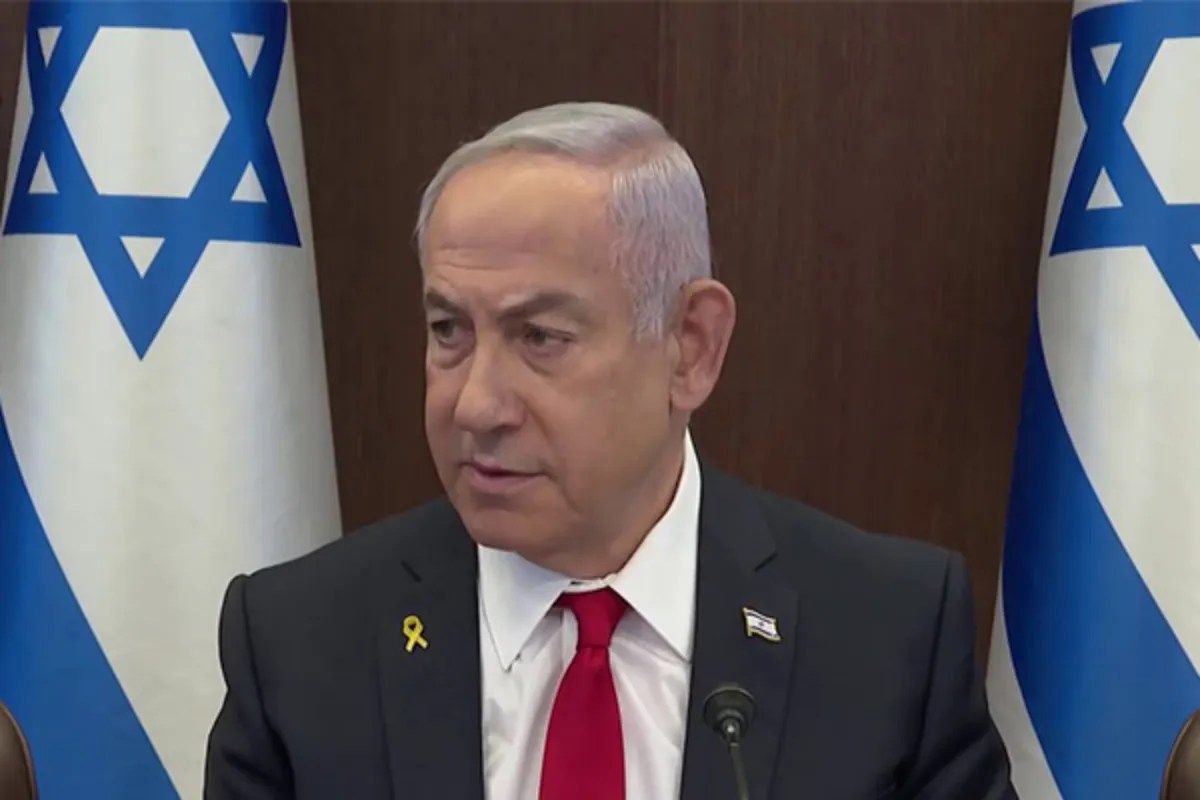
Benjamin Netanyahu stepped before the cameras with a message carved in absolute defiance. The promise was stark, stripped of diplomatic cushioning or the soft language of peace talks. He vowed that the regime in Tehran would fall, that its grip on power would be shattered, and that the twin proxies of Hamas in the south and Hezbollah in the north would be systematically dismantled to their roots. To the casual observer thousands of miles away, sitting behind a morning newspaper or scrolling past a glowing smartphone screen, these words might sound like standard political bravado. Just another broadcast in an endless cycle of Middle Eastern rhetoric.
They are wrong.
When you live within the radius where a rocket can rewrite your afternoon in three seconds, words like regime change and total eradication are not abstract political strategies. They are the daily weather. They dictate whether you walk your child to school or keep them huddled in the reinforced concrete box of your apartment's safe room. They determine whether fishermen in Tyre pull empty nets or stay ashore entirely, and whether shopkeepers in Tehran lock their doors early as the currency spirals into another abyss of worthlessness.
To understand the weight of this declaration, we have to look past the podium and examine the machinery of conflict that has locked three distinct populations into a suffocating embrace.
Consider the anatomy of a proxy network. It is not an army in the traditional, uniform sense. It is an underground web woven through neighborhoods, hospitals, and schools. For years, the strategic doctrine in the north and the south was built on containment. Build a higher wall. Install a better iron dome. Shoot down the incoming metal and hope the political pressure cooker cools down by next Tuesday.
That era is over. The calculus has shifted from management to amputation.
When a leader promises to dismantle a network like Hezbollah or Hamas, he is talking about unraveling a labyrinth of subterranean tunnels reinforced with concrete imported under the guise of civil reconstruction. He is talking about severing the financial and logistical umbilical cord that stretches directly from the Revolutionary Guard headquarters in Tehran down to the Mediterranean coast.
Let us be entirely honest about what this means. Wars of containment are messy; wars of total dismantlement are apocalyptic in their collateral cost. Every concrete bunker targeted in the suburbs of Beirut or beneath the streets of Gaza sits underneath civilian apartments, bakeries, and playgrounds. This is the tragic, inescapable architecture of modern asymmetric warfare. The defenders of the old order use civilian density as armor, forcing an attacking military into a brutal, agonizing choice: absorb the blows indefinitely or strike through the human shield to reach the source.
Netanyahu’s gamble is that the Israeli public—and the broader regional alignment that quietly nods along in Riyadh, Abu Dhabi, and Cairo—has reached a saturation point. The fatigue of perpetual low-intensity bleeding has finally eclipsed the fear of total escalation. When you are told for the fourth decade that your children are fighting the same war their parents fought, patience does not wear thin; it snaps.
Yet, promising to topple the Iranian regime is an ambition of an entirely different magnitude. Tehran is not a militant enclave squeezed into a coastal strip. It is a sprawling empire of eighty-plus million souls, governed by an ideological apparatus that views survival through the lens of martyrdom and divine destiny.
How do you dismantle a state-sponsored theological apparatus from the outside?
Military strikes can crater missile factories, silence radar installations, and set back a nuclear enrichment program by years. They can puncture the aura of invincibility that the Islamic Revolutionary Guard Corps carefully projects across the region. But a government does not collapse simply because its warehouses burn. Regimes fall when the internal pressure cooker bursts from the bottom up—when shopkeepers, teachers, and university students decide that the cost of obedience is higher than the price of rebellion.
We saw flashes of this courage in the streets of Tehran and Shiraz during the Woman, Life, Freedom protests. Young women burning mandatory headscarves in bonfires of defiance. Unarmed citizens staring down basij militia batons with a cold, terrifying clarity in their eyes. They did not need a foreign speech to tell them their government was choking the life out of their future. They lived it every time they tried to buy groceries with a devalued rial or watched their daughters' educational horizons shrink into an ideological cage.
When Netanyahu links the fate of Hamas and Hezbollah directly to the survival of the Iranian regime, he is drawing a straight line through what security analysts call the Axis of Resistance. Cut off the head of the octopus in Tehran, the theory goes, and the tentacles in Beirut and Gaza will inevitably wither.
But history is rarely that neat.
Nature abhors a vacuum, and political vacuums in the Middle East tend to fill with fire. What happens the morning after a regime in Tehran collapses? Who secures the centrifuges? Who stops the splintered militias from turning every city block into an independent fiefdom of warlords and automatic rifles? These are the questions that keep sleepless military planners awake in underground command bunkers from Tel Aviv to Washington.
The trouble with absolute promises is that they create an invisible debt that must eventually be paid in blood, steel, and unyielding political will. If you vow to destroy an enemy completely, you leave no room for diplomatic off-ramps, no graceful retreats, no face-saving compromises. It becomes an existential poker game where both sides are convinced that folding means total annihilation.
We are standing on the precipice of a regional restructuring that will either redraw the map of the Middle East for the next century or leave it smoking in ruins.
Look out over the Mediterranean tonight. The water is dark, indifferent to the chessboards of generals and the fiery declarations of prime ministers. Somewhere out there, cargo ships move silently through the shipping lanes. In the hills of the Galilee, farmers check the locks on their irrigation systems, listening for the wind. In the alleyways of the southern suburbs, families go about their evening routines under a sky that feels just a fraction heavier than it did yesterday.
The speeches will fade from the cable news loops. The headlines will cycle on to the next crisis. But the architects of this new, violent reality have set their stones in motion, and gravity cares nothing for the promises of men.