Geopolitical deterrence relies heavily on the cost function imposed upon an aggressor. When conventional military parity is unattainable, state actors substitute capital-intensive hardware with labor-intensive asymmetric doctrines. The establishment of civilian-focused military training hubs across urban centers in Iran, including specialized installations in Tehran, signals an institutional shift toward total population mobilization. This operational analysis deconstructs the mechanics, strategic objectives, and systemic limitations of integrating non-combatant populations into national defense architectures.
The Tripartite Matrix of Civilian Integration
The operational doctrine governing these urban training centers is structured around three core operational pillars: tactical competency, civil continuity, and psychological resilience.
- Tactical Competency: Trainees receive instruction in small-arms handling, including assault rifles and general-purpose handguns, alongside training on portable anti-aircraft systems and shoulder-fired munitions. This addresses the defense gap against airborne assets and ground infiltration.
- Civil Continuity: Urban defense curricula integrate firefighting, search-and-rescue operations, and first-aid protocols. By equipping the populace with disaster-response capabilities, the state mitigates infrastructural degradation caused by aerial campaigns or economic sabotage.
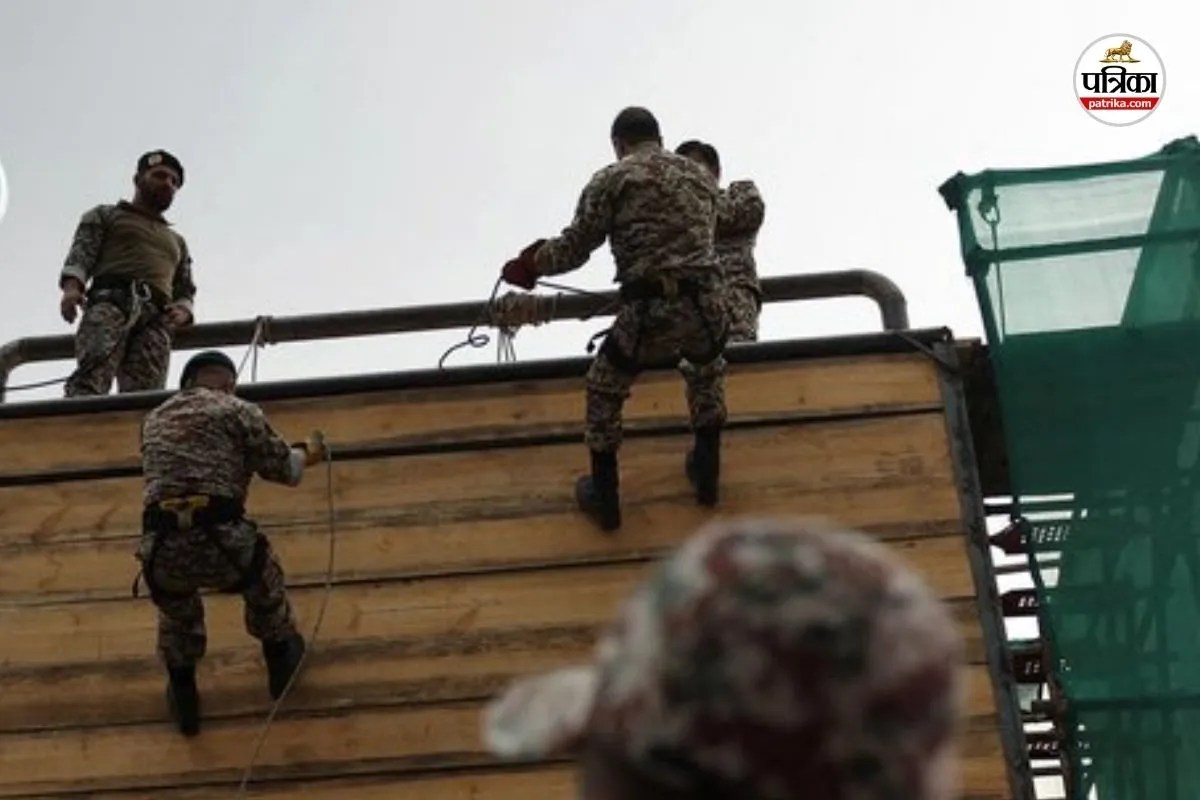
- Psychological Resilience: Exposure to obstacle courses, rappel training, and simulated combat environments conditions the civilian demographic to function under high-stress operational parameters.
[Conventional Defense Deterrence Gap]
       │
       ▼
[Asymmetric Mobilization: Basij Framework]
       ├── Tactical Competency (Small Arms / Air Defense)
       ├── Civil Continuity (First Aid / Firefighting)
       └── Psychological Conditioning (Urban Simulation)
       │
       ▼
[Objective: Raising the Cost Function of Ground Incursion]
The Logistics of Mass Mobilization
Operating under the broader framework of the Basij militia structure, such as the Jan Fada campaign initiatives, mass training programs function as a force multiplier for the Islamic Revolutionary Guard Corps (IRGC). The logistical objective is the formation of decentralized operational battalions.
Scaling training from elite units to the general populace introduces distinct economic and administrative variables.
- Decentralized Readiness: Utilizing public spaces and municipal squares reduces reliance on secure military garrisons, allowing rapid throughput of volunteers across diverse demographics, including women and youth cohorts.
- Standardization vs. Speed: Rapid instruction prioritizes functional familiarity over comprehensive tactical mastery. The curriculum focuses on basic weapons maintenance, marksmanship fundamentals, and micro-drone awareness rather than complex multi-domain maneuver warfare.
Strategic Objectives and Deterrence Calculus
The primary utility of a militarized populace is deterrence by denial rather than deterrence by punishment. Traditional military analysis evaluates state capability through active armor, naval tonnage, and air superiority. Civilian military training alters this calculus by introducing structural friction for any potential occupying force.
- Asymmetric Cost Inflation: An occupying force facing an armed and trained civilian base encounters continuous urban resistance, neutralizing the technological advantage of high-end conventional platforms.
- Political Signaling: Publicly broadcasting these training programs serves as a signaling mechanism to external adversaries, indicating that any military escalation would encounter deeply entrenched domestic resistance rather than a passive administrative collapse.
Operational Constraints and Vulnerabilities
Despite the strategic intent, large-scale civilian mobilization contains intrinsic systemic inefficiencies.
Command and control structures present a primary vulnerability. Dispersed, lightly trained units lack the secure communication networks, heavy logistics, and electronic warfare protection required to operate effectively against advanced, integrated armed forces. Without sustained logistical pipelines, localized units risk operational isolation.
Furthermore, diversion of state resources toward baseline civilian instruction creates opportunity costs for high-technology research, precision-guided munition stockpiling, and professional military modernization. The systemic friction between maintaining advanced strategic deterrence and expanding low-cost territorial defense highlights the inherent trade-offs of a prolonged war of attrition.
Integrate decentralized civil-defense networks with redundant command nodes to ensure functional continuity under severe electronic and physical disruption.