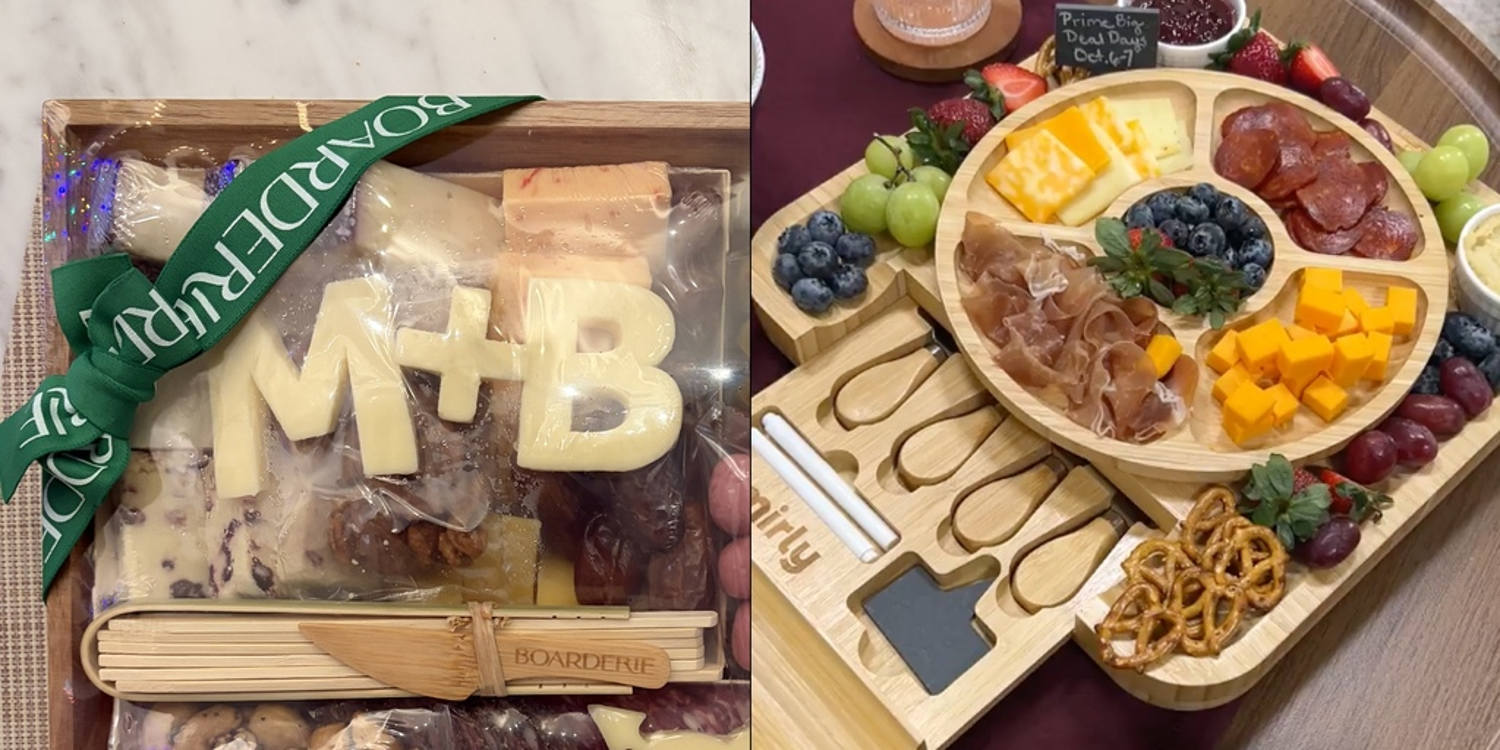
Most grazing boards fail because builders treat assembly as a visual decoration exercise rather than a thermodynamic, structural, and sensory engineering problem. A functional charcuterie board is an open-air food system designed to regulate guest traffic, prevent palate fatigue, and maintain structural integrity under ambient room temperatures for two to three hours. Optimizing this system requires controlling three primary variables: volumetric ratios, moisture migration, and spatial ergonomics.
The Volumetric Allocation Framework
Standard hosting advice relies on vague directives such as "buy a variety of meats and cheeses" or "fill in the gaps." This leads to inventory imbalances, excessive food waste, and bottlenecked grazing zones. Instead, procurement and placement must follow a strict volumetric and caloric distribution model based on the duration of the event and whether the board serves as a pre-dinner appetizer or a primary meal replacement.
For a standard two-hour pre-dinner reception, total food mass should target 140 to 170 grams per guest. When the board functions as the primary sustenance over a three-to-four-hour window, allocation scales to 280 to 340 grams per guest. Within this total mass, ingredients divide into four functional tiers:
- Tier 1: Lipid and Protein Anchors (45% of total mass). Comprises cured meats and cheeses. Cheeses should account for roughly 60% of this tier (85 to 100 grams per person for appetizers) and cured meats for 40% (55 to 70 grams per person).
- Tier 2: Structural Carriers (25% of total mass). Includes sliced baguettes, water crackers, seeded crisps, and breadsticks. Carriers must provide mechanical rigidity sufficient to support dense soft cheeses without fracturing under shear force.
- Tier 3: Acidic and High-Moisture Counterweights (20% of total mass). Consists of cornichons, castelvetrano olives, pickled onions, fresh grapes, and sliced apples or pears.
- Tier 4: Viscous Binders and Textural Accents (10% of total mass). Encompasses honeycomb, fruit preserves, whole-grain mustard, and toasted nuts.
Sensory Engineering and Palate Calibration
The primary failure mode of an uncalibrated meat-and-cheese board is sensory adaptation—specifically, palate fatigue caused by excessive lipid coating of the oral mucosa. Cured pork and aged dairy are dense in saturated fats and sodium. Without chemical counter-agents, taste receptors become saturated after three to four bites, diminishing perceived flavor intensity across the remaining inventory.
To counteract lipid saturation, every high-fat item on the board requires a paired acidic, astringent, or bitter counterweight. The mechanism is straightforward: organic acids (acetic acid in pickles, malic acid in apples, tartaric acid in grapes) stimulate salivation and strip residual lipids from the tongue, resetting taste receptors between bites.
The Four-Quadrant Cheese Matrix
Selecting cheeses by color or generic popularity results in overlapping flavor profiles. A systematic selection covers four distinct biochemical categories based on moisture content, proteolysis (protein breakdown), and lipolysis (fat breakdown):
- High-Moisture Lactic (Fresh/Soft-Ripened): Burrata, fresh chèvre, or triple-cream Brie. These offer high butterfat content, low acidity, and a yielding paste that requires a rigid structural carrier.
- Semi-Soft Washed-Rind or Alpine: Gruyère, Comté, or Taleggio. Washed-rind varieties introduce savory, volatile sulfur compounds via Brevibacterium linens, while Alpine styles provide nutty, crystalline amino acid structures (tyrosine) that bridge mild and aggressive flavors.
- Hard Aged: Parmigiano-Reggiano (24+ months), aged Gouda, or Manchego. Low moisture content concentrates glutamates (umami) and produces crunchy calcium lactate crystals. These cheeses hold structural integrity at room temperature longest.
- Internal Mold-Ripened (Blue): Roquefort, Gorgonzola Dolce, or Stilton. Penicillium roqueforti breaks down triglycerides into methyl ketones, yielding sharp, peppery notes that cut through sweet preserves or honey.
Charcuterie Selection by Cure and Grind
Cured meats divide operationally into whole-muscle cures and emulsified or coarse-ground salumi. Mixing both ensures textural contrast.
- Whole-Muscle Cures: Prosciutto di Parma, Jamón Serrano, or Bresaola. Sliced paper-thin (under 1 millimeter) to maximize surface area and allow body heat to melt intramuscular fat immediately upon contact with the tongue. Thick slices of prosciutto create an unpleasant, fibrous chewing resistance.
- Coarse-Ground Fermented Sausages: Soppressata, Finocchiona, or Chorizo. These contain visible fatback globules suspended in a fermented protein matrix, offering a firmer bite and concentrated spice profiles.
- Spreadable Emulsions: Pâté, rillettes, or 'nduja. High fat-to-protein ratios allow these items to function similarly to soft cheeses, requiring containment vessels (ramekins) to prevent grease migration onto porous board surfaces.
Thermodynamics and Moisture Migration
Food safety and textural degradation on an ambient display are governed by temperature curves and water activity ($a_w$). Cold dairy fat is solid and traps volatile aromatic compounds; serving cheese straight from a 3°C refrigerator suppresses up to 60% of its aromatic profile. Conversely, cured meats held above 21°C for extended periods undergo lipid weeping, where surface oils separate from the protein matrix, creating a greasy visual sheen and limp texture.
Staging Timeline Protocol
To balance aromatic release against structural collapse, execute a staggered staging protocol:
- T-Minus 60 Minutes: Remove hard and semi-soft cheeses from refrigeration. Leave wrapped in wax or parchment paper to prevent surface desiccation (crusting) while internal temperatures rise toward 16°C–18°C.
- T-Minus 45 Minutes: Pre-slice hard cheeses into bite-sized batons or irregular chunks. Guests hesitate to cut into a monolithic block of Parmigiano-Reggiano, creating a service bottleneck. Pre-fracturing removes psychological friction and speeds up plate assembly.
- T-Minus 30 Minutes: Remove soft-ripened cheeses (Brie, Camembert) and cured meats from cold storage. Keep meats sealed until T-minus 15 minutes to prevent oxidation, which turns bright myoglobin pigments into dull, brownish metmyoglobin.
- T-Minus 15 Minutes: Unwrap and plate cured meats. Fold or ribbon thin slices rather than laying them flat. Folding traps air pockets between layers, increasing visual volume by up to 300% and allowing guests to lift single portions cleanly with tongs without tearing adjacent slices.
- T-Minus 5 Minutes: Place structural carriers (crackers, sliced bread) onto the board.
Preventing Moisture Migration
Water activity ($a_w$) dictates how moisture moves between adjacent ingredients. High-$a_w$ items (fresh berries, cut figs, olives, cornichons) transfer water vapor and liquid runoff directly into low-$a_w$ items (crackers, toasted nuts, crusty bread). Within 20 minutes of direct contact, starches absorb moisture, losing their glass-transition crispness and becoming soggy.
Eliminate cross-contamination by enforcing physical barriers. Place all high-moisture items, brined goods, and viscous condiments inside ceramic, glass, or metal ramekins. Position dry carriers on the perimeter of the board, separated from soft cheeses and fruit by dry buffers such as rosemary sprigs, folded parchment, or bowls of nuts.
Spatial Ergonomics and Traffic Flow
A poorly organized board causes physical congestion. If guests must reach across open food to access utensils, or if high-demand items cluster in a single corner, queue times spike and hygiene degrades.
The Anchor-and-Tributary Layout
Construct the board using a top-down spatial hierarchy rather than random clustering:
- Place Fixed Vessels First: Position ramekins containing olives, pickles, mustard, and preserves at asymmetrical intervals across the board. These serve as structural anchors that define the physical zones of the layout.
- Establish Cheese Stations: Place the four cheese categories at maximum distance from one another (e.g., opposite corners or alternating edges). This distributes guest hand traffic evenly around the perimeter and prevents flavor cross-contamination on serving knives. Assign one dedicated knife or spreader to each cheese—never force guests to share a blade between a pungent blue cheese and a mild triple-cream.
- Build Meat Rivers: Snake folded ribbons of cured meats through the negative space between ramekins and cheeses. This visually connects disparate zones and guides the eye across the surface.
- Insert Buffer Zones: Fill remaining voids with low-moisture fruits (grapes cut into small, 4-to-5-berry sub-clusters rather than a single massive stem that guests must wrestle apart) and nuts.
- Stage Carriers Externally: If board surface area is constrained, move crackers and bread entirely off the main platter into adjacent baskets. Overcrowding the primary board forces ingredients into unstable vertical stacks that collapse when disturbed.
System Limitations and Failure Modes
Even an optimized charcuterie system faces hard operational constraints. Builders must account for three environmental and biological limits:
- Ambient Heat Degradation: In outdoor environments or rooms exceeding 24°C, triple-cream cheeses liquefy within 45 minutes and cured meats sweat excessively. Under these conditions, eliminate soft-ripened cheeses entirely and substitute firm sheep's milk cheeses (Pecorino, Manchego) alongside dry-cured salumi with higher melting points.
- Cross-Contamination in Shared Utensil Zones: Guests inevitably mix serving utensils, transferring gluten from cracker crumbs onto cheese wedges or dragging pungent blue cheese into fruit preserves. When hosting guests with celiac disease or severe nut allergies, do not rely on spatial separation on a single board. Construct entirely isolated satellite boards for allergen-free inventory.
- Surface Porosity and Sanitation: Unsealed wood boards (especially softwoods like pine or porous bamboo) absorb meat lipids and dairy proteins into microscopic grain fissures, creating bacterial reservoirs and rancid odors over time. Limit display surfaces to non-porous materials—slate, marble, ceramic—or end-grain hardwoods (maple, walnut) treated with food-grade mineral oil and beeswax.
Tactical Execution Blueprint
To maximize throughput, flavor balance, and visual density on your next build, abandon the single-platter default for gatherings exceeding twelve people. Instead, deploy modular twin boards placed at opposite ends of the serving table, mirroring the exact four-quadrant cheese and cure matrix on both surfaces. This doubles perimeter access, cuts guest queue times in half, and lets you hold back 30% of your fresh inventory in cold storage to execute a clean mid-event refresh at the 90-minute mark.