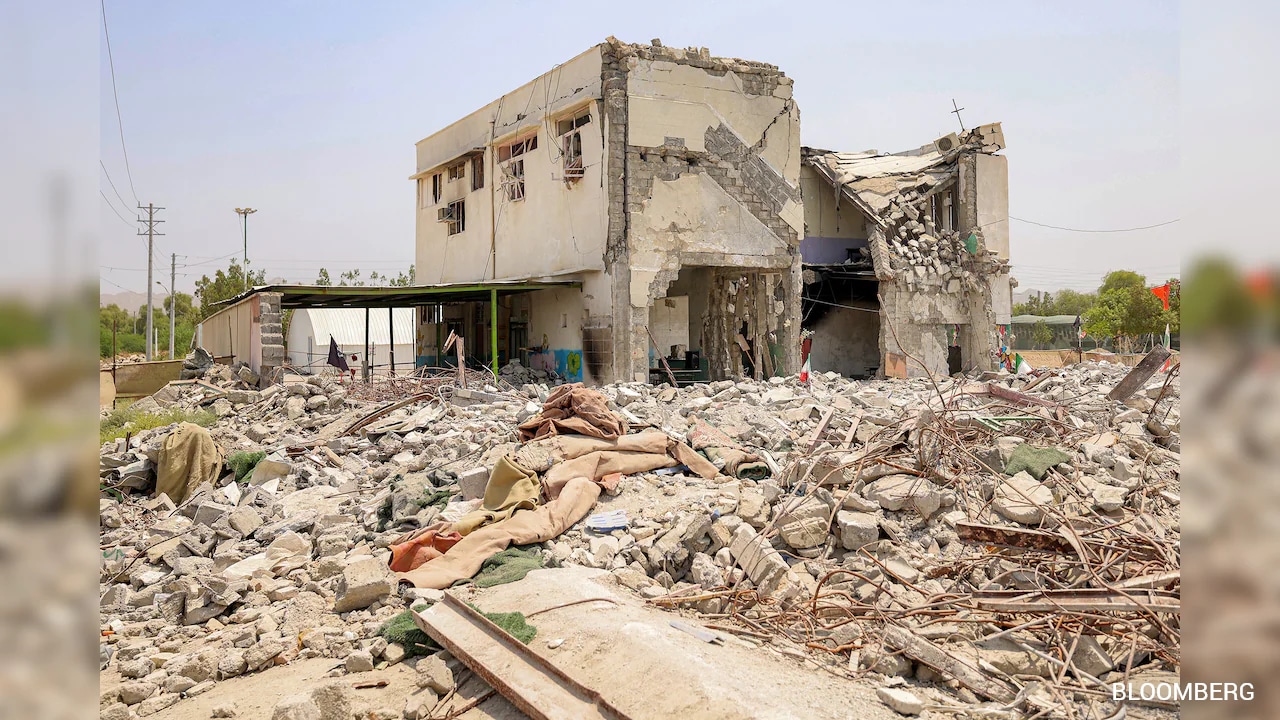
The convergence of advanced kinetic strike architecture and institutional targeting protocols creates a narrow margin for error where system failures cascade into catastrophic civilian casualties. When precision-guided munitions impact high-density civilian infrastructure, the resulting inquiry transcends diplomatic condemnation, forcing an examination of how intelligence inputs, weapons systems mechanics, and military doctrine intersect. Deconstructing events such as the Minab school strike requires analyzing the structural vulnerabilities inherent in modern military operations, specifically the friction points between automated target recognition, outdated geospatial intelligence, and international humanitarian law.
The Mechanics of Targeting Failure
Modern long-range strike operations rely on complex data chains that process signals intelligence, geospatial feeds, and pre-cached target folders. In high-tempo operational environments, the velocity of decision-making outpaces data verification.
When a structural asset like an educational facility is misidentified as a dual-use military objective or struck due to proximity degradation, the failure typically traces back to three distinct vectors within the operational pipeline:
- Stale or Contaminated Intelligence: Target databases maintained over years can contain obsolete structural footprints. If a military installation expands or adjacent civilian properties are repurposed, failure to update the geospatial baseline introduces structural blind spots.
- Algorithmic and Automated Tagging Errors: The integration of machine learning target-recognition systems introduces automated confirmation bias. When software processes overhead imagery, pattern-matching errors can classify fortified civilian boundaries or compound walls as tactical command nodes.
- Munition Dispersion Profiles: High-yield tactical missiles designed for reinforced structures possess blast radii that scale exponentially in urban or semi-urban environments. Selecting an improper warhead-fuze combination for an urban-adjacent target guarantees structural overpressure outside the intended perimeter.
These variables interact to produce systemic risk. A minor discrepancy in coordinate transcription compounded by an automated validation routine transforms a low-confidence data point into an executed strike order.
Legal Thresholds Under International Humanitarian Law
The evaluation of whether a military strike constitutes a war crime rests on codified principles under the Geneva Conventions and customary international humanitarian law. Legal analysts and fact-finding bodies do not assess these events purely by body count; they evaluate the decision-making calculus at the moment of execution.
The legal framework is governed by three core doctrines:
- Distinction: Parties to a conflict must distinguish at all times between civilian objects and military objectives. Schools, hospitals, and residential zones enjoy presumptive immunity unless concretely converted to military use.
- Proportionality: An attack is unlawful if the expected civilian casualties or damage to civilian objects are excessive in relation to the concrete and direct military advantage anticipated from the attack.
- Precaution: Commanders must take all feasible precautions in the choice of means and methods of attack to avoid, and in any event to minimize, incidental loss of civilian life.
When an independent commission reports reasonable grounds to believe a war crime has occurred, it signifies that the investigative threshold has cleared circumstantial evidence of recklessness. Specifically, if operators execute a strike while aware of a substantial risk of hitting a civilian object, or fail to conduct mandatory verification when intelligence is ambiguous, the legal defense of operational necessity collapses under scrutiny.
The Structural Limits of Internal Accountability
Internal military investigations into high-casualty collateral incidents face structural impediments that often compromise transparency. Internal probes are bound by institutional incentives to protect command chains and classify sensitive technological capabilities.
This creates an analytical vacuum filled by external actors, including satellite intelligence verification teams, nongovernmental human rights organizations, and United Nations fact-finding missions. These independent bodies rely on open-source intelligence, multispectral satellite analysis, and digital forensics to reconstruct the timeline of events.
The divergence between internal military denials and external forensic findings highlights a broader systemic issue: accountability mechanisms in modern warfare are frequently reactive rather than preventative. Without mandatory external oversight embedded within real-time targeting approval loops, the structural risk of catastrophic targeting errors remains constant.
Strategic Outlook
The proliferation of long-range precision strike capabilities without commensurate upgrades in real-time civilian-mapping safeguards guarantees future operational failures. Military strategy must evolve past the assumption that technological precision equals moral immunity.
To mitigate systemic vulnerability, defense architectures require the implementation of mandatory double-blind civilian verification protocols, independent legal reviews for targets located within urban density thresholds, and automated abort mechanisms linked to real-time geospatial updates. Until these safeguards are institutionalized, high-tempo kinetic campaigns will continue to generate catastrophic tactical anomalies that test the limits of international legal frameworks.